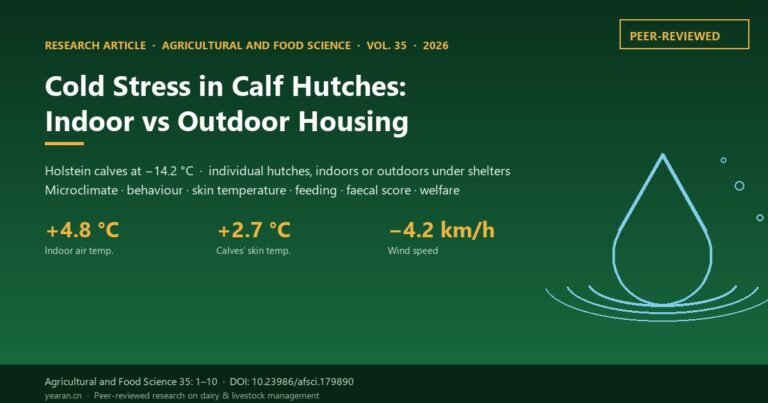
Effects of Low Temperatures on Microclimate, Clinical Status, and Behaviour of Calves under Different Housing Systems

Effects of Low Temperatures on Microclimate, Clinical Status, and Behaviour of Calves under Different Housing Systems

At -14.2 C, Holstein calves housed indoors in a lightweight building had higher skin temperature and spent more time standing, moving and drinking than calves in outdoor hutches under shelters.

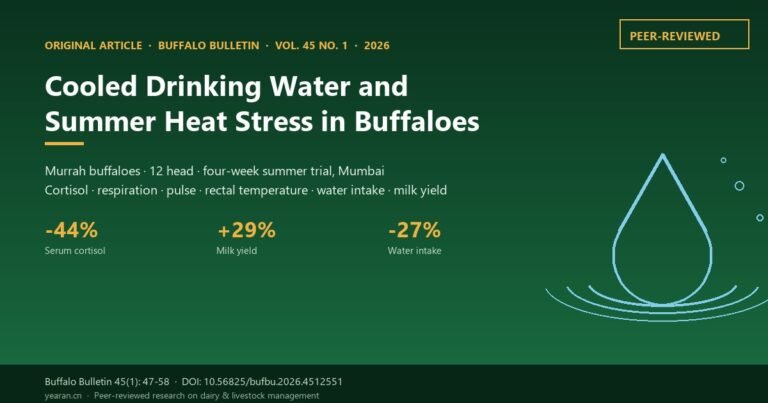
Amelioration of Physiological Responses, Cortisol and Milk Yield in Buffaloes by Regulating Their Drinking Water Temperature During Summer Season

Amelioration of Physiological Responses, Cortisol and Milk Yield in Buffaloes by Regulating Their Drinking Water Temperature During Summer Season

A four-week summer trial on 12 lactating Murrah buffaloes: drinking water pre-cooled in an earthen pot lowered serum cortisol by 44%, respiratory and pulse rates and rectal temperature, and raised milk yield by 29% compared with naturally warm farm water.

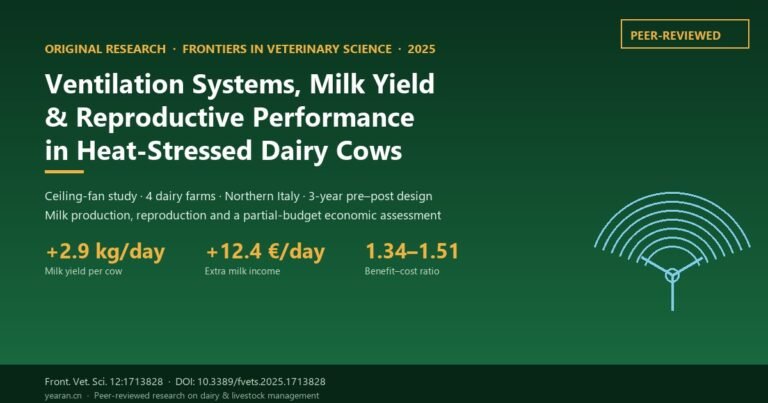
Integrative assessment of the effects of ventilation systems on economic efficiency, milk production, and reproductive performance in dairy cows

Integrative assessment of the effects of ventilation systems on economic efficiency, milk production, and reproductive performance in dairy cows

A 3-year study on four Northern Italian dairy farms found that ceiling-fan ventilation raised milk yield by 2.9 kg/cow/day and improved reproductive traits, with a benefit–cost ratio of 1.34–1.51 depending on heat-stress intensity.

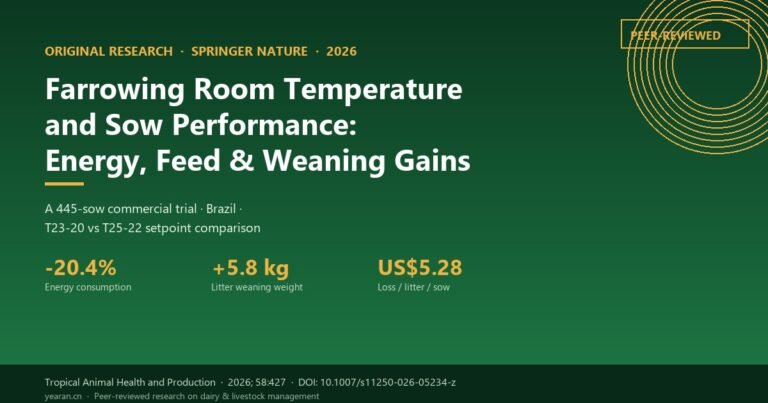
Effect of farrowing room temperature adjustment on total electrical energy consumption and sow and litter performance

Effect of farrowing room temperature adjustment on total electrical energy consumption and sow and litter performance

A 445-sow commercial study in southern Brazil comparing two farrowing-room temperature programs. Raising the cooling setpoint by 2 °C cut total electrical energy use by 20.4% (≈ US$1.00/sow), but reduced sow lactation feed intake (6.5 vs 6.3 kg/day) and litter weaning weight by 5.8 kg, translating to a US$5.28/litter/sow economic loss — substantially outweighing the energy savings.

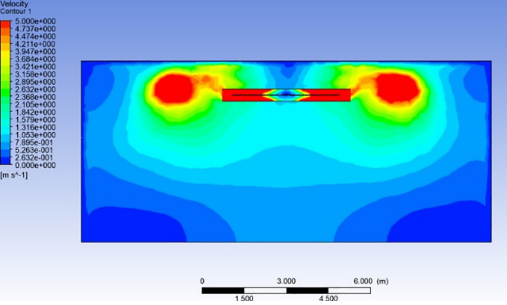
Comparative study on performance of high volume low speed (HVLS) fans with high-speed fans for the use in dairy barns

Comparative study on performance of high volume low speed (HVLS) fans with high-speed fans for the use in dairy barns

Bitopan Das, Polash Pratim Dutta, Monoj Bardalai , Partha Pratim DuttaDepartment of Mechanical Engineering, Tezpur University, Napaam, Assam, India. Proper ventilation in dairy barns is important in the summer as high temperatures and the accompanying heat stress can affect the…

The impact of a partially shaded laneway on voluntary cow movement to an automatic milking system

The impact of a partially shaded laneway on voluntary cow movement to an automatic milking system

Ashleigh Wildridge, S. Garcia, P. Thomson, C. Clark, E. Jongman and K. KerriskDairy Science Group, Faculty of Veterinary Science, School of Life and Environmental Sciences, University of Sydney, Camden, NSW, 2570, Australia.Faculty of Veterinary Science, University of Sydney, Camden, NSW,…

Influence of Water Temperature and Heat Stress on Drinking Behavior in Holstein Dairy Cows

Influence of Water Temperature and Heat Stress on Drinking Behavior in Holstein Dairy Cows

Ana Valeria González Pereyra, Verónica Maldonado May, Carlos Guillermo Catracchia,María Alejandra Herrero, Myriam Celina Flores, and Mariana Mazzini Grazing animals are exposed to heat stress and there should be conditions to facilitate water intake. Three experiments were carried out to…

Cooling cows efficiently with sprinklers: Physiological responses to water spray

Cooling cows efficiently with sprinklers: Physiological responses to water spray

Jennifer M. Chen, Karin E. Schütz, and Cassandra B. Tucker Department of Animal Science, University of California, Davis 95616 AgResearch Ltd., Hamilton 3240, New Zealand Dairies in the United States commonly cool cattlewith sprinklers mounted over the feed bunk that…

End of content

End of content