Abstract
This systematic review analyzes and synthesizes advancements in automated monitoring technologies for cattle drinking behavior and water intake measurement from 2000 to 2025. Using a thorough search strategy across 121 selected articles, the study summarizes various technological applications, such as radio frequency identification (RFID), accelerometers, water flow meters, electronic drinkers, and advanced vision-based systems integrated with AI (including Deep Learning and Generative AI). These innovations enable the precise acquisition of individual animal data, enhance predictive capabilities for health and welfare, and contribute to scalable water management solutions. Critically synthesizing this diverse literature provides a holistic understanding of the technological landscape and identifies key strategic directions for future development. For instance, RFID systems can record heifer movements at water points with 95% accuracy. Accelerometer algorithms can detect over 94% of drinking events lasting more than 10 s. Advanced vision-based systems, particularly those utilizing DeepLabCut and LSTM, have achieved recognition accuracies of up to 98.25% for beef cattle drinking behavior. Water flow meters demonstrate a consistent correlation of 0.99 with measured volumes. Additionally, artificial neural networks have demonstrated prediction accuracies of approximately 94.3% for water consumption on dairy farms. Despite significant progress, critical issues remain. These include limitations in accurately classifying short drinking events, reliability challenges in extensive environments, and the high costs of implementing advanced systems. There are persistent knowledge gaps regarding the optimal water requirements of cattle under various environmental conditions. This challenge is exacerbated by current technological limitations in accurately measuring individual water intake in extensive grazing systems and consistently classifying brief drinking events. Continued development of validated sensors and advanced analytics is crucial for transforming livestock farming into more sustainable practices. Further research is necessary to develop robust, cost-effective, and scalable solutions for global food security and environmental stewardship.
Key words: precision livestock farming, artificial intelligence, generative artificial intelligence, you only look once, animal behaviour
Introduction
Effective monitoring of cattle drinking behavior and water intake is paramount for ensuring optimal animal health, welfare, and the sustainability of livestock production (Lee et al., 2021; Menendez et al., 2023; Cameron et al., 2025).
Adequate water intake is fundamental for cattle productivity and health (Ghaffari et al., 2022; Herrero-García et al., 2023), influenced by various factors including environmental conditions, physiological states, and social dynamics (Shine et al., 2020). Studies have shown a positive correlation between water intake and drinking events as well as time spent drinking (Williams et al., 2019). Disruptions to water access or changes in drinking patterns can significantly impact animal performance and well-being, serving as early indicators of stress, disease, or other health disorders (Williams et al., 2018; Kumar et al., 2023).
However, decreasing voluntary water intake, even for reducing the water footprint, could negatively affect animal health and welfare (Franco et al., 2023). Chronic water restriction initially reduces body weight and intake before stabilizing (Allwardt et al., 2017). The reviewed technologies address this issue by enabling precise, individual-level monitoring. This allows empirical determination of specific water-intake thresholds. Thus, water footprint reduction can be achieved without compromising animal health and welfare through informed management. This granular data helps identify and prevent unintended deprivation that could result from less precise, herd-level approaches.
Additionally, any mismanagement or significant loss of water could result in a notable decrease in animal farming production (Gharibi et al., 2012; Palhares et al., 2021; Biglari et al., 2022).
Furthermore, water consumption is influenced by ambient temperature and humidity (Vtoryi et al., 2020). Daily water intake can vary significantly for dairy cows, with predicted drinking water intake ranging from 77.0 L/d to 91.4 L/d, and studies showing significant differences between groups (Nizzi et al., 2024). Total water intake in Holstein dairy cows is strongly predicted by dry matter intake, while free water intake is best predicted by dietary dry matter content (Khelil-Arfa et al., 2012). Drinking patterns are sensitive indicators of how cattle respond to environmental stressors, such as temperature, and their overall welfare (Frank et al., 2012; Genčurová et al., 2014).
Dairy cows exhibit altered drinking behaviour in response to temperature (Irigoin et al., 2025). For instance, research indicates that heat stress significantly affects drinking habits (Antanaitis et al., 2024). An exponential relationship has been established between average drinking length and the temperature humidity index (THI), as well as a linear relationship between average daily drinking frequency and THI (in the range of 68 to 90) (Legesse et al., 2017). This behavioural change highlights the direct impact of environmental factors on water consumption patterns (Antanaitis et al., 2024), suggesting that drinking behaviour can efficiently indicate heat stress alerts and may even correlate with milk production predictions (Tsai et al., 2020).
The design of watering systems can also affect drinking duration measurements, though further research is needed to determine if shorter drinking times from larger troughs necessarily indicate less water consumption (Brandstetter et al., 2019).
Monitoring drinking behavior and water intake provides valuable insights into animal health and welfare, with research demonstrating specific changes linked to various conditions (Chen and Auerswald, 2018; Alam et al., 2023). More specifically, monitoring drinking behaviour is a powerful tool for the early detection of illness, particularly in calves, often before overt clinical signs appear (Dong et al., 2018; King and DeVries, 2024).
Sick calves exhibit altered drinking patterns, including changes in drinking speed up to three days before diarrheal episodes (Costa, 2021; Knauer, 2017). These calves generally consume less milk, make fewer visits, and drink at a slower rate compared to healthy counterparts (Montes, 2023). On the day of disease diagnosis, sick calves drank 158.4 mL/min more slowly than control calves. This drinking speed had a sensitivity of 71.43% and a specificity of 64.29% for detecting disease (Morrison et al., 2022). Additionally, a decrease in unrewarded visits to feeders has been observed two to four days prior to the onset of clinical illness (Costa, 2021). For instance, they had −2.2 fewer visits/d seven days before producer treatment, increasing to −4.1 fewer visits/d one day before treatment (Morrison et al., 2022). Combining measures such as drinking speed, consumption, and unrewarded visits can increase the sensitivity of sickness detection to as high as 77% (Knauer, 2017).
The drinking behaviour of cattle can help detect health disorders (Benaissa et al., 2023). For example, cows with mastitis-related fever have been shown to decrease their water intake (Szyszka et al., 2012).
Furthermore, behavioral parameters, monitored using real-time location sensors combined with accelerometers, have been used as health status indicators, showing that lame cows had different feeding behaviors compared to healthy ones (Poulopoulou et al., 2019). Sensor-based technologies that record DMI, WI, and BW can detect metabolic disorders, as lower feed intake is often followed by a decrease in BW (Reith et al., 2014; Lu et al., 2022a, 2022b). Water intake decreases in cows with a mastitis-related fever (Szyszka et al., 2012). Before being diagnosed with pneumonia, cows produce less milk, ruminate less, weigh less, and are less active than their baseline (King and DeVries, 2024).
Social hierarchy can influence drinking behaviour (Tinny et al., 2024). For instance, when a water trough was in a corridor, the number of drinking events and time spent drinking were greater for dominant cows compared to subordinate ones (Coimbra et al., 2012). This influence was not present when the trough was in the paddock (Coimbra et al., 2012). Subordinate cows may experience insufficient water access, especially during periods of high ambient temperature or with fewer drinkers, potentially leading to increased physiological stress, modified behaviors, and the appearance of abnormal behaviours (Nizzi et al., 2024).
Accurately measuring water intake and continuously monitoring drinking behavior are critical to maintaining the health, welfare, and productivity of cattle, while also optimizing water resource management in livestock operations. However, traditional monitoring methods are often labor-intensive and prone to human error. They lack the necessary granularity for assessing individual animals, and are impractical for acquiring continuous, real-time data across large herds or extensive environments. These limitations underscore the urgent need for more advanced solutions. Therefore, this systematic review aims to analyze and synthesize the technological advancements in automated cattle drinking behaviour monitoring from 2000 to 2025. The review will focus on sensor-based, AI, and vision-based systems to identify key findings, current limitations, and future research directions. These innovations provide real-time, detailed insights into individual and herd-level drinking patterns, facilitating data-driven decision-making. Electronic drinking systems, for example, use flow meters to measure individual daily consumption and provide real-time data (Palhares et al., 2021).
Electronics and digital systems for monitoring feeding and drinking behaviour have demonstrated high specificity and sensitivity in identifying animal presence and accurately measuring visit duration and consumption (Chapinal et al., 2007; Oliveira et al., 2017).
Automated systems contribute to understanding drinking behavior; for example, automated milk feeders can track individual calf drinking speed and milk consumption, with some software alerting producers to 25% deviations in 3-day average consumption as an indicator of potential illness (Knauer, 2018).
Radio Frequency Identification (RFID) ear tags or microchips implanted into animals identify individual cattle, allowing for the tracking of their visits to water points (Biglari et al., 2022). When combined with automated drinking stations, these systems can record individual animal data such as visit time, duration, and water intake (Williams et al., 2019).
A sensor-based solution using RFID panel readers, accelerometers, and water flow meters for beef cattle showed high accuracy. RFID readers correctly recorded 95% (94/99) of heifer movements in and out of the water point (r = 0.99 correlation to observed times). Water meter volumes were highly correlated with measured volumes (r = 0.99). An accelerometer algorithm successfully detected 94% (98/104) of drinking events longer than 10 s (F1 score = 77%, r = 0.84 correlation to observed duration) (Williams et al., 2019). RFID technology allows for individual measurement of consumption and efficiency in group-housed animals (Monteiro et al., 2023).
Computer vision technology, often utilizing low-cost camera systems, offers a non-invasive way to acquire visual data for monitoring drinking behaviour (Islam et al., 2023). These systems are designed to record cattle drinking actions, capturing the visual information necessary for subsequent detailed analysis. Furthermore, these vision-based systems provide the raw visual data necessary for advanced analysis, including the detection and recognition of cattle within video streams.
Kawagoe et al. (2023) proposes a method using facial region analysis with YOLO for real-time individual cow identification and feeding time estimation, aiming to improve health management and reduce farmer workload. Similarly, Moe et al. (2025) present an AI-powered visual Emonitoring system specifically designed for cattle health and wealth assessment.
Other smart water intake monitoring systems are equipped with motion sensors and weather-sealed cameras. When an animal is present at a drinking station, the motion sensor triggers the camera to confirm the drinking event (Biglari et al., 2022). Machine vision has also been used to detect the presence of animals in feeding or drinking areas, with systems capable of identifying feeding behaviour with a sensitivity of 87% (Nasirahmadi et al., 2017).
The integration of various automated systems and sensors allows for real-time data acquisition, providing a robust foundation for continuous, non-invasive monitoring of individual animal water intake and drinking patterns (Obermeyer and Kayser, 2023). This advancement allows for a more proactive approach to animal husbandry, enabling precise interventions based on deviations from normal physiological and behavioural baselines. Deep learning models, such as YOLO and CNNs, are used for object detection and recognition within video streams. YOLOv5 architectures, for example, have been trained using transfer learning methods, with results showing recognition accuracy of drinking behaviour up to 97.50% (Islam et al., 2023). SlowFast algorithms have also been proposed to identify cow behaviours, including drinking, with an accuracy of around 92.60% (Islam et al., 2023). Artificial Neural Networks are being developed as artificial intelligence models with low computational cost and satisfactory data prediction. These models are capable of predicting water consumption based on simple variables such as the number of lactating cows, milk productivity, and type of management (Osaki et al., 2024).
The integration of different sensor data, including environmental parameters and individual animal biometrics, with advanced machine learning techniques offers unprecedented opportunities for real-time, comprehensive monitoring of animal health and welfare (Zhang et al., 2023; Yamamoto et al., 2024; Zong et al., 2025).
Several authors have proposed technologies and systems that can identify, and measure drinking behaviour and monitor water intake with high precision. For example, Zhang et al. (2024) propose a multimodal deep learning algorithm that accurately recognizes dairy cow behaviors, (including drinking), achieving 97.67% precision and 87.93% recall for drinking behavior. Wu et al., (2021) proposed a CNN-LSTM algorithm for accurately detecting the basic behaviours of a single dairy cow, such as drinking, ruminating, walking, standing, and lying, even in complex and variable environments. The proposed algorithm achieved an average accuracy of 0.976 for recognizing these behaviors in livestock environments (Wu et al., 2021). A multi-scale attention two-stream inflated 3D ConvNet network for cattle behavior recognition presents a deep learning approach for cattle behaviour recognition that includes the accurate identification of drinking behaviour among other key actions, highlighting its importance for improving animal welfare and production efficiency (Yang et al., 2025). This novel two-stream M3D network demonstrates superior performance and achieves high classification accuracy by effectively utilizing spatio-temporal information for cattle behavior recognition (Yang et al., 2025). Liang et al., (2024) present an IMU-based machine learning approach that accurately recognizes dairy cow behaviors, including drinking, to enable effective health monitoring in livestock. The system achieved an F1-score of 0.87 (and 0.93 for drinking specifically) with the XGBoost model, and a final overall percentage error of 1.55% per day during online testing (Liang et al., 2024).
Furthermore, drinking behaviour is often closely linked with an animal’s physiological state and overall health (Cairo et al., 2020; Wang et al., 2020; Geng et al., 2024). In this way, the relationship between drinking behaviour or water intake and animal health/welfare has also been investigated (Yamamoto et al., 2024; Zong et al., 2025). Changes in drinking patterns can be early indicators of stress, disease, or even reproductive status (Biglari et al., 2022; Chapa et al., 2020).
For instance, electronic drinkers can be used to monitor social competition among dairy cows at the water trough. A study found that a ≤29-second interval between sequential drinking events from the same bin accurately identified competitive replacements with 82–85% sensitivity and 83–89% specificity (McDonald, 2019). During periods of elevated ambient temperature, cows increase water intake. This leads to more aggressive interactions at water sources, which can restrict access for subordinate animals (McDonald, 2019).
The research demonstrates that lameness in fresh dairy cows impacts specific feeding attributes, including drinking time and drinking gulps, suggesting these metrics can serve as valuable indicators for automated lameness detection to improve animal health management (Antanaitis et al., 2021).
Inadagbo et al. (2024) present a machine learning-powered approach to automatically characterising behavioural phenotypes in dairy cows. The approach focuses on drinking and brush use, both of which are relevant to thermotolerance. The developed system, utilizing YoloV8 for object detection and a CNN model for cow identification, demonstrated high accuracy: the YoloV8 model achieved an overall average classification accuracy of 93% for cow objects, and the CNN model achieved 96% accuracy, 97% recall, and 97% F1-score for cow identification (Inadagbo et al., 2024). Tsai et al. (2020) demonstrated that the daily total length and frequency of drinking bouts in dairy cows were highly related to the temperature and humidity index, suggesting these metrics can be useful indicators for heat stress alerts and even milk production prediction (Tsai et al., 2020). Furthermore, these systems facilitate precision livestock farming by providing individual animal data to support tailored management decisions, moving away from traditional group-based approaches (Palhares et al., 2021).
AI and Deep Learning play a pivotal role in advanced vision-based systems for monitoring cattle drinking behavior by leveraging sophisticated Deep Learning and Computer Vision techniques for highly accurate classification, identification, and tracking of these behaviors from visual data. These systems utilize CNN-based models like DeepLabCut and YOLO, as well as Mask R-CNN architectures, to analyze complex activities and achieve high recognition accuracies, sometimes exceeding 98% for drinking behavior. This approach represents the frontier of research in livestock monitoring, enabling rapid, non-invasive, and quantitative assessment that significantly advances our ability to understand and manage animal welfare and productivity. The integration of these cutting-edge AI methodologies is crucial for transforming traditional monitoring practices into more precise and data-driven methods, facilitating early disease detection, and optimizing resource utilization.
The precise monitoring of cattle drinking behavior and water intake is crucial for identifying health issues, stress, and welfare concerns in livestock, yet traditional methods are often labor-intensive and limited.
Generative AI (GenAI) presents a transformative approach to this domain by addressing key challenges, particularly data scarcity, which frequently impedes the development of robust AI models for animal behavior recognition (Li et al., 2024; Wang et al., 2020). GenAI models, such as Generative Adversarial Networks, effectively synthesize diverse and realistic data – including images of drinking behaviors under varied conditions or simulated sensor data patterns – thereby significantly augmenting existing datasets and enhancing the accuracy and robustness of deep learning models, especially for rare events (Neethirajan, 2021; Peden et al., 2019). This capability extends to the development of “digital twins” – virtual replicas of animals – that allow for simulations of water intake scenarios, prediction of responses to environmental stressors, and virtual testing of management interventions, offering advantages like cost-effective data generation and contributing to ethical research by reducing the need for live animal experimentation (Neethirajan, 2021; Zhang et al., 2024, 2025). However, the application of GenAI faces limitations; ensuring the fidelity of synthetic data is paramount, as unrealistic data can lead to biased models (Benaissa et al., 2023), and the “black box” nature of complex GenAI models poses interpretability challenges critical for trust and validation in Precision Livestock Farming (Niloofar et al., 2021; Schoenke et al., 2021). Current research trends focus on multimodal data fusion and advanced digital twin construction, while future challenges include economic viability, bridging research to practical applications, ensuring data privacy and security, achieving scalability, and developing ethical AI frameworks, especially concerning Large Language Models in agriculture (Abbona et al., 2020; Aquilani et al., 2021; Coghlan and Parker, 2023; Kaur et al., 2023; Menezes et al., 2024; Neethirajan, 2023; Parivendan et al., 2025; Prestegaard-Wilson and Vitale, 2024).
The existing literature emphasizes the potential of digital monitoring systems (e.g., animal feeding, activity, and behaviour) in promoting precision livestock farming transitions. However, significant research gaps remain, particularly in cattle drinking behaviour and water intake monitoring applications. For this reason, this review addresses the two main areas of analysis (drinking behaviour and water intake monitoring) with a particular focus on their technologies, applications and emerging challenges.
This systematic review comprehensively analyzes and synthesizes these advancements in automated monitoring technologies for cattle drinking behavior and water intake measurement from 2000 to 2025.
Specifically, it explores the evolution of various technological applications, ranging from well-established sensor-based systems, such as RFID and water flow meters, to advanced vision-based approaches integrated with artificial intelligence, deep learning, and generative AI. We aim to identify key findings, current limitations and emerging challenges, to highlight crucial research gaps, and to propose future directions for integrating these technologies into precision livestock farming to improve animal health and welfare and optimize water resource management.
To achieve these objectives, this research adopts a systematic methodology, detailed in Section 2, ensuring comprehensive and transparent identification, screening, and analysis of relevant literature.
The subsequent sections are organized to logically present the synthesized information: Section 3 delves into the specific automated systems and sensor-based technologies; Section 4 examines various data modeling and analysis approaches, including traditional non-AI methods, advanced AI-based approaches, and comprehensive GenAI-driven models and computational tools; Section 5 provides an analysis of current applications and case studies across different scales; and finally, Section 6 identifies research trends, knowledge gaps, and future challenges. This structured approach allows for a coherent exploration of the field, from foundational technologies to advanced analytics, culminating in a forward-looking perspective.
Research methodology
This systematic approach ensured a thorough review of literature on automated drinking behaviour monitoring, covering various technological applications and research findings. The present study analyzes research on automated cattle drinking behaviour monitoring conducted from 2000 to 2025. Based on the research objectives, keywords related to three key concepts were identified and used to define the search string: (i) water intake and drinking behaviour, (ii) analysis and monitoring, and (iii) smart technologies (Table 1).
| String | Search Within | Keywords |
|---|---|---|
| #1 | TITLE-ABS-KEY | “water point” OR “watering hole“ OR “water consumption” OR “water intake” OR “water assumption” OR “water use” OR “water quality” OR “water behaviour” OR drink* OR “drinking behaviour” OR “drinking time” |
| #2 | TITLE-ABS-KEY | monitor* OR model* OR analys* OR predict* OR assess* OR evaluat* OR product* OR recognition |
| #3 | TITLE-ABS-KEY | network* OR technolog* OR system* OR sensor* OR “precision livestock farming” OR “digital livestock” OR “smart livestock” OR “smart farming” OR “advanced animal” OR “intelligent livestock” OR “artificial intelligence” OR “ generative artificial intelligence” OR “GenAI” OR “AI” OR “machine learning” OR “deep learning” OR dection OR automat* |
| #4 | TITLE-ABS-KEY | livestock OR animal* OR bovine OR cattle OR cow* OR bull* OR dairy OR beef OR “bos taurus” OR hereford OR calf OR veal OR herd OR buffalo |
The investigation employed a tripartite methodology. First, the scope of analysis was defined, establishing foundational concepts for the subsequent literature search. This search was then conducted across the Elsevier Scopus and Web of Science databases to identify relevant articles. Third, information was extracted from the selected articles, which were then analyzed and discussed.
The search string was applied to the “titles”, “abstracts”, and “keywords” indexed by the Elsevier Scopus and Web of Science databases, which encompass most scientific publications.
This approach allowed for more precise searching using filters for English articles, reviews, and conference papers published between 2000 and 2025. While this initial strategy produced a large number of articles, it had a known limitation: keywords sometimes appeared coincidentally in the abstract or title rather than reflecting the core research area. This meant that many articles were not directly relevant upon initial inspection.
For this reason, this literature review follows the Preferred Reporting Items for Systematic Reviews and Meta-Analyses guidelines, employing an evidence-based checklist connected to a three-phase flow diagram: identification, screening, and inclusion (Page et al., 2021) (Fig. 1). After the initial search, the retrieved articles underwent a rigorous screening process that included reviewing the titles and abstracts, followed by assessing the full texts for eligibility against the predefined inclusion and exclusion criteria.
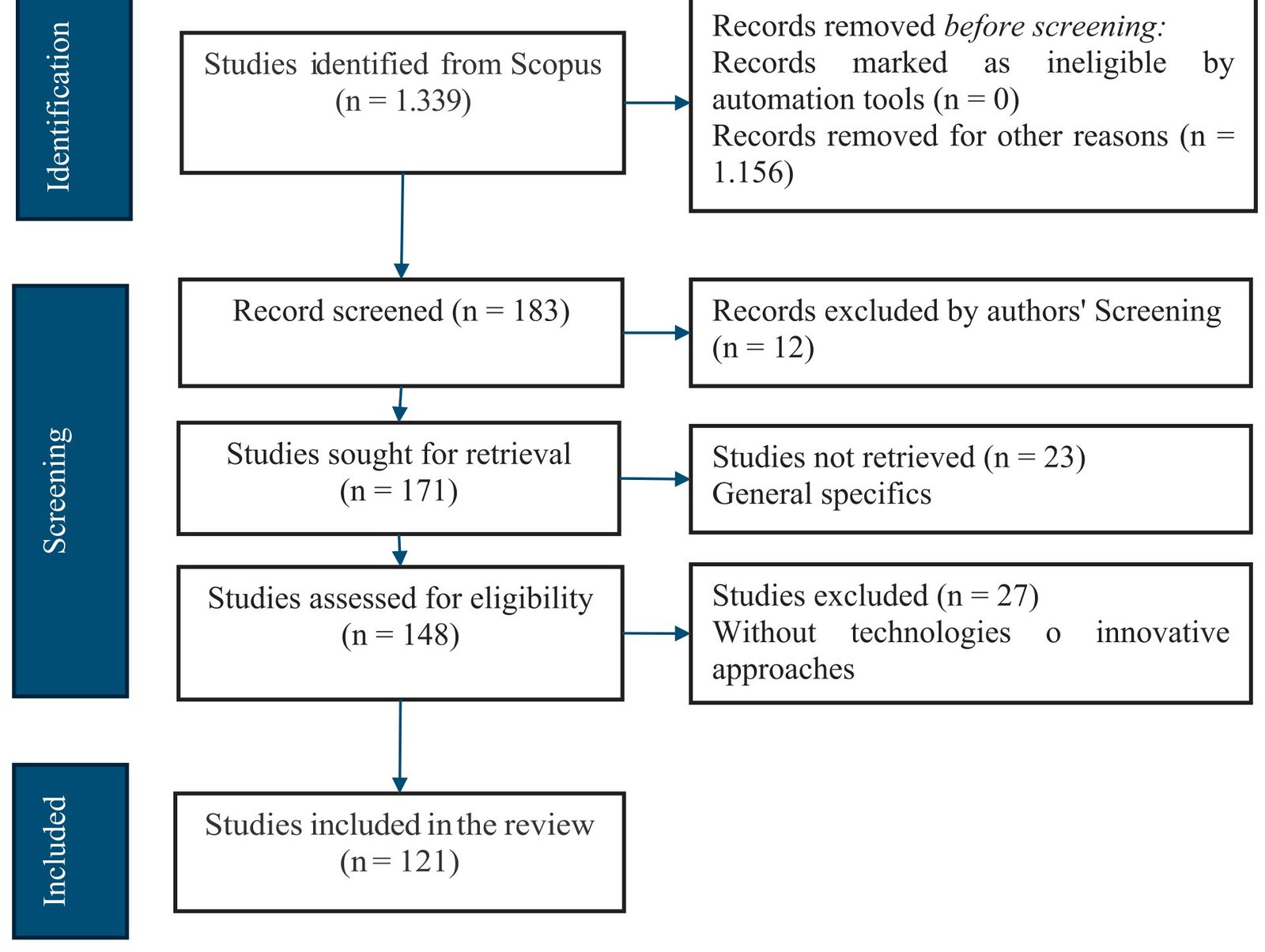
The search yielded 1.339 documents published between 2000 and 2025. The articles were analyzed individually and filtered to select only those relevant to the research (181 articles) (Fig. 1). Among the studies sought for retrieval, the following exclusion criteria were applied: 1) articles that mentioned smart technologies (e.g., sensors) but did not focus on them; and 2) articles that were not conducted at the farm level or lacked detailed information about the smart technology used. After selection, a total of 121 articles were included in the review.
A cluster analysis was conducted to group words with similar meanings, thereby facilitating a multidisciplinary analysis by identifying key connections across different fields. This analysis resulted in the selection of five distinct clusters, designed to sufficiently cover the research scope while avoiding over-classification. Each cluster represents a significant thematic area within the study of automated cattle drinking behavior and water intake monitoring. The identified clusters and their associated keywords are presented in Table 2.
| Cluster | Key Themes | Keywords |
|---|---|---|
| Technology Integration | Focuses on the foundational technologies and methodologies used for data acquisition and processing. | Sensors, Machine Learning, AI, Data Analytics, Biosensors, Automated Systems, Computer Vision, Precision Livestock Farming. |
| Health Monitoring | Addresses the application of monitoring systems to assess and improve animal health and welfare. | Behavior, Welfare, Disease Detection, Heat Stress, Calving, Activity Monitoring, Nutrition Status, Weight Change. |
| Nutrition and Feeding Strategies | Encompasses aspects related to animal diets, nutrient management, and feeding practices. | Diets, Nutrients, Digestibility, Feeding Rates, Protein Content, Fat Content, Water Intake, Supplements. |
| Climate Adaptation | Deals with the environmental factors influencing cattle and strategies for adapting to climate-related challenges. | Heat Stress, Water Efficiency, Greenhouse Gas Emissions, Rainfall Variability, Evaporation, Irrigation Systems, Crop Rotation, Resource Allocation. |
| Farm Management | Covers the practical and economic aspects of integrating these technologies into overall farm operations. | Productivity, Economics, Sustainability, Waste Management, Market Trends, Consumer Preferences, Policy Interventions, Risk Mitigation. |
Automated systems and sensor-based technologies
Sensor-based technologies that monitor water intake and drinking behavior have diverse applications across various cattle production environments, such as intensive feedlots, dairy farms, and extensive grazing systems (Allwardt et al., 2017; Oliveira et al., 2017).
The deployment of sensor-based technologies has yielded significant results in understanding and managing cattle water intake or individual/herd water consumption. The technologies and findings discussed are directly applicable to various types of cattle, including beef cattle (Allwardt et al., 2017; Islam et al., 2023; Palhares et al., 2021; Williams et al., 2018, 2019) and dairy cows/heifers (Cairo et al., 2020; Cantor et al., 2018; Monteiro et al., 2023; Oliveira et al., 2017; Ruuska et al., 2015; Tsai et al., 2020).
Automated systems equipped with water flow meters and RFID readers can precisely measure the volume of water consumed by each animal or group of animals (Williams et al., 2019). This data is crucial for identifying inefficient water use, implementing corrective actions, and monitoring the impact of management strategies (Palhares et al., 2021). For instance, RFID technology can record the movements of individual cattle in and out of watering stations, providing data on visit frequency and duration. This data can then be correlated with climate conditions to understand behavioral adaptations (Williams et al., 2018).
These insights aid in pasture management, help identify animals with atypical drinking patterns, and assist in cattle mustering (Williams et al., 2018).
Electronic drinkers serve as a broader classification for equipment electronically monitoring animal drinking behavior and water intake, whereas electronic water bins denote a more specific design within this category, often featuring a physical bin structure equipped with technologies like transponders to identify individual animals and record their intake and behavior (Chapinal et al., 2007).
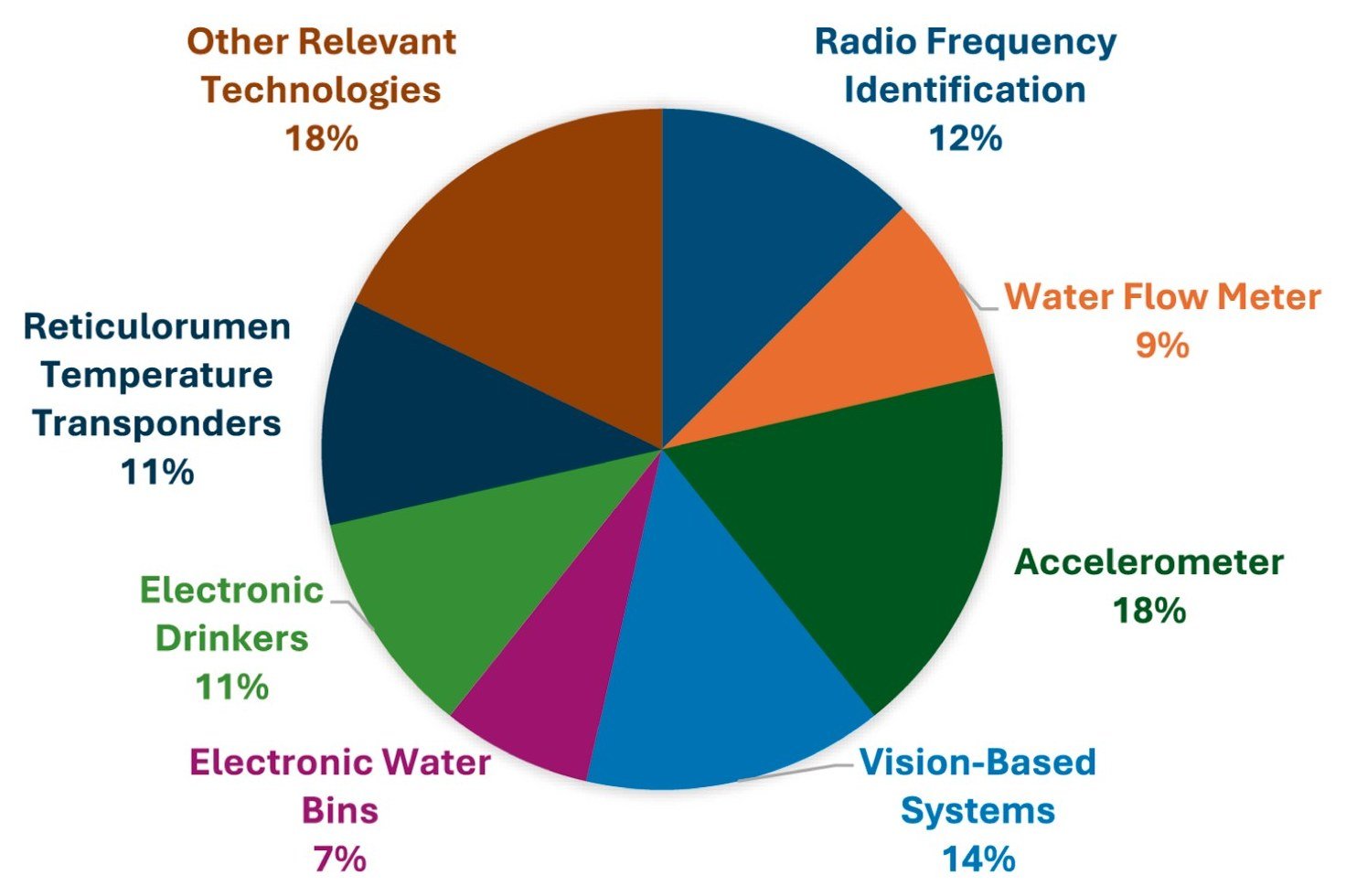
Several technologies have been employed to automatically and non-invasively measure water intake and monitor drinking behaviour in cattle (Fig. 2).
Core sensor technologies
Water Flow Meters measure water consumption at the trough level, which provides accurate volumes of water consumed. These are often combined with RFID to link water consumption to specific animals or groups (Palhares et al., 2021; Williams et al., 2019).
Coupled with water flow meters, Radio Frequency Identification (RFID) readers are installed at water points to identify individual animals and record their visit times, durations, and water intake volumes.
RFID technology has been extensively used to identify individual animals and record their visits to water points. This allows for the calculation of visit frequency, duration, and individual water intake.
RFID systems are effective in both intensive and extensive systems (Monteiro et al., 2023; Williams et al., 2018, 2019).
Systems often integrate RFID panel readers at the entry and exit points of water troughs (Williams et al., 2018, 2019). For instance, Williams et al. (2019) developed and implemented an RFID-based system for accurately recording heifer movements at water points. This system focuses on the foundational data acquisition of entry and exit times, demonstrating the hardware’s capability to capture individual animal presence for water access monitoring. Similarly, Oliveira et al. (2017) validated an electronic system utilizing unique passive transponders in ear tags to monitor individual feeding and drinking behavior and intake in young cattle.
While RFID systems offer a foundational solution for individual animal identification and tracking at water points, achieving high accuracy in recording animal movements (e.g., 95% detection rates) and strong correlations (r = 0.99) with observed times for grazing cattle, their practical deployment faces significant reliability challenges (Williams et al., 2019). Despite these high reported accuracies, limitations in continuous operation, potential equipment failure, lost connections, and power loss can lead to 5–20% of RFID records being lost. This data loss, coupled with variable detection ranges and susceptibility to weather impacts, means that while RFID is effective for measuring visit frequency and duration, its utility for precise, uninterrupted individual water intake monitoring in extensive environments is inherently compromised. The reported ‘not quite reliable’ status in some applications underscores the gap between laboratory performance and real-world robustness, particularly when aiming for highly granular, continuous data capture (Biglari et al., 2022).
Electronic Drinkers offer advanced individual water consumption data and behavioral indicators, though their high acquisition and maintenance costs present a significant challenge for broader adoption.
While these systems provide real-time, precise data, simpler water meter systems may offer comparable overall consumption measurements at a lower cost, making them a more viable option for small and medium-sized farms (Palhares et al., 2021). For example, Allwardt et al. (2017) successfully validated an Insentec automated system for monitoring individual water intake in group-housed beef steers.
Studies using electronic feeding and drinking bins have successfully identified changes in intake and behavior related to estrus, demonstrating the predictive power of such data (Cairo et al., 2020).
Electronic drinkers allow for monitoring individual drinking behavior and social hierarchy within group-housed dairy cows. These systems record visit start time, duration, water intake, and animal ID (Nizzi et al., 2024). These systems are also employed to monitor social competition at water sources (McDonald, 2019). Additionally, they track individual water intake under both ad libitum (free access) and restricted water conditions (Allwardt et al., 2017). Automated water measurement systems, particularly advanced electronic equipment, come with a high cost of acquisition and maintenance (Palhares et al., 2021). Their operation is dependent on continuous energy availability, and there are only a limited number of manufacturers for such technology (Palhares et al., 2021). While generally accurate, these systems can exhibit slightly higher measurement errors during periods of water restriction compared to ad libitum access (Allwardt et al., 2017).
Electronic water bins equipped with load cells are designed to monitor individual water intake and behavior, especially in group-housed young cattle and beef steers. These systems can document visit frequency, duration, and water intakes with high specificity (99.42% for water) and accuracy (r = 0.99 for water intake) (Oliveira et al., 2017).
They offer the significant advantage of individual measurement in group housing and record various behavioral data. While suitable for monitoring individual water intake in group-housed beef steers, errors can be slightly higher during water restriction periods (Allwardt et al., 2017).
One potential limitation is that water bins may refill when the mass falls below a certain threshold, which could affect continuous measurement (Oliveira et al., 2017). The high cost of advanced technology can prevent small and medium-sized farmers from acquiring these systems (Palhares et al., 2021).
Water flow meters are used to measure farm water volume and evaluate water systems, particularly in feedlot and dairy farm settings.
They can accurately measure and calculate water consumption in different partitions of a dairy farm, enabling detailed water budget analysis (VanderZaag et al., 2018). In feedlot beef cattle, water meters provide average daily consumption and can perform comparably to high-technology systems (Palhares et al., 2021). Their main advantage is their low cost of acquisition, installation, and maintenance. However, they typically only provide average daily consumption and require labor
for monitoring, and for detailed analysis, multiple flow meters might be necessary (Palhares et al., 2021; VanderZaag et al., 2018). Water measurement systems often have certain characteristics and limitations.
They usually provide average daily water consumption data for the entire herd rather than individual animals, unless they are integrated with specific identification technology (Palhares et al., 2021). Furthermore, some float valve-based systems may only activate and begin recording water flow once a certain volume, for instance, approximately 10 L, has been removed (Williams et al., 2019). In their basic configurations, these systems typically require manual labor for monitoring (Palhares et al., 2021).
Animal-attached sensor devices are fixed to animals to continuously monitor their behaviour and physiological parameters. Often integrated into neck collars or ear tags, accelerometers detect specific head and neck movements and positions associated with drinking. Algorithms have been developed to accurately classify drinking events, distinguishing them from other activities such as grazing or rumination (Chapa et al., 2020; Williams et al., 2019). Accelerometer-based algorithms have been validated to detect drinking events with high precision (e.g., 94% detection of events longer than 10 s) (Williams et al., 2019).
Accelerometers are primarily used to validate behavior systems and assess animal health and welfare. While they generally produce good results for rumination detection (r > 0.99), detecting drinking time can be challenging, with one study showing a weak correlation (r = 0.17) (Chapa et al., 2020). Efforts to improve cattle behavior monitoring, particularly in dairy cattle, have shown that while drinking remains challenging with accelerometers alone, combining them with Ultra-Wideband (UWB) indoor location and accelerometer data improves classification accuracy (R2 = 0.90) (Benaissa et al., 2023). Some water monitoring systems have difficulty accurately capturing drinking events. Specifically, they may not be accurate for short drinking events lasting 10 s or less (Williams et al., 2019). Interference from the water trough itself can also lead to missed drinking events (Williams et al., 2019). Furthermore, the performance of these systems can be significantly affected by the height of the trough and the placement of accelerometers (Williams et al., 2019). Due to the brief nature of drinking behavior, its precise classification can be challenging (Benaissa et al., 2023; Ruuska et al., 2015).
Systems based on pressure sensors, such as those integrated into halters, can measure eating, rumination, and drinking behaviors by detecting pressure changes due to jaw movements or head positions (Ruuska et al., 2015). Although these systems are primarily used for core body temperature monitoring, changes in reticulorumen temperature can indicate water intake events. Research suggests that algorithms can be developed to predict drinking occurrences based on these temperature fluctuations (Cantor et al., 2018).
Reticulorumen temperature (RT) transponders are used to monitor the core body temperature of lactating dairy cattle and understand the physiological responses to water intake. Studies show that water intake significantly affects RT, with greater quantities leading to greater RT drops (average decline: 2.29 ± 1.82 ◦C) (Cantor et al., 2018).
Water consumption can cause a temporary but dramatic decrease in RT (Bewley et al., 2008). These transponders offer continuous core body temperature monitoring and can detect fever. However, the temporary dramatic decrease in RT caused by water intake limits the use of RT as a general temperature monitor, as RT is also influenced by dry matter intake (Bewley et al., 2008; Cantor et al., 2018). This physiological response can also interfere with the primary use of internal transponders for fever detection (Bewley et al., 2008; Cantor et al., 2018).
Vision-based systems and machine learning
These systems leverage advancements in computer vision and artificial intelligence and analyze video footage to identify and quantify drinking behaviour. Vision-based models have also achieved high recognition accuracy rates of over 98% for drinking behavior (Islam et al., 2023; Tsai et al., 2020).
CNN-based Recognition: Smart water intake monitoring systems can use motion sensors and cameras, combined with CNN-based recognition, to confirm drinking events in grazing areas, linking drinking patterns to growth and health (Biglari et al., 2022).
Deep Learning and Image Processing: Deep learning convolutional neural networks are employed to detect cattle heads over drinking troughs from video streams, allowing for the estimation of drinking bout length and frequency. This technology can be particularly useful in assessing heat stress impacts on dairy cows’ drinking behavior (Tsai et al., 2020).
Pose Estimation Models: Advanced computer vision techniques, such as DeepLabCut pose-estimation-based models, can accurately categorize drinking behavior and analyze drinking time from videos without invasive procedures (Islam et al., 2023).
Multi-camera and 3D Imaging Systems provide top-down views for detecting animal presence in feeding/drinking areas and monitoring changes in feed or water volumes (Chen et al., 2021; Nasirahmadi et al., 2017). The data collected by these systems typically includes individual animal identification, visit frequency and duration at water points, water consumption volumes and rates, behavioural activity patterns (e. g., drinking, eating, rumination), and environmental context (e.g., temperature) (Oliveira et al., 2017; Palhares et al., 2021; Tsai et al., 2020; Williams et al., 2019). This comprehensive data collection also serves as the foundation for advanced applications such as ‘digital twins’. GenAI models can utilize this historical data to create virtual replicas of animals, allowing for the simulation of water intake scenarios and the virtual testing of management interventions.
While modern systems incorporate AI, earlier approaches relied on manual or semi-automated analysis through software like The Observer and ELAN to code behaviours from video footage (Benaissa et al., 2023; Meunier et al., 2017; Pereira, 2021).
Vision-based systems, often utilizing cameras, are applied to detect feeding and drinking behavior, monitor production and welfare, and assess conditions like heat stress (Porto et al., 2023). These systems can achieve high accuracy in classifying drinking behavior, with one embedded imaging system for dairy cows reporting 93% accuracy (Tsai et al., 2020), and an algorithm for beef cattle showing 97.35% accuracy (Islam et al., 2023). Furthermore, GenAI offers a pathway to further improve the classification of rare or short-duration drinking events by generating synthetic data that fills gaps in real-world observations.
These systems offer several advantages, including serving an alternative to expensive traditional equipment, offering continuous monitoring (Nasirahmadi et al., 2017), and enabling long-term observations with easy installation (Tsai et al., 2020). They also provide a low-cost camera system that reduces labor demands (Islam et al., 2023). These systems have been applied to cattle, pigs, and dairy cows (Islam et al., 2023; Nasirahmadi et al., 2017; Tsai et al., 2020). Developing and training deep learning models, particularly for tasks like analyzing cattle drinking behavior, is a complex and resource-intensive undertaking. It demands substantial computational power and significant time (Islam et al., 2023). However, to address the challenge of data scarcity often associated with these resource-intensive tasks, GenAI techniques such as Generative Adversarial Networks are increasingly being explored to synthesise diverse and realistic images of drinking behaviours, thereby augmenting existing datasets and enhancing model robustness. A key challenge lies in continuously tracking specific points on moving cattle without the need for expert pre-marking (Islam et al., 2023). Furthermore, image processing is essential for accurate animal identification within these systems (Biglari et al., 2022). Additionally, alongside traditional computer vision techniques, GenAI is emerging as a complementary tool for generating cost-effective training data for these ‘smart sensing systems’, which is crucial for validating algorithms used in complex livestock environments.
Beyond the specific categories, other technologies contribute to monitoring water intake and drinking behavior. These include smart sensing systems for livestock (Tang et al., 2021) and validated automated systems for monitoring individual intake in group-housed cattle (Chapinal et al., 2007). The smart sensing systems aim for real-time data and remote monitoring potential (Tang et al., 2021). Automated individual monitoring systems in group settings show high accuracy and precision, including drinking behavior (Chapinal et al., 2007). These diverse technological approaches highlight ongoing efforts to enhance the monitoring and understanding of water consumption and drinking habits in various livestock, offering valuable insights for health, welfare, and production management. Moreover, the integration of GenAI with these vision-based technologies contributes to ethical research by enabling advanced simulations and synthetic data generation, thereby reducing the need for extensive live-animal experimentation.
The extensive array of technological solutions now available for automatically and sensor-based measuring water intake and monitoring drinking behavior in cattle provides considerable flexibility in achieving production goals. From RFID systems, water flow meters, and accelerometers to advanced vision-based tools and electronic drinkers, these innovations offer detailed insights into individual and herd-level drinking patterns. Consequently, the selection of an appropriate technology or process extends beyond mere scientific experimentation and technical–economic characterization (Table 3).
| Category | Scope | Application | Application Level | Livestock Use | References |
|---|---|---|---|---|---|
| RFID | Individual consumption, efficiency, behaviour | Improve practices, production, | Research/Lab | Dairy cattle | (Monteiro et al., 2023) |
| RFID | Cattle movement, drinking behavior | Monitor grazing cattle drinking | Research/Lab | Cattle/heifers | (Williams et al., 2019) |
| RFID | Cattle water source utilization | Animal watering | Research/Lab | Cattle/beef | (Kumawat, 2022) |
| RFID | Identify cattle, track consumption | Monitor intake, management | Research/Lab | Cattle | (Biglari et al., 2022) |
| Water Flow Meter | Farm water volume | Assess dairy livestock budget | Full Scale | Dairy farm | (VanderZaag et al., 2018) |
| Water Flow Meter | water measurement systems | Evaluate feedlot water systems | Research/Lab | Beef cattle | (Palhares et al., 2021) |
| Accelerometer | Validate accelerometer behaviors systems | Assess health and welfare | Research/Lab | Cattle, pigs | (Chapa et al., 2020) |
| Accelerometer | Improve cattle behavior monitoring | Dairy cattle monitoring | Research/Lab | Dairy | (Benaissa et al., 2023) |
| Vision-Based Systems | Detect feeding, drinking behavior | Welfare | Research/Lab | Cattle and dairy cows | (Nasirahmadi et al., 2017) |
| Vision-Based Systems | Monitor drinking, heat stress | Assess dairy cow heat stress | Research/Lab | Dairy cows | (Tsai et al., 2020) |
| Vision-Based Systems | Cattle drinking system | Monitor animal health, wellbeing | Research/Lab | Beef cattle | (Islam et al., 2023) |
| Electronic Water Bins | Monitor individual intake behaviour | Young cattle group housing | Research/Lab | Young cattle (heifers) | (Oliveira et al., 2017) |
| Electronic Water Bins | Monitor individual water intake | Group-housed beef steers | Research/Lab | Group-housed beef steers | (Allwardt et al., 2017) |
| Electronic Drinkers | Monitor individual drinking, hierarchy | Dairy cow group housing | Research/Lab | Dairy cows | (Nizzi et al., 2024) |
| Reticulorumen Temperature Transponders | Water intake, reticulorumen temperature | Monitor core body temperature | Research/Lab | Dairy cows | (Cantor et al., 2018) |
| Reticulorumen Temperature Transponders | Water temperature, reticular temperature | Physiological water responses | Research/Lab | Dairy cows | (Bewley et al., 2008) |
| Other Relevant Technologies | Monitor water quality, intake | Livestock, wild animals | Research/Lab | Livestock, wild animals | (Tang et al., 2021) |
| Other Relevant Technologies | Monitor individual intake | Group-housed cattle | Research/Lab | Group-housed cattle | (Chapinal et al., 2007) |
Data modelling and analysis
Several approaches and non-AI models have significantly advanced the understanding and monitoring of water intake and drinking behaviour in cattle (Fig. 3). Today, these approaches continue to offer valuable insights for enhancing animal management and resource efficiency.

Raw data from various sensor technologies (e.g., RFID, accelerometers, water meters) are often acquired as text files and processed using scripting languages or statistical software (Williams et al., 2018). For instance, Williams processed RFID reader data using R to cleanse and prepare it for analysis, calculating time intervals between cattle visits to water points (Williams et al., 2018). Furthermore, specialized software like Noldus Observer XT (Pereira, 2021) and ELAN (Benaissa et al., 2023) are used for annotating and analyzing behavioral data from video recordings, allowing researchers to log the start, end, and duration of specific behaviors like drinking. ImageJ has also been used for image processing in studies focusing on animal behavior (Meunier et al., 2017).
Data modeling and analysis without AI for water intake and drinking behavior primarily involve statistical methods and empirical model development (Melín et al., 2005; Nizzi et al., 2024; Palhares et al., 2021). Statistical measures, such as Spearman rank correlation and Pearson correlation, are applied to investigate relationships between different behavioural parameters, water intake, and other factors (e.g., social hierarchy, environmental conditions) (Nizzi et al., 2024; Williams et al., 2019).
Multiple linear regression and other linear models are commonly used to predict water consumption based on various factors such as milk yield, dry matter intake, body weight, and environmental variables (Khelil-Arfa et al., 2012; Shine et al., 2018, 2020). Khelil-Arfa et al. developed predictive equations for water intake and excretion flows in Holstein dairy cows using multiple regression with stepwise selection of regressors (Khelil-Arfa et al., 2012). Shine et al. also used linear regression functions for predicting daily cow drinking water requirements (Shine et al., 2018). Partial least squares regression has also been applied to model water use on dairy farms (Higham, 2017).
Researchers have developed empirical equations and models to estimate water requirements based on observed physiological and environmental parameters, often derived from meta-analysis (Higham, 2017; Sharma et al., 2016). These models aim to predict water intake under various conditions without relying on complex learning algorithms.
However, a critical aspect of non-AI approaches involves validating the accuracy and precision of automated systems against direct human
observation or established measurement methods (Allwardt et al., 2017; Chapinal et al., 2007; Oliveira et al., 2017; Palhares et al., 2021). This ensures the reliability of the data collected and the systems themselves.
Non-AI approaches
Nevertheless, these non-AI approaches have facilitated numerous insights into cattle water intake and drinking behaviour:
Individual and Group Monitoring: Systems allow for both individual and group-level monitoring of water consumption, providing critical data for precision livestock farming (Allwardt et al., 2017; Nizzi et al., 2024). Allwardt et al. validated the Insentec system for monitoring individual water intake in group-housed beef steers, demonstrating its effectiveness under both ad libitum and restricted water conditions (Allwardt et al., 2017). The system showed high levels of sensitivity and very strong correlations (R2 ≥0.99) between automated data and direct observations for individual intakes in group-housed cattle (Allwardt et al., 2017). While daily inaccuracies might occur, especially during water restriction, these errors are considered negligible when averaged over longer periods, as correlations increased when daily intakes were averaged over a 3-day collection period (Allwardt et al., 2017). The system was found to be a suitable resource for monitoring the individual water intake of growing, group-housed steers (Allwardt et al., 2017).
Behavioral Pattern Analysis: Understanding the frequency, duration, and timing of drinking events can help identify normal versus abnormal patterns that may indicate health issues or stress (Melín et al., 2005). For instance, Melín et al. analyzed feeding and drinking patterns in dairy cows in automatic milking systems (Melín et al., 2005). Nizzi et al. found that subordinate cows tended to have lower water and dry matter intake, and milk yield compared to dominant cows. They also explored using electronic drinkers to characterize social hierarchy and individual drinking behavior (Nizzi et al., 2024).
Relationship to Productivity and Health: several studies have linked water intake and drinking behavior to milk production, dry matter intake, and overall animal health (Khelil-Arfa et al., 2012; Mardhati, 2021; Sharma et al., 2016). Khelil-Arfa et al. developed equations to predict water intake, and excretion flows in dairy cows under thermoneutral conditions. They identified dry matter intake as the primary predictor of total water intake and diet dry matter content as the primary predictor of free water intake, which suggested compensation between water sources (Khelil-Arfa et al., 2012).
Water Management Strategies: The collected data and derived models contribute to the development of more efficient water management strategies on dairy and beef farms by providing a better understanding of water demand and usage patterns (Monteiro et al., 2023; Shine et al., 2018, 2020). Monteiro et al. reviewed efficient water use in dairy cattle production. They found that protein content increases water consumption, and that small-scale farms with low yields consume more water per kg of energy-corrected milk. They also found that farm management plays a more significant role than the system type itself in water efficiency (Monteiro et al., 2023). Shine et al. performed multiple linear regression modeling of direct on-farm water and electricity consumption. They found that the relationship between water consumption and lactating cow numbers and milk production decreased in strength. This suggests a greater influence from managerial processes, environmental conditions, and farm infrastructure (Osaki et al., 2024; Shine et al., 2018). Shine et al. (2018) evaluated machine-learning algorithms for predicting dairy-farm water consumption.
The application of AI and computational tools in this domain primarily focuses on automating the tracking and analysis of water consumption, thereby moving beyond traditional, labor-intensive observation methods (Islam et al., 2023). These systems aim to provide precise individual animal data on water intake, drinking rates, visit times, and bout durations (Williams et al., 2019). Beyond measurement, models are developed to predict water consumption (Osaki et al., 2024), understand drinking patterns linked to growth and health (Biglari et al., 2022), and even assess physiological states like heat stress in dairy cows by monitoring changes in their drinking habits (Tsai et al., 2020).
Various computational approaches have been employed. Artificial neural networks are used for predicting water consumption based on simple variables like the number of lactating cows and milk productivity (Osaki et al., 2024). Multiple linear regression models forecast daily or monthly water requirements using diverse farm-level data (Shine et al., 2018, 2020). Machine learning algorithms, including Random Forests, Support Vector Machines, and Extremely Randomised Trees, are utilized to handle non-linear relationships in data for improved prediction accuracy (Shine et al., 2018).
Computer vision and deep learning models, such as Convolutional Neural Networks and Long Short-Term Memory networks, are increasingly prevalent for recognizing and classifying drinking behavior from video footage (Islam et al., 2023). For instance, DeepLabCut, a CNN-based pose estimation model, combined with LSTM, has been used to
accurately categorize drinking and non-drinking periods in beef cattle (Islam et al., 2023). Other vision-based systems track head movements over drinking troughs to determine drinking status and duration (Tsai et al., 2020).
AI models are extensively employed to predict water consumption, with ANN demonstrating a capacity for satisfactory data prediction (accuracy 94.3%) (Osaki et al., 2024). Similarly, computer vision systems leverage sophisticated deep learning models, such as DeepLabCut and LSTM, to accurately classify drinking behaviour, showcasing their strong analytical power (accuracy 97.35%) (Islam et al., 2023).
While some MLR models for water prediction exhibit varying accuracies (e.g., a 49% relative prediction error for water consumption compared to 26% for electricity) (Shine et al., 2018), the continuous development of more sophisticated AI techniques aims to improve these figures by better handling nonlinear data relationships. Challenges remain, such as the precision required for classifying short drinking events due to their brief duration (Ruuska et al., 2015; Williams et al., 2019). However, the overall trend indicates significant progress in automating and accurately quantifying water intake and drinking behaviour (Table 5).
| Category | Scope | Livestock Application | Application Level | References |
|---|---|---|---|---|
| data-driven | Water consumption prediction | Dairy farm | Full Scale | (Osaki et al., 2024) |
| data-driven | Drinking behavior monitoring | Grazing (cattle) | Pilot Scale | (Williams et al., 2019) |
| image-driven | Monitoring water intake | Cattle | Full Scale | (Biglari et al., 2022) |
| data-driven | Water/electricity consumption | Farm consumption forecasting | Full Scale | (Shine et al., 2018) |
| data-driven | Drinking behavior features, Calving prediction | Dairy cows | Research/Lab | (Vázquez-Diosdado et al., 2023) |
| image-driven | Drinking behavior monitoring | Dairy cow | Research/Lab | (Tsai et al., 2020) |
| data-driven | Water demand modeling | Dairy farm | Full Scale | (Shine et al., 2020) |
| image-driven | Drinking behavior analysis | Beef cattle | Research/Lab | (Islam et al., 2023) |
| image-driven | Behavior recognition | Group-ranched cattle | Research/Lab | (Bello et al., 2022) |
| image-driven | Behavioral phenotype, thermotolerance | Dairy cows | Research/Lab | (Inadagbo et al., 2024) |
| image-driven | Behavior detection | Cattle | Research/Lab | (Nasirahmadi et al., 2017) |
| image-driven | Basic behavior detection | Dairy cows | Research/Lab | (Wu et al., 2021) |
| data-driven | Water prediction | Farm consumption prediction | Full Scale | (Shine et al., 2018) |
| data-driven | Daily behavior recognition | Dairy cows | Research/Lab | (Liang et al., 2024) |
AI approaches
Machine Learning (ML) algorithms have a wide range of applications for predicting water consumption and monitoring behavior. These algorithms have been used to predict on-farm direct water and electricity consumption on pasture-based dairy farms (Shine et al., 2018).
While multiple linear regression models predicted water consumption to within 49% relative prediction error, machine learning algorithms, particularly Random Forest, were found to maximize prediction accuracy, reducing the RPE for dairy-farm water consumption to 38% (Shine et al., 2018; Shine et al., 2020). These ML algorithms can handle non-linear relationships and interactions between input variables, which is an advantage over traditional multiple linear regression models (Shine et al., 2018). However, machine-learning algorithms in this context “failed to reduce the prediction error to a usable level (less than 20%)” (Shine et al., 2020).
ML is also used to automatically characterize behavioral phenotypes, including drinking behaviour, in dairy cows for thermotolerance studies (Inadagbo et al., 2024). ML models can predict disease in preweaning dairy calves using automated milk feeder data (Perttu, 2019) and detect behavioral anomalies in dairy cows (Wagner et al., 2020). ML techniques, including ANNs and Random Forest, have been applied to feeding and drinking behavior data to detect early estrus in dairy heifers.
One study developed an ANN model with the aim of predicting water consumption using simple variables like the number of lactating cows, milk productivity, and management type (Osaki et al., 2024). The model demonstrated satisfactory data prediction, achieving an average absolute error of 28.4% in training and 48% in validation (Osaki et al., 2024).
A notable advantage of this ANN model is its low computational cost and ability to provide satisfactory data prediction, contributing to decision support and benchmarking water efficiency (Osaki et al., 2024). The study did not explicitly detail specific disadvantages of the ANN model beyond general comparisons to other models regarding performance and speed (Osaki et al., 2024).
Deep Learning and Computer Vision techniques are essential for analyzing complex drinking behaviors and other cattle activities from visual data.
Image/Video -Based DL for Drinking Behavior: Deep learning models have been developed to monitor beef cattle water drinking behavior and classify drinking and non-drinking periods. Advanced computer vision models, such as the integrated DeepLabCut and LSTM demonstrated by Islam et al (2023). (Bai et al., 2023) have achieved high recognition accuracies of up to 98.25% in classifying beef cattle drinking behavior.
This model provides a rapid and non-invasive analytical framework for precise categorization and duration analysis of drinking events, highlighting the computational power in distinguishing complex behaviors.
For dairy cows, deep learning CNN models are used in embedded imaging systems to monitor drinking behavior and assess heat stress. These systems detect cows’ heads over drinking troughs, achieving high F1 scores (0.987) for head detection and a true positive rate of 0.983 (Tsai et al., 2020). The system offers a novel approach for automatic and quantitative assessment (Tsai et al., 2020). Deep learning models like YOLOv8n_BiF_DSC enhance the recognition of nine behaviors in beef cattle, including drinking, across complex scenarios, with advantages in fast recognition efficiency and high accuracy, showing a 3.1% enhancement compared to a base model (Li et al., 2024).
DL for Identification and Tracking: Deep learning is used to recognize behaviors in group-ranched cattle from video sequences. It can accurately identify eating, drinking, active, and inactive behaviors. Mask RCNN achieved an average recognition accuracy of 88.03% for drinking behavior, demonstrating high detection accuracy and speed suitable for real-time applications (Bello et al., 2022). A vision-based cattle recognition system monitors livestock water intake by processing images of RFID ear tags to identify individual cattle, helping to track water consumption patterns (Biglari et al., 2022). Deep learning also facilitates non-destructive identification and tracking of multi-object behaviors in beef cattle (Li et al., 2024). For basic behavior detection in a single dairy cow within a complex environment, CNN-LSTM models show accurate recognition of behaviors like drinking, ruminating, walking, standing, and lying, providing data for health assessment (Wu et al., 2021).
Multimodal DL Approaches: New methods for modeling digital twin behavior perception in cows use multimodal data for daily behavior recognition, including drinking (Zhang et al., 2024). This approach combines video and sensor data, and vision-based recognition can achieve high accuracy (e.g., 94.93%). However, recognition performance for walking and standing is relatively poor due to similar postures, and drinking behavior can be misclassified as lying or walking if
cows lift heads to rest (Zhang et al., 2024). Identifying cow behaviour solely through video data can also be difficult for certain behaviours (Zhang et al., 2024).
Computational Tools and Integrated Systems: Beyond explicit AI models, general computational tools and machine vision are essential for monitoring. Machine vision has been used to detect behaviors of cattle and pigs, including feeding and drinking (Nasirahmadi et al., 2017).
While these systems contribute to better animal management, further development of different feature detection algorithms is needed to overcome challenges like variations in appearance within groups of animals (Nasirahmadi et al., 2017).
For dairy calves, a machine vision-based method monitors scene-interactive behaviours, such as feeding and drinking, by identifying their location and drinking actions (Guo et al., 2020). However, static behaviour is occasionally misjudged, and head swinging leads to misjudgment (Guo et al., 2020). The review of behavior recognition in pigs and cattle outlines the journey from traditional computer vision to deep learning, highlighting its objective, non-invasive, and continuous nature in monitoring behaviors like drinking (Chen et al., 2021).
Sensor-based solutions integrated with computational tools play a vital role. For example, the system described by Williams et al. (2019), which combines RFID panel readers, accelerometers, and water flow meters, offers a robust framework for the initial collection of raw data on individual grazing cattle’s drinking behavior and water intake in extensive systems.
In summary, AI-driven models and computational tools are transforming the monitoring of water intake and drinking behavior in cattle (Table 6). These technologies range from sophisticated deep learning for visual analysis to integrated sensor systems and broader machine learning applications. They provide increasingly precise and non-invasive methods. While these technologies offer significant advantages in enhancing farm management, facilitating early disease detection, and optimizing resource utilization, limitations related to data variability, specific accuracy thresholds, and technology-specific challenges require ongoing research and development.
| Category | Scope | Application | Application Level | References |
|---|---|---|---|---|
| Artificial Neural Network | Water consumption prediction | Dairy farm | Full Scale | (Osaki et al., 2024) |
| Artificial Neural Network | Estrus detection | Dairy cows | Research/Lab | (Cairo et al., 2020) |
| Linear Regression Models | Water prediction | Farm consumption forecasting | Full Scale | (Shine et al., 2018) |
| Linear Regression Models | Water prediction | Farm consumption forecasting | Full Scale | (Shine et al., 2018) |
| Linear Regression Models | Water demand modelling | Dairy farm | Full Scale | (Shine et al., 2020) |
| Linear Regression Models | Water use prediction | Pasture-based dairy farm | Research/Lab | (Higham, 2017) |
| Machine Learning | Water prediction | Farm consumption forecasting | Full Scale | (Shine et al., 2018) |
| Machine Learning | Water demand modeling | Dairy farm | Full Scale | (Shine et al., 2020) |
| Machine Learning | Disease risk prediction | Calf | Research/Lab | (Perttu, 2019) |
| Machine Learning | Behavioral phenotype characterization, thermotolerance | Dairy cows | Research/Lab | (Inadagbo et al., 2024) |
| Machine Learning | Behavioural anomaly detection | Dairy cows | Research/Lab | (Wagner et al., 2020) |
| Machine Learning | Estrus detection | Dairy cows | Research/Lab | (Cairo et al., 2020) |
| Machine Learning | Behaviour detection, movement analysis | Cattle | Research/Lab | (Biszkup et al., 2024) |
| Machine Learning | Behavior detection | Cattle | Research/Lab | (Nasirahmadi et al., 2017) |
| Machine Learning | Behavior-disease associations | Dairy cattle health | Research/Lab | (King and DeVries, 2024) |
| Deep Learning | Drinking behavior recognition | Cattle | Research/Lab | (Islam et al., 2023) |
| Deep Learning | Behavior recognition | Group-ranched cattle | Research/Lab | (Bello et al., 2022) |
| Deep Learning | Livestock water intake | Cattle | Full Scale | (Biglari et al., 2022) |
| Deep Learning | Drinking behavior monitoring | Dairy cows | Research/Lab | (Tsai et al., 2020) |
| Deep Learning | Daily behavior recognition | Dairy Cows | Research/Lab | (Yu et al., 2024) |
| Deep Learning | Behavior recognition | Beef cattle | Research/Lab | (Li et al., 2024) |
| Deep Learning | Behavior identification/tracking | Beef cattle | Research/Lab | (Li et al., 2024) |
| Deep Learning | Basic behavior detection | Dairy cows | Research/Lab | (Wu et al., 2021) |
| Deep Learning | Behavior-disease associations | Dairy cows | Research/Lab | (King and DeVries, 2024) |
Generative AI (GenAI), characterized by its ability to create new, realistic data, offers a powerful avenue to address many existing limitations, particularly the challenge of data scarcity which often hinders the training of robust AI models (Li et al., 2024b; Pallottino et al., 2025).
GenAI models, such as Generative Adversarial Networks, can synthesize diverse, realistic data – including varied images of cows drinking under different conditions or simulated sensor data patterns – to augment existing datasets (Neethirajan, 2021; Peden et al., 2019; Lu et al., 2022a, 2022b). This capability is crucial for improving the accuracy and robustness of deep learning models, especially for rare or difficult-to-capture behavioral events (Peden et al., 2019). Furthermore, GenAI enhances the development of “digital twins” of individual animals, which are virtual replicas mirroring their behavior and physiological state (Zhang et al., 2024, 2025). These digital twins, powered by GenAI, facilitate simulations of water intake scenarios, prediction of responses to environmental stressors, and virtual testing of management interventions (Neethirajan, 2021). Advantages of GenAI integration include overcoming data scarcity, providing cost-effective training data, and contributing to ethical considerations by potentially reducing the need for live animal experimentation for certain research questions.
Despite its immense promise, GenAI’s direct application in generating complex cattle drinking behaviors is still emerging, and several critical limitations and challenges must be addressed. A primary concern is the fidelity of synthetically generated data; if it deviates significantly from real-world distributions, it can lead to biased or ineffective models (Benaissa et al., 2023). To prevent misclassification, model learning must be well-supervised and thoroughly validated (Neethirajan, 2021).
Another significant challenge lies in the interpretability of complex GenAI models. In PLF, “black box” models are often not well-accepted due to their lack of explainability, which is vital for building trust and enabling human validation of analytical insights, predictions, and recommendations (Niloofar et al., 2021; Schoenke et al., 2021). The emergence of Explainable AI aims to provide transparent validation of these models, especially given that algorithmic methods can learn “bad habits” from improper data (Bulusu et al., 2025; Neethirajan, 2023).
Economically, a significant knowledge gap exists regarding the costs, benefits, and optimal implementation strategies for these emergent AI systems, which needs to be clarified to assess their long-term viability (Abbona et al., 2020; Aquilani et al., 2021). Key research trends include multimodal data fusion (Zhang et al., 2024), advanced digital twin construction (Zhang et al., 2025), edge computing (Zhang and Kanjo, 2025), and Explainable AI (Bulusu et al., 2025; Neethirajan, 2023).
Future challenges encompass ensuring data privacy and security (Neethirajan, 2023; Parivendan et al., 2025), achieving scalability for diverse farm conditions, bridging research innovations to practical
applications (Kaur et al., 2023), and developing ethical AI frameworks for livestock, including the responsible integration of Large Language Models (Coghlan and Parker, 2023; Menezes et al., 2024; Prestegaard-Wilson and Vitale, 2024).
Analysis of current applications and case studies
Fig. 4 presents the distribution of articles focusing on image-driven and data-driven approaches across different research and application scales: Full Scale, Pilot Scale, and Research/Lab.
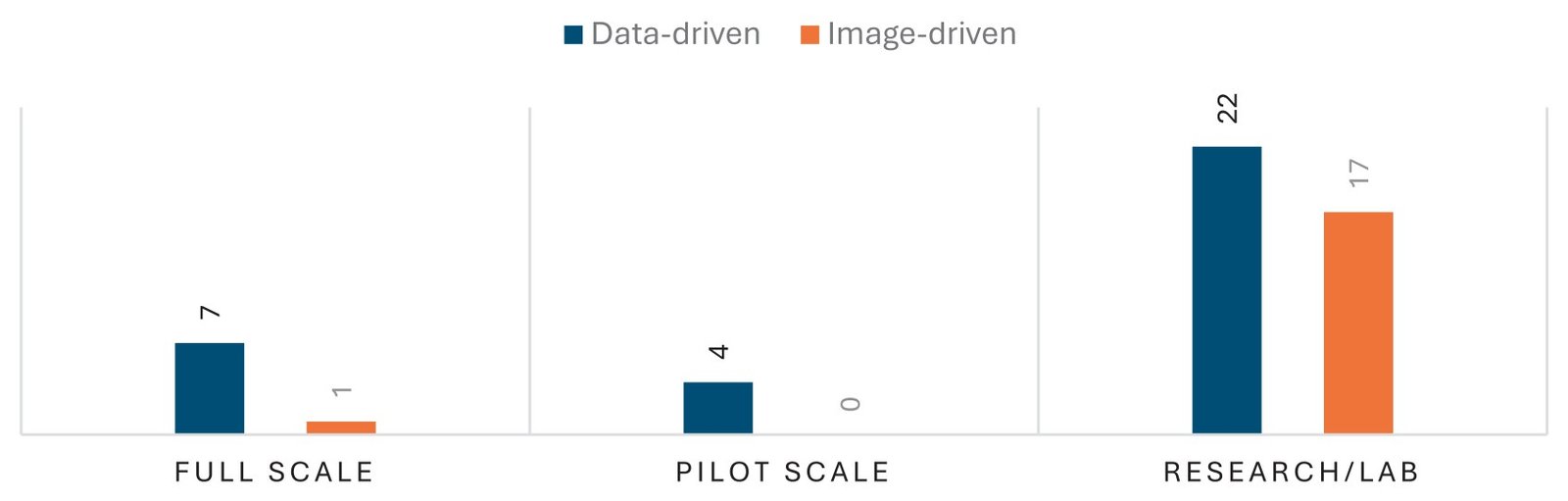
The figure highlights that data-driven approaches have been used across all scales, with a significant number of articles in the Research/ Lab category, followed by 7 in Full Scale, and 4 in Pilot Scale. Image-driven approaches are primarily concentrated in Research/Lab settings, with 17 articles, and a smaller presence (1 article) in Full Scale, showing no articles at the Pilot Scale based on the provided data. This suggests a stronger emphasis on image-driven technologies in foundational research compared to their current application in more scaled environments, while data-driven methods see broader adoption across various stages.
These technologies and their applications differ significantly depending on their focus: a large-scale commercial setting, a controlled pilot study, or a detailed research laboratory. To better understand how water intake is measured and drinking behavior is monitored in cattle, it is possible to cross-reference the data on the type of process used with the scale of application of the study. Fig. 5 comprehensively outlines the distribution of articles on various technologies and sensor-based approaches for monitoring water intake and drinking behaviour in cattle.

The articles are categorized by their application scale: Full Scale, Pilot Scale, and Research/Lab. The figure offers a clear snapshot of where different innovations are primarily being explored and implemented.
A striking observation is the significant concentration of research within the Research/Lab scale, which underscores a strong global focus on foundational development and validation for most technologies.
For instance, Accelerometers (9 articles), Vision-Based Systems (7 articles), Electronic Drinkers (5 articles), and Radio Frequency Identification (5 articles) all show their highest representation in controlled research environments. This trend highlights ongoing efforts to refine sensor capabilities and analytical methodologies before broader deployment. While the Research/Lab dominates, some technologies demonstrate a noteworthy presence in more applied settings.
The category of Other Relevant Technologies stands out with 4 articles in Full Scale, suggesting a diverse group of more mature or readily adaptable solutions. Both Radio Frequency Identification and Water Flow Meters show a consistent, albeit smaller, presence across all three scales (1 article each in Full and Pilot, then 5 and 3 respectively in Research/Lab), indicating their established utility and continued refinement from initial studies to practical farm applications.
Technologies like Electronic Water Bins and Electronic Drinkers primarily see development in Research/Lab settings, with some pilot-scale testing, signaling their progression towards practical integration.
Conversely, Reticulorumen Temperature Transponders appear exclusively in Research/Lab articles (6 articles), indicating that they are still largely in the exploratory phase regarding water intake monitoring. In essence, the data reveals a vibrant landscape of innovation, with the majority of technological advancements for cattle water intake and drinking behavior currently rooted in research and laboratory settings, gradually progressing towards pilot and full-scale implementation for specific, more established solutions.
In the demanding environment of full-scale applications – such as sprawling commercial farms and intensive production systems – the primary goal is to monitor water consumption in a practical and cost-effective manner for herd management and resource optimization.
Although monitoring each individual is desirable, the large number of animals often requires broader, more manageable solutions.
Water meters, whether mechanical or electromagnetic, are straightforward yet highly effective tools for overseeing farm-level water consumption (Monteiro et al., 2023; Palhares et al., 2021).
These devices are easy to monitor, and their low acquisition, installation, and maintenance costs make them an attractive option for tracking seasonal and annual consumption patterns (Monteiro et al., 2023; Palhares et al., 2021). However, some argue that these basic tools only provide average daily consumption and lack the granular detail needed for precise management (Palhares et al., 2021). Yet, for many large operations, this average data proves just as effective as more sophisticated high-technology solutions for informing crucial decisions (Palhares et al., 2021). They are invaluable for detecting insidious leaks and losses in the water distribution network, and for effectively planning the farm’s overall water system (Monteiro et al., 2023). Understanding cattle water needs and usage in commercial livestock operations is important for farmers to make informed decisions (Palhares et al., 2021). Basic facts about how much water bovine consumes and how often they drink are not well understood by grazers or scientists under various conditions (Kumawat, 2022).
Pilot-scale studies are a crucial intermediate step that bridges the gap between fundamental laboratory research and full-scale commercial deployment. One common application here is the meticulous validation of automated systems designed to monitor individual water intake and, in some cases, restrict it under controlled conditions (Allwardt et al., 2017). For instance, researchers have rigorously tested and validated electronic systems for monitoring individual feeding and drinking behavior and intake in young cattle housed in groups (Oliveira et al., 2017). Similarly, the Insentec monitoring system has undergone extensive validation, comparing its electronic measurements of feed and water intake against direct human observation and time-lapse video recordings (Chapinal et al., 2007).
In pilot studies, the synergistic integration of RFID technology with accelerometers and water flow meters has been effectively applied to collect detailed data on individual animals, yielding critical insights into precise visit times, durations, and actual water intake rates (Williams et al., 2019). This integrated approach demonstrates its practical utility in controlled environments, often serving as a foundation for validating
analytical methods against real-world scenarios. These advancements go beyond mere intake numbers, providing a deeper understanding of animal behavior that can inform management practices. The overall approach combines stationery and animal-attached (accelerometer) sensors to record beef cattle drinking behavior and herd water intake in grazing systems.
In the highly controlled environments of research and laboratory settings, the pursuit is one of fundamental understanding. Developing robust algorithms that can accurately classify drinking behavior from accelerometer data is a significant area of research (Williams et al., 2019). Studies test the performance of existing data interpretation models against visual observation for behaviors such as rumination, and similar approaches can be applied to drinking (Chapa et al., 2020).
Wearable wireless biosensor systems, including those with accelerometers, are being collated and evaluated for their ability to accurately represent animal physiological and behavioral parameters (Lee et al., 2021). This highlights a mild contradiction: while initial data collection with accelerometers can be straightforward, generating truly meaningful insights often requires complex algorithms and extensive validation.
Beyond accelerometers, a variety of advanced sensors and techniques are employed. For example, pressure sensors, used in conjunction with triaxial accelerometers in built-in cow halters, offer another avenue for detecting behavioral patterns in dairy cows (Monteiro et al., 2023).
Ear tags or collars may also incorporate acceleration sensors, radio chips, temperature sensors, and Global Navigation Satellite System technology, to provide a comprehensive spatial and physiological profile of the animal (Monteiro et al., 2023). These integrated systems contribute to smart farming, where sensors are used to monitor animal health and performance, especially for behavior classification (Antanaitis et al., 2025; Obermeyer and Kayser, 2023).
Vision-based systems are also gaining considerable traction in laboratory settings. These innovative setups use motion sensors and cameras and sometimes employ deep learning to recognize cattle and monitor drinking patterns. (Biglari et al., 2022). A computer vision system, using an RGB camera and an ultrasonic sensor, has been developed to record beef cattle drinking actions. Vision-based systems, when implemented in laboratory settings, effectively utilize advanced techniques such as DeepLabCut for tracking key body parts, leading to high-accuracy classification of drinking periods in specific case studies and research applications (Islam et al., 2023). Machine vision has emerged as an alternative method for detecting feeding and drinking behavior in cattle and pigs (Nasirahmadi et al., 2017). Furthermore, embedded imaging systems have been developed to monitor the drinking behavior of dairy cows over the long term (Tsai et al., 2020). Although microchips (RFID/ EID) are being investigated for identifying individual cattle in research settings, their reliability can be affected by factors such as detection range and environmental conditions (Biglari et al., 2022). Video recording is also often used for assessing cattle behavior in research settings, despite being labor-intensive and prone to error. It is frequently used for comparison with electronic data (Shane et al., 2016).
In short, the measurement and monitoring of water intake and drinking behavior are advancing dynamically through a diverse and ever-evolving suite of technologies. From foundational water meters, which are essential for full-scale commercial efficiency, to sophisticated sensor arrays and cutting-edge vision-based systems used in research, the field consistently strives to deliver more precise and actionable data.
This evolution is driven by the need to enhance animal welfare, optimize productivity, and manage our vital water resources responsibly.
Research trends, knowledge gaps and future challenges
Recent years have seen a growing research interest in quantifying water intake and observing drinking patterns in cattle. Fig. 6 illustrates the growth trends of the reviewed articles.
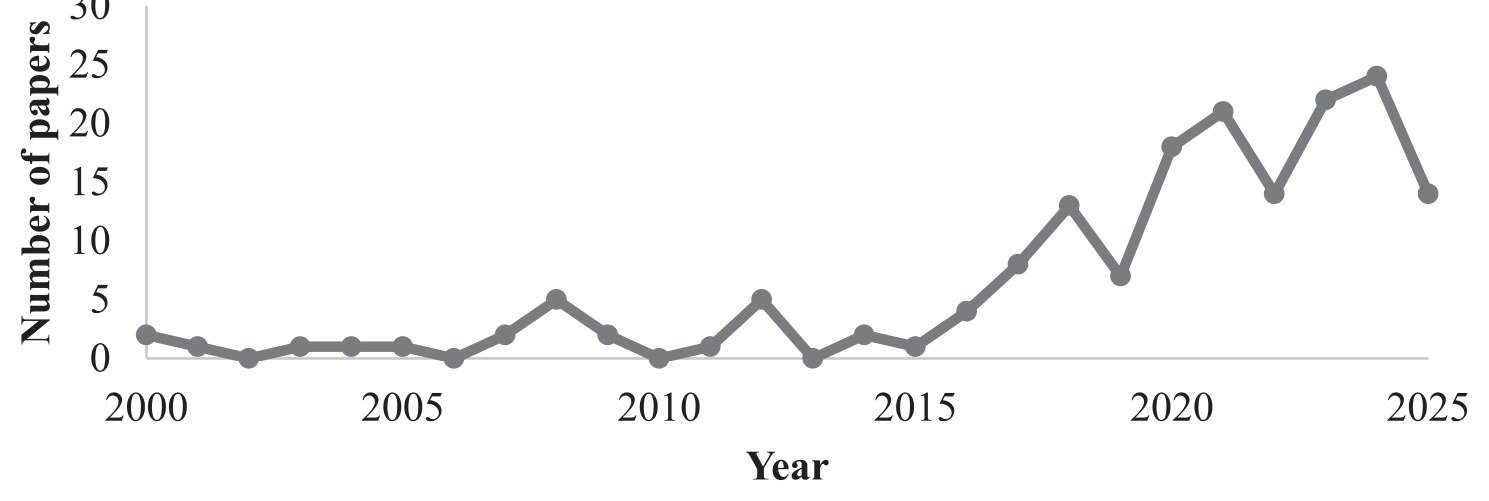
Subsequently, the top five countries that made significant contributions to the reviewed field were determined. The United States emerged as the primary contributor, followed by Brazil, China, Canada, and Germany.
An analysis of the articles revealed the areas of development, objectives, and underlying drivers of the processes of measuring water intake and monitoring drinking behavior. Measuring water intake and monitoring drinking behavior in cattle is an evolving field, driven by a blend of technological innovation, animal welfare concerns, and a growing commitment to environmental stewardship. This field is increasingly demanding robust data and supportive policies, and its future trajectory is shaped by the convergence of cutting-edge technological frontiers and the imperative for multidisciplinary collaborations to bridge existing research gaps.
A primary area of development focuses on the continuous improvement of methods and technologies for measuring water intake and monitoring drinking behavior. Researchers are actively seeking to transition from labor-intensive, direct observation methods to automated, non-invasive solutions. The integration of RFID, accelerometers, and GPS technologies aims to collect precise data on water point visits, drinking duration, and intake rates. Advanced computer vision and deep learning techniques are being developed to automatically recognize and analyze cattle drinking behavior, offering scalability and reduced human intervention. However, transitioning from controlled laboratory settings to large-scale agricultural operations presents challenges.
Technologies for cattle water monitoring must demonstrate their efficacy and reliability in varied, real-world environments, especially in extensive grazing systems where individual monitoring remains difficult. Often, this necessitates finding cost-cutting paths to enable wider adoption, as some advanced systems can be prohibitively expensive for smaller farms. Several factors are contributing to the need for and the development of more accurate water intake measurement and drinking behavior monitoring systems (Fig. 7).
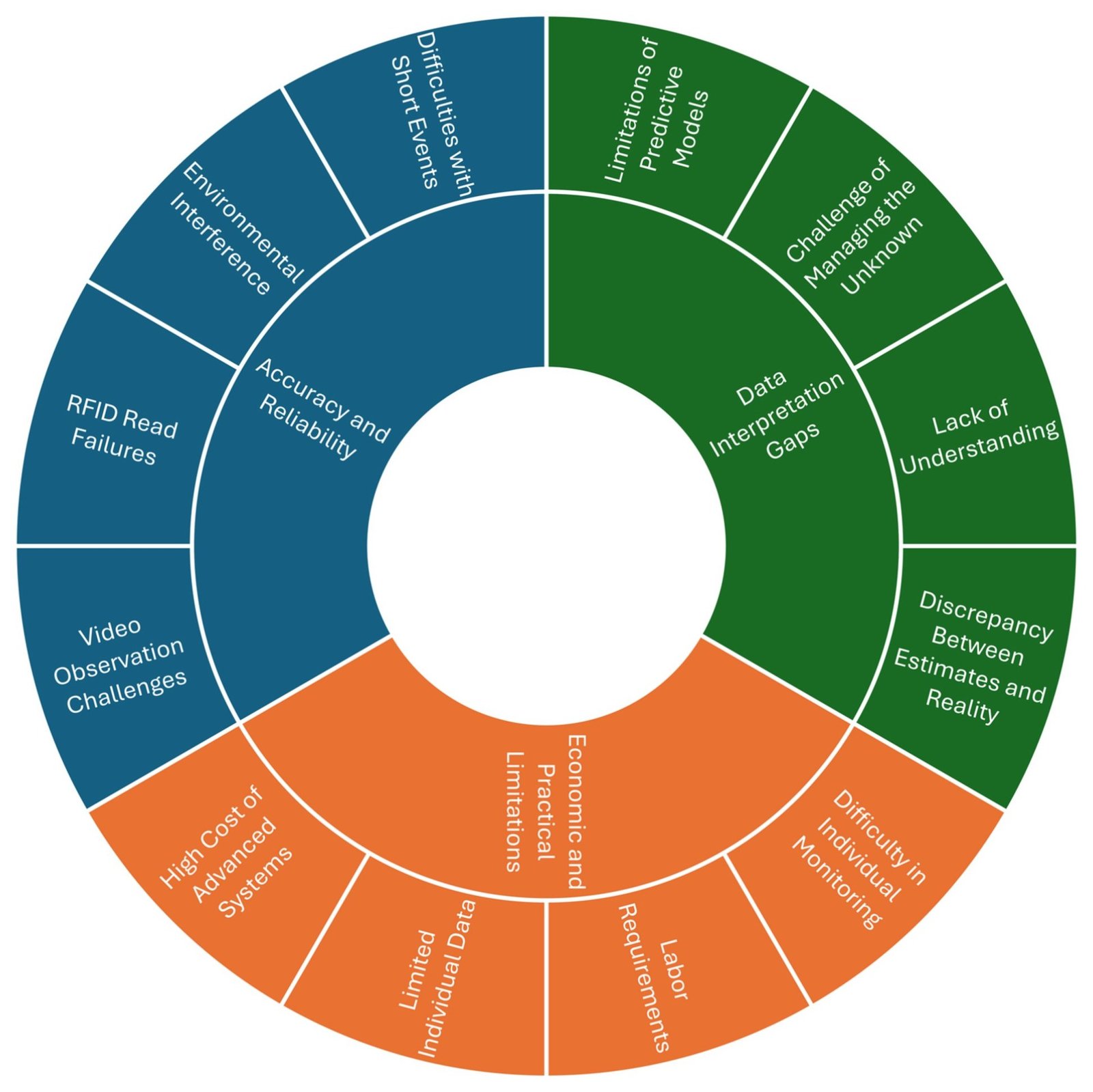
Accuracy and Reliability Concerns: many automated systems have difficulty accurately classifying (Williams et al., 2019). For instance, accelerometer-based systems often struggle with accurately classifying short drinking events (typically under 10 s), which can be indistinguishable from other behaviors based on head-neck movements. This
inherent limitation can lead to an overestimation of drinking events or misclassification, directly impacting the precision of behavioral phenotyping. Furthermore, the performance of these algorithms is highly sensitive to external factors such as trough height and physical interference, leading to considerable variability in effectiveness across different farm setups. Similarly, while RFID systems boast high detection rates, their susceptibility to detection range issues and environmental impacts can result in 5–20% missed reads, compromising the integrity of
continuous individual tracking. These quantitative limitations highlight the critical need for more robust algorithms and sensor fusion techniques capable of maintaining high accuracy and reliability across diverse and challenging agricultural environments. A key technological frontier here involves developing more sophisticated AI algorithms, possibly incorporating multimodal sensor fusion, capable of distinguishing subtle, rapid behavioral nuances. Future technological frontiers should focus on enhanced RFID antenna designs, alternative identification technologies (e.g., computer vision-based facial recognition), and improved data fusion strategies to compensate for missed reads (Ruchay et al., 2024).
Manual or automated analysis of drinking behavior from video recordings can be subject to systematic errors between observers. Even minor imprecision in algorithms can significantly affect overall measurements, especially given the typically short duration of drinking bouts (Ruuska et al., 2015). This highlights a research gap in developing standardized, open-source AI models for video analysis that are robust to inter-observer variability and accurately capture short-duration events, potentially leveraging advanced pose estimation and GenAI for data augmentation to train more precise models.
Economic and Practical Limitations: digital technologies, while offering detailed individual data, come with a high cost of acquisition and maintenance. This significant investment often prohibits their adoption by small and medium-sized farmers, who might benefit greatly from improved water management. A critical technological frontier is the development of robust, yet affordable, sensor technologies and AI solutions that are scalable and require minimal maintenance, making precision livestock farming accessible to a wider range of producers.
This necessitates multidisciplinary collaborations involving engineers, economists, and agricultural extension specialists to ensure solutions are not only technologically sound but also economically viable and farmer-friendly. This economic barrier is further compounded by the complexities and costs associated with ensuring seamless interoperability with existing diverse farm management software, which is often a prerequisite for maximizing the utility of newly implemented precision technologies. (Palhares et al., 2021).
While traditional water meters are inexpensive and easy to monitor, they typically provide only the average daily water consumption for the entire herd, not individual animal intake (Palhares et al., 2021). This lack of granularity limits their utility for identifying specific animal health or productivity issues related to water consumption. A research gap exists in creating cost-effective hybrid systems that combine the simplicity of water meters with AI-driven analytics or simpler identification methods to provide more granular, near-individual data without prohibitive costs.
Despite the goal of automation, some systems, including basic water meters, still require manual labor for monitoring and data collection (Palhares et al., 2021). Finally, traditional methods such as direct observation or time-lapse video remain highly labor-intensive (Chapinal et al., 2007). Future technological directions will increasingly integrate remote monitoring capabilities and autonomous data collection systems, reducing human labor and enhancing real-time decision-making.
Data Integration for Decision Support: We emphasize the importance of integrating diverse data streams into comprehensive decision-support systems to provide farmers with actionable insights for proactive management. This highlights the recognized need for different data sources to work together effectively, which is a core component of interoperability. However, achieving true interoperability where various hardware devices, sensor data streams, and analytical software seamlessly communicate and exchange information with existing farm management software platforms remains a significant practical challenge (Huang et al., 2025). Many proprietary systems lack open APIs or standardized data formats, creating silos of information that hinder holistic decision-making.
Standardized Protocols and Open-Source Platforms: We propose that developing open-source platforms and standardized protocols for data exchange could facilitate broader adoption and collaborative research. This directly addresses the necessity for systems to communicate and share data, a key aspect of interoperability with existing and future farm management software. Such initiatives are critical to overcoming the current fragmentation in digital agriculture and enabling the practical integration of advanced monitoring systems into daily farm operations.
Transition to Large-Scale Operations: We note the challenges in transitioning technologies from controlled laboratory settings to large-scale agricultural operations, requiring demonstrated efficacy and reliability in varied, real-world environments. Such transitions inherently involve integrating new systems into complex existing farm management workflows, often necessitating bespoke solutions to ensure interoperability with the specific combination of hardware and software already in use on a given farm.
Data Interpretation and Understanding Gaps: Water consumption estimates derived from equations may be significantly higher than actual field measurements, underscoring the necessity of having physical water measurement equipment installed (Palhares et al., 2021).
This highlights a critical issue where the absence of accurate and readily available data on water usage hinders effective water resource management on farms (Palhares et al., 2021, 2024). A significant research gap lies in developing advanced AI models, particularly deep learning and GenAI, that can integrate heterogeneous data sources (sensor, environmental, physiological) to provide more accurate and context-aware predictions of water intake, moving beyond generalized empirical equations.
Static models relying on established equations may struggle to account for the substantial variability in individual animals (Menendez et al., 2023). Empirical equations for predicting intake often explain only 50–70% of the variation and can have high standard errors (Menendez et al., 2023). Factors like dry matter intake, live weight, sodium intake, and farm-specific conditions (e.g., leaks) can significantly influence water consumption, and models may not always adequately integrate these variables, leading to poor prediction accuracy (Shine et al., 2020). Addressing this requires multidisciplinary collaboration between animal nutritionists, environmental scientists, data scientists, and veterinarians to identify all influencing factors and build robust, dynamic predictive models that account for individual animal variation and environmental stressors.
Measuring water intake and monitoring drinking behavior in cattle present several complex challenges that delineate crucial future research directions. Accurately measuring individual water intake in extensive grazing systems remains difficult without animal separation, as current technological solutions are not yet robust enough for these environments (Williams et al., 2019). This represents a technological frontier demanding innovations in low-power, long-range, and durable wireless sensor networks coupled with advanced AI for remote animal identification and behavioral analysis in unpredictable outdoor settings. RFID and EID systems face reliability issues due to detection range and weather conditions (Biglari et al., 2022), while vision-based monitoring struggles with continually tracking moving cattle, handling object occlusion, and the significant computational demands of deep learning (Biglari et al., 2022). Future research must focus on developing more resilient and resource-efficient vision-based AI models, potentially integrating edge computing to process data locally and reduce latency and power consumption. The short duration of drinking bouts and few events present a major challenge, as even slight algorithmic imprecision can significantly distort overall measurements. This highlights a research gap for specialized deep learning architectures, possibly leveraging generative adversarial networks for synthetic data augmentation of rare events, to enhance the precision of short-duration behavior classification. The short duration of drinking bouts and few events present a major challenge, as even slight algorithmic imprecision can significantly distort overall measurements, and reliable video recording is often hindered by systematic observer error (Ruuska et al., 2015).
Further research is also needed to develop algorithms that effectively clean data from reticulorumen temperature transponders and accurately predict water intake during stressors such as heat stress (Cantor et al., 2018). This requires multidisciplinary collaboration between veterinarians, animal physiologists, and data scientists to refine bio-physiological models and integrate real-time sensor data with predictive AI. One persistent challenge is the lack of a clear, objective definition of drinking bouts, which impacts the consistency of research findings (Melín et al., 2005). This is a fundamental research gap that calls for collaborative efforts between animal behaviorists and AI specialists to develop standardized, AI-driven behavioral ontologies. There is a broader lack of understanding among farmers and scientists regarding cattle water consumption (Palhares et al., 2021; Williams et al., 2018).
Implementing automated systems also faces hurdles in distinguishing non-drinking visits at water sources (Nizzi et al., 2024). Methodological differences in calculating beef water footprints further complicate assessment and standardization efforts (Menendez et al., 2023). Additionally, the high cost of advanced precision technologies often prevents small and medium-sized farmers from adopting them (Palhares et al., 2021), and there is also a recognized gap in attributing overall direct water utilization and awareness of freshwater resource management on dairy farms is limited (Monteiro et al., 2023; Palhares et al., 2024). This economic barrier necessitates interdisciplinary teams involving engineers, agricultural economists, and policymakers to develop and promote affordable, open-source solutions. Finally, the lack of large-scale water intake studies for beef cattle (Allwardt et al., 2017) underscores the need for more comprehensive research to inform future water management strategies. Continued interdisciplinary research, focusing on developing robust, cost-effective, and scalable technological solutions that can provide accurate and reliable data on cattle drinking behavior across various production systems is necessary to address these knowledge gaps and challenges.
In summary, addressing these knowledge gaps and challenges requires a concerted, multidisciplinary approach. Future technological frontiers will focus on developing robust, cost-effective, and scalable AI and sensor-based solutions for diverse production systems, from intensive dairy to extensive grazing. This will involve experts in engineering, artificial intelligence (including GenAI), animal science, veterinary medicine, environmental science, and agricultural economics collaborating to translate research innovations into practical, sustainable, and welfare-enhancing farm applications.
Conclusions
This systematic review has thoroughly analyzed the advancements in automated monitoring technologies for cattle drinking behavior and water intake measurement from 2000 to 2025, synthesizing findings from 121 selected articles. We have demonstrated significant progress in developing and validating sensor-based and AI-driven systems. These systems eliminate the need for labor-intensive manual observation and enable the collection of detailed, real-time data on individual animal drinking patterns. The analytical value of this review stems from its ability to distill complex, multi-disciplinary evidence into actionable insights, thereby bridging the gap between theoretical advancements and on-farm applicability.
The deployment of technologies such as Radio Frequency Identification systems, accelerometers, water flow meters, electronic drinkers, and advanced vision-based systems integrated with AI, deep learning, and Generative AI has profoundly enriched our understanding of cattle physiology and behavior. These innovations have provided enhanced predictive capabilities for health management, facilitated early detection of illnesses, and contributed to more efficient and sustainable water management strategies in livestock operations. The ability to monitor drinking patterns in detail has emerged as a powerful tool for identifying deviations indicative of stress, disease, or other welfare concerns.
Despite these substantial achievements, critical challenges and significant knowledge gaps persist. Key issues include the accurate classification of short drinking events, reliability in extensive grazing environments, high implementation costs for advanced systems, and an incomplete understanding of optimal water requirements under diverse environmental conditions. Furthermore, the integration of these sophisticated technologies into existing farm management software presents interoperability hurdles, and the ethical implications of widespread technological surveillance require careful consideration.
Looking ahead, the future direction of this field demands concerted efforts across several technological frontiers and through robust multidisciplinary collaborations. Continued research is essential to develop more precise, validated, and cost-effective animal-attached sensors and advanced data analytics that are scalable for various production systems. This includes leveraging emerging AI capabilities, particularly in GenAI for data augmentation and “digital twin” simulations, to overcome data scarcity and refine predictive models.
Addressing these complex challenges necessitates a multidisciplinary approach, bringing together experts in engineering, artificial intelligence, animal science, veterinary medicine, environmental science, and agricultural economics. Such collaborations are vital to translate research innovations into practical, sustainable, and welfare-enhancing farm applications, bridge the gap between laboratory settings and real-world farm needs, and ensure that technological advancements align with both scientific rigor and societal acceptance. By fostering these integrations and collaborations, the field can continue its trajectory towards transforming livestock farming into a more sustainable, efficient, and welfare-focused practice, ultimately contributing to global food security and environmental stewardship.
CRediT authorship contribution statement
Alexey Ruchay: Writing – original draft, Validation, Software, Project administration, Methodology, Investigation, Formal analysis, Data curation, Conceptualization. Hao Guo: Writing – review & editing, Visualization, Software, Investigation. Andrea Pezzuolo: Writing – original draft, Validation, Supervision, Methodology, Investigation, Formal analysis, Conceptualization.
Declaration of competing interest
The authors declare that they have no known competing financial interests or personal relationships that could have appeared to influence the work reported in this paper.
Acknowledgment
The research was conducted with the support of a grant from the Russian Science Foundation, project No. 21-76-20014-П, https://rscf. ru/project/21-76-20014/.
Data availability
Data will be made available on request.
References
- Alam, M., Silpa, M.V., Dey, D.K., Adilieme, C., Malik, P.K., Bhatta, R., König, S., Schlecht, E., 2023. Urbanisation threats to dairy cattle health: Insights from Greater Bengaluru, India. Trop. Anim. Health Prod. 55 (5). https://doi.org/10.1007/s11250-023-03737-7.
- Allwardt, K., Ahlberg, C.M., Broocks, A., Bruno, K., Taylor, A., Place, S.E., Richards, C., Krehbiel, C.R., Calvo-Lorenzo, M.S., DeSilva, U., VanOverbeke, D.L., Mateescu, R.G., Goad, C., Rolf, M.M., 2017. Technical note: Validation of an automated system for monitoring and restricting water intake in group-housed beef steers. J. Anim. Sci. 95 (9), 4213. https://doi.org/10.2527/jas2017.1593.
- Antanaitis, R., Džermeikaitė, K., Krištolaitytė, J., Arlauskaitė, S., Girdauskaitė, A., Tolkačiovaitė, K., Juodžentytė, R., Palubinskas, G., Labokojytė, A., Šertvytytė, G., Lembovičiūtė, G., Baumgartner, W., 2025. Utilizing noseband sensor technology to evaluate rumination time as a predictor of feeding and locomotion behaviors in dairy cows. Agriculture 15 (3), 296. https://doi.org/10.3390/agriculture15030296.
- Antanaitis, R., Džermeikaitė, K., Krištolaitytė, J., Ribelytė, I., Bespalovaitė, A., Bulvičiūtė, D., Palubinskas, G., Anskienė, L., 2024. The impacts of heat stress on rumination, drinking, and locomotory behavior, as registered by innovative technologies, and acid–base balance in fresh multiparous dairy cows. Animals 14 (8), 1169. https://doi.org/10.3390/ani14081169.
- Antanaitis, R., Juozaitienė, V., Urbonavičius, G., Malašauskienė, D., Televičius, M., Urbutis, M., Baumgartner, W., 2021. Impact of lameness on attributes of feeding registered with noseband sensor in fresh dairy cows. Agriculture 11 (9), 851. https:// doi.org/10.3390/agriculture11090851.
- Abbona, F., Vanneschi, L., Bona, M., Giacobini, M., 2020. Towards modelling beef cattle management with Genetic programming. Livest. Sci. 241, 104205. https://doi.org/ 10.1016/j.livsci.2020.104205.
- Aquilani, C., Confessore, A., Bozzi, R., Sirtori, F., Pugliese, C., 2021. Review: Precision livestock farming technologies in pasture-based livestock systems. Animal 16 (1). https://doi.org/10.1016/j.animal.2021.100429.
- Bai, Q., Gao, R., Wang, R., Li, Q., Yu, Q., Zhao, C., Li, S., 2023. X3DFast model for classifying dairy cow behaviors based on a two-pathway architecture. Scientific reports 13 (1), 20519. https://doi.org/10.1038/s41598-023-45211-2.
- Bello, R.-W., Mohamed, A.S.A., Talib, A.Z., Sani, S., Wahab, M.N.A., 2022. Behavior recognition of group-ranched cattle from video sequences using deep learning. Indi. J. Animal Res.
- Benaissa, S., Tuyttens, F., Plets, D., Martens, L., Vandaele, L., Joseph, W., Sonck, B., 2023. Improved cattle behaviour monitoring by combining Ultra-Wideband location and accelerometer data. Animal 17 (4), 100730. https://doi.org/10.1016/j. animal.2023.100730.
- Bewley, J.M., Grott, M.W., Einstein, M.E., Schutz, M.M., 2008. Impact of Intake Water Temperatures on Reticular Temperatures of Lactating Dairy Cows. J. Dairy Sci. 91 (10), 3880. https://doi.org/10.3168/jds.2008-1159.
- Biglari, A., Tang, W., Stochaj, S., Che, W., Ward, M., Boucheron, L., Smallidge, S., Shadabi, L., Biglari, M.J., 2022. A vision-based cattle recognition system using tensor-flow for livestock water intake monitoring. IEEE Sens. Lett.
- Biszkup, M., Vásárhelyi, G., Setiawan, N.N., Márton, Á., Szentes, S., Balogh, P., Babay-Török, B., Pajor, G., Drexler, D., 2024. Detectability of multi-dimensional movement and behaviour in cattle using sensor data and machine learning algorithms: Study on a Charolais bull. Artif. Intell. Agric. https://doi.org/10.1016/j.aiia.2024.11.002.
- Brandstetter, V., Neubauer, V., Humer, E., Kröger, I., Zebeli, Q., 2019. Chewing and Drinking activity during transition period and lactation in dairy cows fed partial mixed Rations. Animals 9 (12), 1088. https://doi.org/10.3390/ani9121088.
- Bulusu, V.V., Phanindra, K.P.R., Sumith, K., Sirisha, T., 2025. Explainable AI for livestock disease detection: an Integrated ML/DL Framework. Asian J. Res. Comput. Sci. 18 (6), 147. https://doi.org/10.9734/ajrcos/2025/v18i6686.
- Cairo, F.C., Pereira, L.G.R., Campos, M.M., Tomich, T.R., Coelho, S.G., Lage, C.F.A., Fonseca, A.P., Borges, Á.M., Alves, B.R.C., Dórea, J.R.R., 2020. Applying machine learning techniques on feeding behavior data for early estrus detection in dairy heifers. Comput. Electron. Agric. 179, 105855. https://doi.org/10.1016/j. compag.2020.105855.
- Cameron, N.A., Peer, R.A.M., Crosson, P., 2025. Quantifying water use in New Zealand’s dairy food system: a baseline for future sustainability. Agr. Syst.
- Cantor, M.C., Costa, J.H.C., Bewley, J.M., 2018. Impact of observed and controlled water intake on reticulorumen temperature in lactating dairy cattle. Animals 8 (11), 194. https://doi.org/10.3390/ani8110194.
- Chapa, J. M., Maschat, K., Iwersen, M., Baumgartner, J., & Drillich, M. (2020). Accelerometer systems as tools for health and welfare assessment in cattle and pigs – A review [Review of Accelerometer systems as tools for health and welfare assessment in cattle and pigs – A review]. Behavioural Processes, 181, 104262. Elsevier BV. Doi: 10.1016/j.beproc.2020.104262.
- Chapinal, N., Veira, D.M., Weary, D.M., von Keyserlingk, M.A.G., 2007. Validation of a system for monitoring individual feeding and drinking behavior and intake in grouphoused cattle. J. Dairy Sci.
- Chen, C., Zhu, W., Norton, T., 2021. Behaviour recognition of pigs and cattle: Journey from computer vision to deep learning. Comput. Electron. Agric. 187, 106255. https://doi.org/10.1016/j.compag.2021.106255.
- Chen, G., Auerswald, K., 2018. A user-friendly calculator for determining oxygen isotope composition of body water in cows based on the MK model and examples of its applications. Comput. Electron. Agric. 154, 248. https://doi.org/10.1016/j. compag.2018.09.015.
- Coimbra, P.A.D., Filho, L.C.P.M., Hötzel, M.J., 2012. Effects of social dominance, water trough location and shade availability on drinking behaviour of cows on pasture. Appl. Anim. Behav. Sci. 139, 175. https://doi.org/10.1016/j.applanim.2012.04.009.
- Costa. (2021). Symposium review Precision technologies for dairy calves and management applications.pdf. J. Dairy Sci.
- Coghlan, S., Parker, C., 2023. Harm to nonhuman animals from AI: a systematic account and framework. Philos. Technol. 36 (2). https://doi.org/10.1007/s13347-023-00627-6.
- Dong, R.L., Chibisa, G.E., Beauchemin, K.A., 2018. Estimating optimal observational sampling frequency of behaviors for cattle fed high and low forage diets1,2. J. Anim. Sci.
- Franco, A.M., da Silva, Á.E.M., de Moura, F.H., Norris, A.B., Roloson, S.B., Gerrard, D.E., Mello, A.S.D., Fonseca, M.A., 2023. Effects of isoenergetic supplementation as water use mitigation strategy on water footprint and health of nursing bull calves. Transl. Anim. Sci. 7 (1). https://doi.org/10.1093/tas/txad127.
- Frank, A.S.K., Dickman, C.R., Wardle, G.M., 2012. Habitat use and behaviour of cattle in a heterogeneous desert environment in central Australia. Rangeland J. 34 (3), 319. https://doi.org/10.1071/rj12032.
- Genčurová, V., Hanuš, O., Janů, L., Macek, A., Vyletělová, M., 2014. Drinking water indicator evaluation in selected dairy cow farms with different management system in the Czech Republic. Acta Univ. Agric. Silvicul. Mendel. Brunen. 56 (4), 57. https://doi.org/10.11118/actaun200856040057.
- Geng, H., Hou, Z., Liang, J., Li, X., Zhou, X., Xu, A., 2024. Motion focus global–local network: combining attention mechanism with micro action features for cow behavior recognition. Comput. Electron. Agric. 226, 109399. https://doi.org/ 10.1016/j.compag.2024.109399.
- Ghaffari, M.H., Monneret, A., Hammon, H.M., Post, C., Müller, U., Frieten, D., Gerbert, C., Dusel, G., Koch, C., 2022. Deep convolutional neural networks for the detection of diarrhea and respiratory disease in preweaning dairy calves using data from automated milk feeders. J. Dairy Sci. 105 (12), 9882. https://doi.org/10.3168/ jds.2021-21547.
- Gharibi, H., Sowlat, M.H., Mahvi, A.H., Mahmoudzadeh, H., Arabalibeik, H., Keshavarz, M., Karimzadeh, N., Hassani, G., 2012. Development of a dairy cattle drinking water quality index (DCWQI) based on fuzzy inference systems. Ecol. Ind. 20, 228. https://doi.org/10.1016/j.ecolind.2012.02.015.
- Guo, Y., He, D., Chai, L., 2020. A machine vision-based method for monitoring sceneinteractive behaviors of dairy calf. Animals 10 (2), 190. https://doi.org/10.3390/ ani10020190.
- Herrero-García, G., Barroso, P., Preite, L., Relimpio, D., Vaz-Rodrigues, R., Balseiro, A., Gortázar, C., 2023. Waterhole characteristics in tuberculosis positive and negative beef cattle farms from endemic regions in Spain. Rangel. Ecol. Manage. 92, 50. https://doi.org/10.1016/j.rama.2023.09.008.
- Higham. (2017). Water use on pasture-based dairy farms. J. Dairy Sci. Doi: 10.3168/ jds.2016-11822.
- Huang, Q., Wang, X., Gao, Q., Carraro, A., Pezzuolo, A., Marinello, F., 2025. How to assess the digitization and digital effort: a framework for Digitization Footprint (Part 1). Comput. Electron. Agric. 230, 109875. https://doi.org/10.1016/j. compag.2024.109875.
- Inadagbo, O., Makowski, G., Ahmed, A.A., Daigle, C.L., 2024. On developing a machine learning-based approach for the automatic characterization of behavioral phenotypes for dairy cows relevant to thermotolerance. AgriEngineering 6 (3), 2656. https://doi.org/10.3390/agriengineering6030155.
- Irigoin, V., Pizarro, D., Fuentes, E., García, C., Wattiaux, M.A., Picasso, V., Arango, J., Delgado, G.R., Gómez, C., 2025. Biotechnical, economic, and environmental assessment of dairy systems in the Peruvian Amazon utilizing the CLEANED tool. Agrofor. Syst. 99 (2). https://doi.org/10.1007/s10457-024-01099-z.
- Islam, M.N., Yoder, J.S., Nasiri, A., Burns, R., Gan, H., 2023. Analysis of the drinking behavior of beef cattle using computer vision. Animals 13 (18), 2984. https://doi. org/10.3390/ani13182984.
- Kawagoe, Y., Kobayashi, I., Zin, T.T., 2023. Facial region analysis for individual identification of cows and feeding time estimation. Agriculture 13 (5), 1016. https:// doi.org/10.3390/agriculture13051016.
- Kaur, U., Malacco, V.M.R., Bai, H., Price, T.P., Datta, A., Xin, L., Sen, S., Nawrocki, R.A., Chiu, G.-T.-C., Sundaram, S., Min, B., Daniels, K.M., White, R.R., Donkin, S.S., Brito, L.F., Voyles, R.M., 2023. Invited review: integration of technologies and systems for precision animal agriculture – a case study on precision dairy farming. J. Anim. Sci. 101. https://doi.org/10.1093/jas/skad206.
- Khelil-Arfa, H., Boudon, A., Maxin, G., Faverdin, P., 2012. Prediction of water intake and excretion flows in Holstein dairy cows under thermoneutral conditions. Animal 6 (10), 1662. https://doi.org/10.1017/s175173111200047x.
- King, M. T. M., & DeVries, T. J. (2024). Associations of Behavior and Production Disease in Dairy Cattle. In Springer eBooks (p. 453). Springer Nature. Doi: 10.1007/978-3-031-51788-4_19.
- Knauer. (2017). Group housing and computerized feeding of pre- weaned dairy calves is gaining popularity among dairy producers worldwide, yet disease incidence and detection remain a challenge in these systems. The aim of this prospective observational cohort study was to describe the relationship between morbidity and feed- ing behavior around the period of illness detection. J. Dairy Sci.
- Knauer. (2018). Evaluation of applying statistical process control techniques to daily average feeding behaviors to detect disease in automatically fed g. J. Dairy Sci.
- Kumar, A., Chandel, B., Dixit, A.K., Singh, A., 2023. Water Use Efficiency in milk production of selected dairy breeds in central region of Bihar: a lifetime analysis. Agric. Res. 12 (3), 339. https://doi.org/10.1007/s40003-023-00655-w.
- Kumawat, P. (2022). Radio Frequency Identification Technology Used to Monitor the Use of Water Point for Grazing Cattle. In Smart innovation, systems and technologies (p. 270). Springer Nature. Doi: 10.1007/978-3-030-92905-3_35.
- Lee, M., Seo, S., Pearce, G., Gonçalves, P., Pedreiras, P., Monteiro, A., 2021. Wearable wireless biosensor technology for monitoring cattle: a review [Review of wearable wireless biosensor technology for monitoring cattle: a review]. Animals. https://doi.org/ 10.3390/ani11102779.
- Legesse, G., Cordeiro, M.R.C., Ominski, K., Beauchemin, K.A., Kroebel, R., McGeough, E. J., Pogue, S.J., McAllister, T.A., 2017. Water use intensity of Canadian beef production in 1981 as compared to 2011. Sci. Total Environ. 1030. https://doi.org/ 10.1016/j.scitotenv.2017.11.194.
- Li, G., Shi, G., Zhu, C., 2024a. Dynamic serpentine convolution with attention mechanism enhancement for beef cattle behavior recognition. Animals 14 (3), 466. https://doi.org/10.3390/ani14030466.
- Li, G., Sun, J., Guan, M., Sun, S., Shi, G., Zhu, C., 2024b. A new method for nondestructive identification and tracking of multi-object behaviors in beef cattle based on deep learning. Animals 14 (17), 2464. https://doi.org/10.3390/ani14172464.
- Li, K., Fan, D., Huijuan, W., Zhao, A., 2024c. A new dataset for video-based cow behavior recognition. Sci. Rep. 14 (1). https://doi.org/10.1038/s41598-024-65953-x.
- Lu, Y., Chen, D., Olaniyi, E., Huang, Y., 2022a. Generative adversarial networks (GANs) for image augmentation in agriculture: a systematic review. Comput. Electron. Agric. 200, 107208. https://doi.org/10.1016/j.compag.2022.107208.
- Liang, H.-T., Hsu, S.-W., Hsu, J., Tu, C.C., Chang, Y.-C., Jian, C.T., Lin, T., 2024. An IMUbased Machine Learning Approach for Daily Behavior Pattern Recognition in Dairy Cows. Smart Agric. Technol. 9, 100539. https://doi.org/10.1016/j. atech.2024.100539.
- Lu, J., Guo, H., Du, A., Su, Y., Ruchay, A., Marinello, F., Pezzuolo, A., 2022b. 2-D/3-D fusion-based robust pose normalisation of 3-D livestock from multiple RGB-D cameras. Biosyst. Eng. 223, 129–141. https://doi.org/10.1016/j. biosystemseng.2021.12.013.
- Mardhati. (2021). Monitoring and detecting individual cows’ liveweight (LW) and liveweight change (LWC) are important for estimation of nutritional requirements and health man- agement, and could be useful to measure short-term feed intake, water consumption, defecation, and urina- tion. J. Dairy Sci.
- McDonald. (2019). Monitoring social competition between dairy cows at the drinker using an electronic drinking system. J. Dairy Sci.
- Melín, M., Wiktorsson, H., Norell, L., 2005. Analysis of feeding and drinking patterns of dairy cows in two cow traffic situations in automatic milking systems. J. Dairy Sci. 88 (1), 71. https://doi.org/10.3168/jds.s0022-0302(05)72664-3.
- Menendez, H.M., Atzori, A.S., Brennan, J.R., Tedeschi, L.O., 2023. Using dynamic modelling to enhance the assessment of the beef water footprint. Animal 17, 100808. https://doi.org/10.1016/j.animal.2023.100808.
- Menezes, G.L., Mazon, G., Ferreira, R., Cabrera, V.E., Dórea, J.R.R., 2024. Artificial intelligence for livestock: a narrative review of the applications of computer vision systems and large language models for animal farming. Animal Front. 14 (6), 42. https://doi.org/10.1093/af/vfae048.
- Meunier, B., Pradel, P., Sloth, K.H., Cirié, C., Delval, É., Mialon, M.M., Veissier, I., 2017. Image analysis to refine measurements of dairy cow behaviour from a real-time location system. Biosyst. Eng. 173, 32. https://doi.org/10.1016/j. biosystemseng.2017.08.019.
- Moe, A.S.T., Tin, P., Aikawa, M., Kobayashi, I., Zin, T.T., 2025. AI-powered visual Emonitoring system for cattle health and wealth. Smart Agric. Technol. 12. https:// doi.org/10.1016/j.atech.2025.101300.
- Monteiro, A., Santos, S. R. dos, & Pereira, J. (2023). Efficient Water Use in Dairy Cattle Production: A Review [Review of Efficient Water Use in Dairy Cattle Production: A Review]. The Open Agriculture Journal, 17(1). Bentham Science Publishers. Doi: 10.2174/0118743315270668231127190323.
- Montes. (2023). Automated milk feeders and social networks to study feeding behavior and disease transmission in group-housed calves. J. Dairy Sci.
- Morrison, J., Winder, C.B., Medrano-Galarza, C., Denis, P., Haley, D.B., LeBlanc, S.J., Costa, J.H.C., Steele, M.A., Renaud, D.L., 2022. Case-control study of behavior data from automated milk feeders in healthy or diseased dairy calves. JDS Commun. 3 (3), 201. https://doi.org/10.3168/jdsc.2021-0153.
- Nasirahmadi, A., Edwards, S.A., Sturm, B., 2017. Implementation of machine vision for detecting behaviour of cattle and pigs. Livest. Sci. 202, 25. https://doi.org/10.1016/ j.livsci.2017.05.014.
- Nizzi, E., Foris, B., Lassalas, J., Hurtaud, C., Boudon, A., 2024. Monitoring individual drinking behaviour and the social hierarchy in dairy cows using electronic drinkers. Appl. Anim. Behav. Sci. 273, 106218. https://doi.org/10.1016/j. applanim.2024.106218.
- Neethirajan, S. (2021). Is Seeing Still Believing? Leveraging Deepfake Technology for Livestock Farming. Frontiers in Veterinary Science, 8. Frontiers Media. Doi: 10.3389/ fvets.2021.740253.
- Neethirajan, S., 2023. Artificial intelligence and sensor innovations: enhancing livestock welfare with a human-centric approach. Hum.-Centric Intell. Syst. 4 (1), 77. https:// doi.org/10.1007/s44230-023-00050-2.
- Niloofar, P., Francis, D.P., Lazarova-Molnar, S., Vulpe, A., Vochin, M., Suciu, G., Bălănescu, M., Anestis, V., Bartzanas, T., 2021. Data-driven decision support in livestock farming for improved animal health, welfare and greenhouse gas emissions: Overview and challenges. Comput. Electron. Agric. 190, 106406. https:// doi.org/10.1016/j.compag.2021.106406.
- Obermeyer, K., Kayser, M., 2023. On-farm assessment of grazing behaviour of dairy cows in two pasture management systems by low-cost and reliable cowtrackers. Smart Agric. Technol. 6, 100349. https://doi.org/10.1016/j.atech.2023.100349.
- Oliveira, B.S., Ribas, M.N., Machado, F.S., Lima, J.A., Cavalcanti, L.F.L., Chizzotti, M.L., Coelho, S.G., 2017. Validation of a system for monitoring individual feeding and drinking behaviour and intake in young cattle. Animal 12 (3), 634. https://doi.org/ 10.1017/s1751731117002002.
- Osaki, M.R., Palhates, J.C.P., Aguiar, F.G., 2024. Artificial neural network model for water consumption prediction in dairy farms. Biosci. J. 40. https://doi.org/ 10.14393/bj-v40n0a2024-68845.
- Page, M.J., McKenzie, J.E., Bossuyt, P.M., Boutron, I., Hoffmann, T.C., Mulrow, C.D., Moher, D., 2021. The PRISMA 2020 statement: An updated guideline for reporting systematic reviews. BMJ 372, 71. https://doi.org/10.1136/bmj.n71.
- Palhares, J.C.P., Matarim, D.L., de Sousa, R.V., Martello, L.S., 2024. Water Performance Indicators and Benchmarks for Dairy Production Systems. Water 16 (2), 330. https:// doi.org/10.3390/w16020330.
- Palhares, J.C.P., Morelli, M., Novelli, T.I., Méo-Filho, P., Hisatugu, M.T., 2021. Comparison of two water measurement systems for feedlot beef cattle. Amb. Agua Interdiscip. J. Appl. Sci. 16 (4), 1. https://doi.org/10.4136/ambi-agua.2729.
- Pereira. (2021). Evaluation of the RumiWatch system for monitoring feeding and locomotion behaviors of grazing dairy cows. J. Dairy Sci.
- Perttu. (2019). Predicting Disease in Preweaning Dairy Calves Using Automated Milk Feeder Data and Machine Learning Algorithms. J. Dairy Sci.
- Parivendan, S.C., Sailunaz, K., Neethirajan, S., 2025. Socializing AI: integrating social network analysis and deep learning for precision dairy cow monitoring – a critical review. Animals 2025 (15), 1835. https://doi.org/10.3390/ani15131835.
- Pallottino, F., Violino, S., Figorilli, S., Pane, C., Aguzzi, J., Colle, G., Nemmi, E., Montaghi, A., Chatzievangelou, D., Antonucci, F., Moscovini, L., Mei, A., Costa, C., Ortenzi, L., 2025. Applications and perspectives of Generative Artificial Intelligence in agriculture. Comput. Electron. Agric. 230, 109919. https://doi.org/10.1016/j. compag.2025.109919.
- Peden, R., Camerlink, I., Boyle, L., Akaichi, F., & Turner, S. P. (2019). Farmer Perceptions of Pig Aggression Compared to Animal-Based Measures of Fight Outcome. Animals, 2019, 9(1), 22. Doi: 10.3390/ani9010022.
- Prestegaard-Wilson, J.M., Vitale, J.D., 2024. Generative artificial intelligence in extension: a new era of support for livestock producers. Anim. Front. 14 (6), 57. https://doi.org/10.1093/af/vfae024.
- Porto, S.M.C., Calì, M., Bonfanti, M., 2023. Eco-design and additive manufacturing of an innovative double-casing pedometer for oestrus detection in dairy cow. Appl. Sci. 13 (21), 11725. https://doi.org/10.3390/app132111725.
- Poulopoulou, I., Lambertz, C., Gauly, M., 2019. Are automated sensors a reliable tool to estimate behavioural activities in grazing beef cattle? Appl. Anim. Behav. Sci. 216, 1. https://doi.org/10.1016/j.applanim.2019.04.009.
- Reith, S., Pries, M., Verhülsdonk, C., Brandt, H., Hoy, S., 2014. Influence of estrus on dry matter intake, water intake and BW of dairy cows. Animal 8 (5), 748. https://doi. org/10.1017/s1751731114000494.
- Ruchay, A., Kolpakov, V., Guo, H., Pezzuolo, A., 2024. On-barn cattle facial recognition using deep transfer learning and data augmentation. Comput. Electron. Agric. 225, 109306. https://doi.org/10.1016/j.compag.2024.109306.
- Ruuska, S., Kajava, S., Mughal, M., Zehner, N., Mononen, J., 2015. Validation of a pressure sensor-based system for measuring eating, rumination and drinking behaviour of dairy cattle. Appl. Anim. Behav. Sci. 174, 19. https://doi.org/10.1016/ j.applanim.2015.11.005.
- Shane, D.D., White, B.J., Larson, R.L., Amrine, D.E., Kramer, J.L., 2016. Probabilities of cattle participating in eating and drinking behavior when located at feeding and watering locations by a real time location system. Comput. Electron. Agric. 127, 460. https://doi.org/10.1016/j.compag.2016.07.005.
- Sharma, A., Kundu, S.S., Tariq, H., Mahesh, M.S., Gautam, S., Singh, S., 2016. Predicting water intake of lactating riverine buffaloes under tropical climate. Livest. Sci. 191, 187. https://doi.org/10.1016/j.livsci.2016.08.009.
- Shine, P., Murphy, M.D., Upton, J., 2020. A global review of monitoring, modeling, and analyses of water demand in dairy farming [Review of a global review of monitoring, modeling, and analyses of water demand in dairy farming]. Sustainability 12 (17), 7201. https://doi.org/10.3390/su12177201.
- Shine, P., Murphy, M.D., Upton, J., Scully, T., 2018a. Machine-learning algorithms for predicting on-farm direct water and electricity consumption on pasture based dairy farms. Comput. Electron. Agric. 150, 74. https://doi.org/10.1016/j. compag.2018.03.023.
- Shine, P., Scully, T., Upton, J., Murphy, M.D., 2018b. Multiple linear regression modelling of on-farm direct water and electricity consumption on pasture based dairy farms. Comput. Electron. Agric. 148, 337. https://doi.org/10.1016/j. compag.2018.02.020.
- Schoenke, J., Aschenbruck, N., Interdonato, R., Kanawati, R., Meisener, A.-C., Thierart, F., Vial, G., & Atzmueller, M. (2021). Gaia-AgStream: An Explainable AI Platform for Mining Complex Data Streams in Agriculture. In Communications in computer and information science (p. 71). Springer Science+Business Media. Doi: 10.1007/978-3-030-88259-4_6.
- Szyszka, O., Tolkamp, B., Edwards, S.A., Kyriazakis, I., 2012. The effects of acute versus chronic health challenges on the behavior of beef cattle1. J. Anim. Sci. 90 (12), 4308. https://doi.org/10.2527/jas.2011-4765.
- Tang, W., Biglari, A., Ebarb, R., Pickett, T., Smallidge, S.T., Ward, M., 2021. A smart sensing system of water quality and intake monitoring for livestock and wild animals. Sensors 21 (8), 2885. https://doi.org/10.3390/s21082885.
- Tinny, M.N., Judas, M., Agree, N.K., Baldwin, B.C., Baldwin, B.C., Mavis, N.A., Moses, R. W., Karen, M., Bohani, M., 2024. Relationship between volumetric water footprint with carcass and meat quality characteristics under intensive beef cattle production in South Africa. Am. J. Anim. Vet. Sci. 19 (3), 315. https://doi.org/10.3844/ ajavsp.2024.315.328.
- Tsai, Y.-C., Hsu, J., Ding, S., Rustia, D.J.A., Lin, T., 2020. Assessment of dairy cow heat stress by monitoring drinking behaviour using an embedded imaging system. Biosyst. Eng. 199, 97. https://doi.org/10.1016/j.biosystemseng.2020.03.013.
- VanderZaag, A., Burtt, S., Vergé, X.P.C., Piquette, S., Wright, T., Kroebel, R., Gordon, R. J., 2018. Case Study: Water budget of a dairy farm with a tie-stall barn for milk cows and summer pasturing of heifers and dry cows. Profes. Animal Sci. 34 (1), 108. https://doi.org/10.15232/pas.2017-01654.
- Vázquez-Diosdado, J.A., Gruhier, J., Miguel-Pacheco, G.G., Green, M., Dottorini, T., Kaler, J., 2023. Accurate prediction of calving in dairy cows by applying feature engineering and machine learning. Prev. Vet. Med. 219, 106007. https://doi.org/ 10.1016/j.prevetmed.2023.106007.
- Vtoryi, V., Vtoryi, S., Gordeev, V., Khazanov, V., Il’in, R.A., 2020. Water consumption for cow watering under loose housing system. Eng. Rural Dev. https://doi.org/ 10.22616/erdev.2020.19.tf118.
- Wagner, N., Antoine, V., Mialon, M., Lardy, R., Silberberg, M., Koko, J., Veissier, I., 2020. Machine learning to detect behavioural anomalies in dairy cows under subacute ruminal acidosis. Comput. Electron. Agric. 170, 105233. https://doi.org/10.1016/j. compag.2020.105233.
- Wang, J., Bell, M., Liu, X., Liu, G., 2020. Machine-learning techniques can enhance dairy cow estrus detection using location and acceleration data. Animals 10 (7), 1160. https://doi.org/10.3390/ani10071160.
- Williams, L.R., Fox, D.R., Bishop-Hurley, G., Swain, D.L., 2018. Use of radio frequency identification (RFID) technology to record grazing beef cattle water point use. Comput. Electron. Agric. 156, 193. https://doi.org/10.1016/j.compag.2018.11.025.
- Williams, L.R., Moore, S.T., Bishop-Hurley, G., Swain, D.L., 2019. A sensor-based solution to monitor grazing cattle drinking behaviour and water intake. Comput. Electron. Agric. 168, 105141. https://doi.org/10.1016/j.compag.2019.105141.
- Wu, D., Wang, Y., Han, M., Song, L., Shang, Y., Zhang, X., Song, H., 2021. Using a CNNLSTM for basic behaviors detection of a single dairy cow in a complex environment. Comput. Electron. Agric. 182, 106016. https://doi.org/10.1016/j. compag.2021.106016.
- Yamamoto, Y., Akizawa, K., Aou, S., Taniguchi, Y., 2024. Entire-barn dairy cow tracking framework for multi-camera systems. Comput. Electron. Agric. 229, 109668. https://doi.org/10.1016/j.compag.2024.109668.
- Yang, J., Jia, Q., Han, S., Du, Z., Liu, J., 2025. An Efficient Multi-Scale attention twostream inflated 3D ConvNet network for cattle behavior recognition. Comput. Electron. Agric. 232, 110101. https://doi.org/10.1016/j.compag.2025.110101.
- Yu, R., Wei, X., Liu, Y., Yang, F., Shen, W., Gu, Z., 2024. Research on automatic recognition of dairy cow daily behaviors based on deep learning. Animals 14 (3), 458. https://doi.org/10.3390/ani14030458.
- Zhang, J., Lei, J., Wu, J., Lu, H., Guo, H., Pezzuolo, A., Ruchay, A., 2023. Automatic method for quantitatively analyzing the body condition of livestock from 3D shape. Comput. Electron. Agric. 214, 108307. https://doi.org/10.1016/j. compag.2023.108307.
- Zhang, Q., Kanjo, E., 2025. A multicore and edge TPU-accelerated multimodal tinyml system for livestock behavior recognition. IEEE Internet Things J. https://doi.org/ 10.1109/JIOT.2025.3624811.
- Zhang, Y., Zhang, Y., Jiang, H., Du, H., Xue, A., Shen, W., 2024. New method for modeling digital twin behavior perception of cows: Cow daily behavior recognition based on multimodal data. Comput. Electron. Agric. 226, 109426. https://doi.org/ 10.1016/j.compag.2024.109426.
- Zhang, Y., Zhang, Y., Gao, M., Wang, X., Dai, B., Shen, W., 2025. Multimodal behavior recognition for dairy cow digital twin construction under incomplete modalities: a modality mapping completion network approach. Artif. Intell. Agric. 15 (3), 459. https://doi.org/10.1016/j.aiia.2025.04.005.
- Zong, Z., Ban, Z., Wang, C., Wang, S., Yuan, W., Zhang, C., Su, L., Yuan, Z., 2025. A study on multi-scale behavior recognition of dairy cows in complex background based on improved YOLOv5. Agriculture 15 (2), 213. https://doi.org/10.3390/ agriculture15020213.