Source: Bostanova, S., Uskenov, R., Serekpayev, N., Tretyakov, I., Önder, H., Aryn, B., & Valiyeva, M. (2025). Correlation between weather conditions and the watering cycle of beef cows in pastures. Journal of Animal Behavior and Biometeorology, 13:e2025025. https://doi.org/10.31893/jabb.2025025
Abstract
This paper presents an analysis of the drinking cycle of Qazaq Aqbas cows during the grazing period in Northern Kazakhstan, which was conducted on 91 heads via an automated platform developed by scientists at Seifullin Kazakh Agrotechnical Research University (Kazakhstan). The research revealed that the animals consumed an average of 3 water types (2.94±0.53). The dependence on climatic conditions emphasizes the importance of considering the wind direction and speed, which significantly affect water consumption and the duration of watering by animals. The results of the statistical analyses (P=0.022 and P=0.035) confirmed that both the wind direction and speed significantly affected water intake. The animals began drinking water at 5 a.m. and continued until 9 p.m., with the peak number of visits to the watering hole observed in the morning and after the day of feed intake. In the hottest months, with an average ambient temperature of 23.5 °C during the grazing period, cows spend 87.12 seconds or 1.5 minutes per approach to water, with an average relative air humidity of 57.0%. The temperature–humidity index of 31.5 is very low and does not cause stress in beef cows. The relationship between the time of water consumption by the Qazaq Aqbas cows and the ambient temperature is positive on average, −0.60 with relative air humidity (moderately average negative) and with the temperature–humidity index (THI) average positive. Thus, to ensure comfortable conditions for keeping beef cows during the grazing period, it is important to consider many parameters and provide free access when the need for liquid is maximal.
Keywords: beef cattle, pastures, temperature, humidity, watering
1. Introduction
Water is the most important feed for all farm animals and plays a key role in organic production, as it directly affects animal health, growth, and well-being. In organic animal husbandry, it is important to provide cows with clean and high-quality water that meets organic farming standards. From an animal welfare perspective, providing water without restrictions in sufficient quantity and quality, with daily monitoring of drinking bowls, is essential. The drinking regime is one of the most important factors influencing the productivity and health of beef cattle. This issue is especially relevant during the grazing period, when the availability of water may vary depending on weather conditions and pasture characteristics. The water requirements of farm animals are influenced by certain factors, such as ambient temperature, level of physical activity, type of diet, stage of lactation, and feed salinity. Access to water is essential for the welfare of animals, both at the group and individual levels. However, an important distinction must be made, namely, “the concept of welfare refers to the mental aspect of the animals’ perception of the environment” (Anses, 2018).
Highly accurate instruments that can better measure individual variability in water drinking behavior are now available. The work of Foris et al. (2019) confirmed the usefulness of automatic waterers, who can collect data on the results of competition and dominance between cows during the watering process.
Research conducted by Nizzi et al. (2023) revealed that the presence of drinkers influences the relationship between social dominance and cow drinking behavior. Reducing the number of drinkers increased the number of shifts, water consumption by dominant cows, and the drinking frequency and water consumption rate of other cows. This also resulted in a change in the water consumption dynamics of middle-aged cows, which switched to drinking water 1–2 hours after the maximum water consumption of the group. They also reported significant differences in water drinking behavior during the treatment period, especially between the dominant cows and other cows. These results highlight that researchers need to better characterize the influence of social dominance hierarchy on access to drinkers to improve watering requirements.
Most studies include only water drinking behavior indicators that are automatically monitored, potentially excluding more robust behavioral indicators for animal welfare assessment. In this context, Rushen et al. (2012) cautioned against relying solely on behavior that can be assessed automatically with current technology. Water supply assessment requires a wide range of behavioral patterns to accurately interpret indicators. However, little information has been provided on how drinking behavior in dairy cows varies with trough type, cleanliness, and climate conditions (Burkhardt et al., 2022).
The amount of water consumed by cows directly depends on their physiological condition, ambient temperature, and diet. In hot weather, cows experience heat stress, which increases their need for water and reduces productivity. Heat stress occurs at temperatures above +22 °C and is especially dangerous at high humidity. Heat stress is the result of an imbalance between the heat produced or received from the environment and the amount of heat lost to the environment. The level of heat stress can vary from insignificant or absent to death in vulnerable animals. In summer, heat stress leads to hyperthermia or heat stress. Heat stress in cattle on feedlots is a common summer phenomenon in countries where cattle are raised (USA, Australia, Brazil, etc.). Heat stress leads to a decrease in feed intake, animal growth, and production efficiency; increased breathing and fluid loss; increased risk of disease; and decreased fertility in cows. During such extreme events, animal losses can exceed 5% of the total cattle population that feeds on a single feedlot.
The level of heat stress experienced by an individual animal is the result of a combination of three different factors: environmental conditions, individual animal susceptibility, and herd management. The environmental components include temperature, humidity, wind speed, and solar radiation. Several indices have been developed that summarize the different components into a single value. Finally, management greatly influences the effects of heat stress. Management factors can be divided into four distinct categories: feed, water, environmental exposure, and animal handling. Understanding these risk factors and how each impacts animal stress will help develop management strategies and how they are implemented (Brown-Brandl, 2018).
The economic losses associated with heat stress result from three main factors: decreased productivity, increased mortality, and decreased reproduction. When losses are summed for the entire summer season in the United States, the average estimated loss for all livestock species is $2.4 billion, with $369 million in feedlot cattle (St-Pierre et al., 2003).
Water has a high heat capacity, which plays a key role in cooling the cow’s body. The main aspects are as follows: cooling through sweating and respiration, maintaining a stable body temperature, and better feed digestibility. Some studies indicate a direct relationship between water consumption and ambient temperature (Coimbra, 2007; Arias et al., 2008), as well as between water consumption and the number of visits to water (Matarazzo et al., 2003; Brown-Brandl et al., 2006; Brscic et al., 2007).
The results of a study conducted by González Pereyra et al. (2010) on the effects of water temperature and heat stress on drinking water consumption in Holstein dairy cows in Argentina revealed that high temperatures affect drinking behavior. Water in drinkers during the summer months, when the water temperature was within normal limits, was the most acceptable for cattle. It was not possible to determine the temperature of the drinking water under heat stress, as the animals preferred to drink at 18 °C rather than 31 °C. However, fresh water is better at removing body heat, which contributes to greater comfort for animals in hot weather.
Researchers have been looking for management methods to reduce heat stress for many years. Management strategies can influence not only the animal’s response to heat but also the overall economic efficiency of the production system. Management strategies can also have unintended consequences and can be divided into four subcategories: feed (Holt et al., 2004; Mader and Davis, 2004; Meat and Livestock Australia, 2006), water (Beck et al., 2000; Bicudo and Gates, 2002), environmental changes (Mader et al., 2007), and handling changes (Brown-Brandl et al., 2010).
Research conducted by Brown-Brandl (2018) on heat stress in beef cattle revealed that unseasonably hot weather occurs during the summer, which can sometimes cause hyperthermia in animals housed outdoors, such as cattle in feedlots. The response of cattle to hot weather can be divided into three components: environment, animal susceptibility, and management. The stress level of a given environment includes many different parameters, such as temperature, humidity, wind speed, solar radiation, and nighttime temperature. Several different models combine factors into one parameter. The most well-known of these indices is the temperature–humidity index.
The summer management of animals can reduce stress and improve their well-being. The management options are quite varied and include providing shade, cooling with sprinklers, changing the diet, and changing the time. All management options have positive and negative aspects. In general, if a precise animal management scheme can be used (applying management strategies that match the individual needs of a person or group of individuals), then the cost–benefit ratio can be maximized (Brown-Brandl, 2018).
Automated systems for monitoring the watering and feeding of cows help control water and feed consumption, reduce feed costs and improve control over housing and feeding.
Today, certain types of such systems are used in dairy and beef cattle farming. These include automatic drinkers with sensors; radio frequency identification (RFID), Internet of Things (IoT) systems and cloud platforms; integrated herd management systems; ultrasonic and infrared sensors; automatic feeders and individual feeding stations; robotic feed dispensers; feeding control and management systems; chewing and feed consumption monitoring systems; and drones and sensors for pasture assessment.
The studies conducted by Tilepova et al. (2024) on the assessment of Qazaq Aqbas bulls on farms of the Republic of Kazakhstan using GrowSafe (Vytelle) technology for monitoring individual feed intake revealed that ranking of beef animals via the RFI index is achievable and can be used as a factor in making decisions regarding the selection of individual animals for breeding to improve the feed efficiency of the Qazaq Aqbas beef breed.
Similar studies on the relationships among temperament type, residual feed intake and productivity of Qazaq Aqbas bulls were conducted via the Intergado system (Uskenov et al., 2024; Uskenov et al., 2023).
The breeding of organic beef cattle requires minimizing stress in the animals. Free access to water helps reduce cortisol levels, which makes meat more tender, tasty, safe for consumers, and promotes the correct distribution of fats and nutrients. Water is involved in the absorption of organic feed, affecting the marbling and juiciness of meat.
A lack of water reduces appetite and slows weight gain, which increases the fattening period and can lead to increased toughness of meat due to tissue dehydration. The quality of water must be clean and free of chemical contamination in sufficient quantity since organic beef cattle breeding uses natural feed, often with a high fiber content (grass, hay), and such feeding requires increased water consumption for normal digestion and digestion of roughage.
The organization of the water supply for beef cattle productivity must comply with the requirements of the RSPCA welfare standards for beef cattle (2025).
Thus, providing cattle with high-quality water in sufficient quantities is the basis for successful production and pasture maintenance.
The purpose of this research was to study and monitor the drinking cycle of Qazaq Aqbas cows on pasture in Northern Kazakhstan during the production of organic meat, as well as to determine the relationship between water consumption on pasture and weather conditions.
2. Materials and Methods
The research was conducted at the North Kazakhstan Agricultural Experimental Station, North Kazakhstan Region, Republic of Kazakhstan.
The research subjects included 91 Qazaq Aqbas cattle during the period from July 15 to August 12, 2023.
The Qazaq Aqbas breed of beef cattle was developed in Kazakhstan in 1932–1950 under conditions of a sharply expressed continental climate by crossing crossbreeds (local Kazakh cattle with Kalmyk cattle) with Hereford bulls.
The watering of the animals on the pasture was recorded via an automatic platform for determining the approaches of the animals to the drinker and the duration of their stay at the drinker; this platform was developed by scientists from Seifullin Kazakh Agrotechnical Research University and underwent field tests at the North Kazakhstan Agricultural Experimental Station in Northern Kazakhstan (Figure 1).
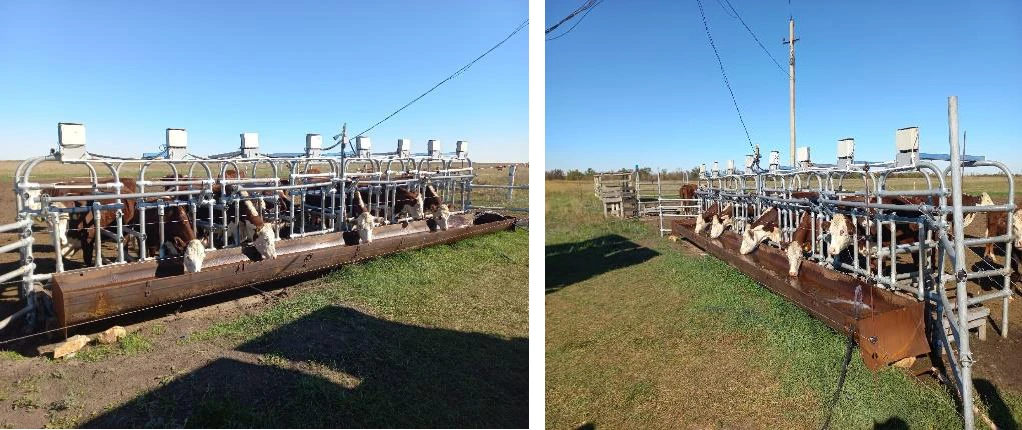
For automatic animal recognition and registration, each platform used a radio frequency identification (RFID) system at ultrahigh frequency (UHF). The system included readers and antennas that recognized special RFID tags attached to animals. The entire system was linked to Herd Management software, which allows for the automatic collection and processing of animal movement and activity data in real time (Mirmanov et al., 2021). This platform is covered by a patent for utility model No. 8658 dated 11/24/2023 (automatic stress-free weighing system).
Animals are identified via radio frequency tags and are used to automate cattle data recording.
The software provides the ability to view information on each animal, the drinking start time and duration, the number of RFID ear tags, the number of data points per second and other parameters. Thus, the system records the start and duration of drinking for each individual cow during each visit to the watering place in 24/7 mode. The device operates continuously and is designed for automated data collection, including registering animal weight, conducting veterinary activities, monitoring the time and duration of water consumption, as well as reading RFID tags and other parameters. A detailed description of the design and operating principle of the equipment is given in the studies carried out by Uskenov et al. (2023).
Archived weather data for the nearest airport in Petropavlovsk for the period from 15 July to 15 August 2023 were obtained from the METAR (METeorological Aerodrome Report) internet data resource. To calculate the average daily temperature and humidity, the initial hourly temperature and humidity values were averaged for each day.
The temperature humidity index (THI) has been used for many years and combines the effects of temperature and humidity. The THI has subsequently been used by the transport industry to provide guidance on the transport of livestock under heat stress.
Throughout the experiment, the ambient temperature (Ta) and relative humidity (RH) were recorded hourly and averaged daily, and the THI was calculated via the following formula (Davis et al., 2001):
Where: Ta is the temperature, °C, and RH is the relative humidity.
The test was conducted on a group of cattle placed on a pasture fenced with an electric fence. To ensure rational use of the forage base, a rotational grazing system was used, in which the pastures were divided into 7 sections. The vegetation cover was represented by natural (endemic) grasses typical of the northern region of Kazakhstan. The group included Qazaq Aqbas cows born in January 2020. At the time of the test, the cows were 36 to 37 months old. Watering of the animals was organized with free access to the drinkers: the cows independently approached the drinker from the pasture. During the experiment, the animals were not in the shade and had free access to a 3 m long metal drinker. The water supplied from other sources was excluded since there were no water bodies on the fenced pasture, and the electric fence limited access to other water bodies. The greatest distance from the most remote part of the pasture to the drinking trough was 1 km, while the average distance was 550 m. Water consumption by beef cattle mainly depends on several factors, including dry matter intake, ambient temperature and other conditions.
Data were collected daily, as the animals were equipped with RFID tags, which allowed the automated system to record their numbers. The RFID tags of cattle correspond to the national identification numbers (KZ tags) used in Kazakhstan. RFID numbers were linked to animals via KZ tags (Önder, 2018).
The number of drinking approaches and the drinking duration were analyzed while considering the influences of the time of day, wind direction and speed. Owing to the deviation of the data distribution from normal, which was established via the Kolmogorov–Smirnov test (P < 0.05) (Önder, 2018), the nonparametric Kruskal–Wallis H test was used to assess the influence of these factors. Poisson regression was used to study the relationship between air temperature and humidity with the number of animal approaches to drink, and linear regression was used to analyze the influence of these meteorological factors on the duration of drinking (Arı and Önder, 2013). The relationships between the studied variables were characterized via the Pearson correlation coefficient.
The data from the database were downloaded and prepared for analysis via SQL queries.
Visualization, analysis, and calculations of the data were performed via the tools available in MS Excel, and statistical processing of the data was carried out via the SPSS 20.0 and R software packages.
3. Results
Beef cows on pasture usually drink water 2–6 times a day, depending on weather conditions, type of feed, physiological state and other factors. Free access to clean water is important, especially in hot weather. The results of studies on the number of approaches to waterers by animals of the Qazaq Aqbas breed during the grazing period are presented in Figure 2.
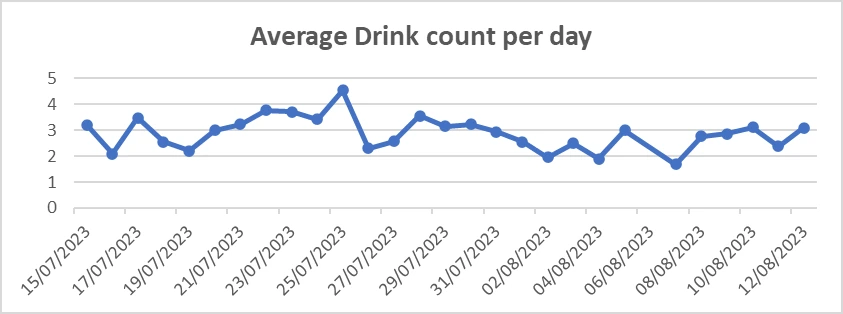
As shown in Figure 2, the greatest number of approaches to water consumption was 4.5 times per day on July 25, 2023, at an ambient temperature of 25.5 °C. The smallest number is 1.7 per day on August 7, 2023, at a temperature of 22.5 °C, which indicates that the hotter the weather is, the more often beef cattle drink water. On average, Qazaq Aqbas cows approached the drinkers 3 times (2.94 ± 0.53). Beef cows drink water mainly during the day, but their watering depends on the temperature, feeding and pasture conditions. In hot weather, cows more often approach water in the morning and evening hours, when it is not so hot. If the cows do not drink enough water on a hot day, they may drink at night, especially if the temperature decreases. Figure 3 shows data on the time the animals spent near the drinkers during the day.
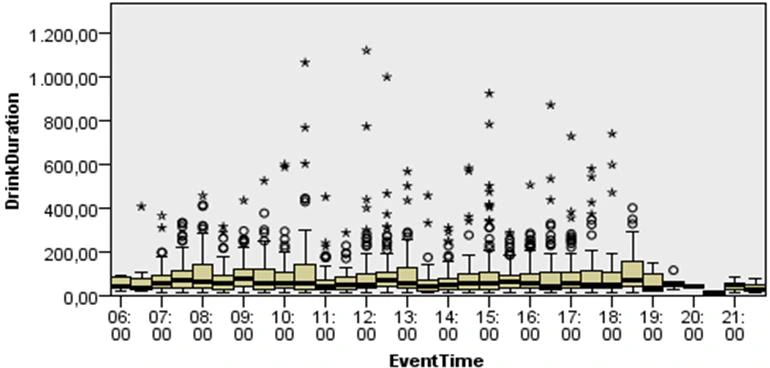
The data in Figure 3 show that in the period from 22:00 at night to 04:00 in the morning, the animals of the Qazaq Aqbas breed, which is located on the pasture, do not approach the waterers. The activity begins at 5 am and continues until 9 pm. The obtained graphic and statistical data indicate that the time of day has a significant effect on the duration of watering. The longest watering is observed during the daytime, from 07:00 to 19:00, which is probably due to the increased activity of the animals and the increased need for water during this period. This time pattern may also reflect the influence of temperature fluctuations, light levels or behavioral rhythms of the herd. The greatest number of animal approaches (250 times) is noted at 16:00, 200 times at 7:00 and 8:00 am, 80–140 times from 10:00 am to 1:00 pm, and from 6:00 pm, there is a decrease in approaches to water.
Beef cows usually drink water for 1–4 minutes per approach, depending on their temperature, physiological state and housing conditions.
To assess the degree of heat stress in animals, the weather safety index is often used, which distinguishes risk levels: “norm”, “warning”, “danger” and “emergency”. The most common indicator is the temperature and humidity index (THI), which is calculated on the basis of the air temperature and relative humidity. Despite the widespread use of the THI, its prognostic value can be significantly increased by considering additional meteorological parameters, such as solar radiation (RAD) and wind speed (WSPD). RAD has a direct effect on the level of heat load, and variations in WSPD alter the efficiency of convective heat transfer, which together determine the animal’s ability to maintain thermal homeostasis. Table 1 shows the timing of the cows’ water consumption, as well as the relationships with the ambient temperature, air humidity, and temperature–humidity index (THI).
| Indicators | Water consumption time, seconds | Ambient temperature, °C | Relative air humidity, % | Temperature–humidity index (THI) |
|---|---|---|---|---|
| Average Values | 87.12 ± 1.97 | 23.5 ± 0.63 | 57.0 ± 2.11 | 31.5 ± 0.81 |
| Correlation | – | 0.45 | −0.60 | 0.57 |
Table 1 shows that in the hottest months, with an average ambient temperature of 23.5 °C during the grazing period, cows spend 87.12 seconds or 1.5 minutes on one approach to water.
On average, the relative humidity was 57.0%, which is comfortable for beef cattle, since this humidity at an ambient temperature of +10…+25 °C is ideal for thermoregulation and animal health. Nevertheless, as seen from the primary data, there were several days when the air temperature was 27 °C with a relative humidity of 51.1%, which indicates possible discomfort and overheating of the animals. The temperature humidity index of 31.5 is very low. This does not cause stress in beef cows, since a THI of up to 72 is a comfortable zone and animals do not experience stress, do not overheat, eat feed in normal volumes, weight gain does not decrease, and temperature and humidity do not harm the cows.
The correlation coefficient of +0.45 between the time of water consumption by Qazaq Aqbas cows and the ambient temperature shows that there is an average positive relationship between these variables. As a rule, as the ambient temperature increases, animals spend more time drinking water, which is also confirmed by the data in Figure 2.
The correlation of −0.60 between the time of water consumption and relative air humidity indicates a moderately negative relationship between these parameters, i.e., as the relative air humidity increases, cows spend less time drinking water.
The correlation coefficient between the duration of water consumption and the temperature–humidity index (THI) was a moderately positive relationship of +0.57. As the THI increases (i.e., under hotter and more humid conditions), the time cows spend drinking water increases.
Wind direction and speed can significantly affect the drinking cycle of animals. Wind direction is important in the context of the locations of waterers and shelters on pastures. For example, with strong wind from a certain direction, animals may avoid open areas if the wind causes discomfort or cooling of the body, which reduces the frequency of approaching waterers. At the same time, a wind from a more comfortable side, especially if it results in coolness, can stimulate animals to increase their activity and the need for water.
The wind speed also plays a key role in thermoregulation. Moderate winds help cool animals, reduce overheating and improve water conditions. However, very strong winds, especially when combined with high temperatures, can cause animals to become stressed, which can lead to decreased activity and a reduced frequency of watering. Wind can also influence animal behavior, causing them to seek shelter, which can impact the availability and use of waterers (Clark et al., 2019).
Figure 4 shows the number of times that the animals approached waterers in different wind directions during the grazing season.
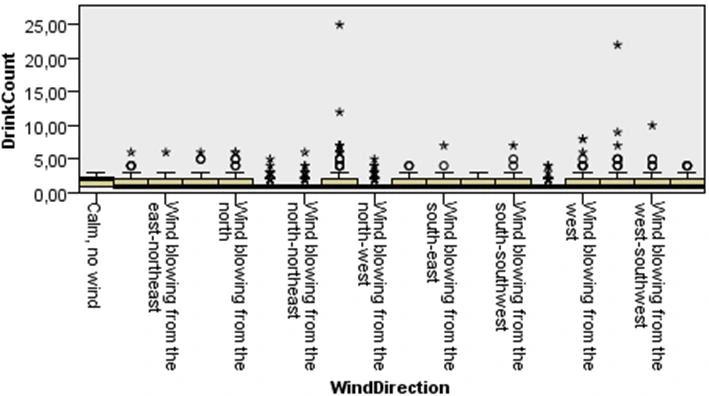
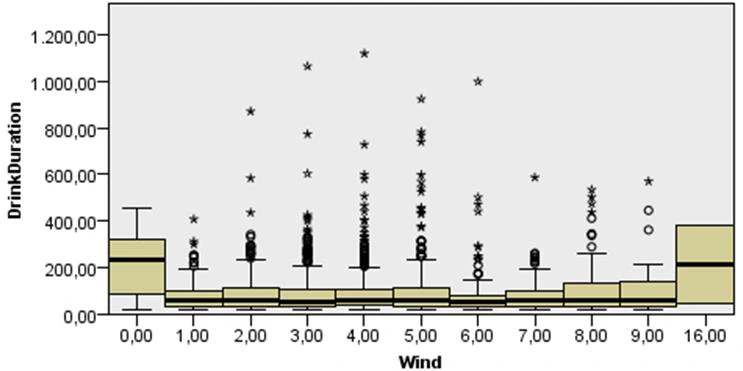
The results in Figure 4 show a significant relationship between the wind direction and water consumption (P = 0.022 < 0.05). Interestingly, water consumption under calm conditions was statistically significantly greater than that under most other wind directions, except for ENE and SSEEs. This highlights the potential importance of weather conditions, particularly calm conditions, in forecasting and managing water consumption. Figure 5 shows water consumption as a function of the wind speed.
The results of the graphical analysis and statistical testing revealed a significant effect of wind speed on the duration of water consumption by the animals (P value = 0.035 < 0.05). A nonlinear, U-shaped relationship was established: the longest watering durations were observed during calm weather (wind speed of 0 m/s) and at high wind speeds (approximately 16 m/s), whereas the minimum duration was recorded at an average wind speed of approximately 6 m/s. This pattern may indicate the presence of compensatory behavioral mechanisms that adapt animals to both the complete absence of air flow and its significant increase. A promising direction for further research is to clarify the physiological or behavioral factors underlying the identified effect. Figure 6 shows the reliability of the approximation (dependence) of the total duration of drinking of animals on temperature, relative humidity of the ambient air, temperature–humidity index (THI) and wind (Wind).
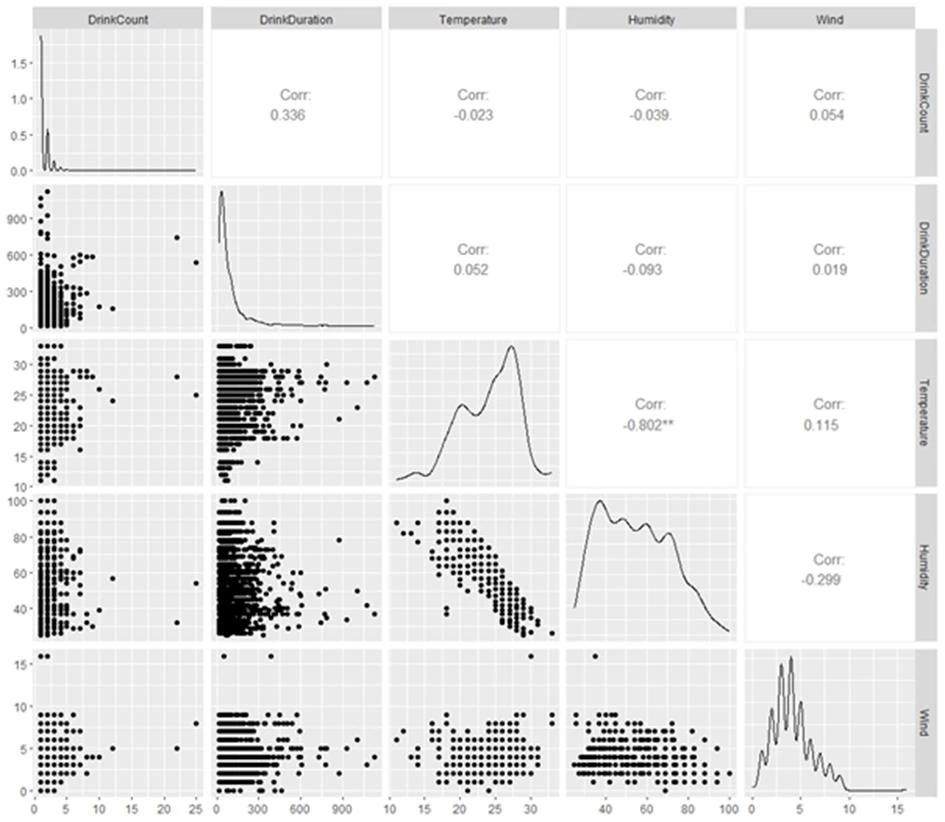
Analysis of the correlations between the behavioral and climatic variables revealed that there were generally no pronounced relationships between the number and duration of watering events and weather conditions, with the exception of a weak positive relationship between the number and duration of watering events (r = 0.336). This may reflect a natural behavioral response: animals perform more acts of drinking when they stay at a water source for a longer period.
Weak or insignificant correlations between the watering location and parameters such as temperature, humidity, and wind speed indicate the presence of complex mechanisms of behavioral adaptation to external conditions in animals. For example, under heat stress, animals can limit their motor activity and reduce the frequency of approaches to water, compensating for this by increasing the duration of each visit to the source. In addition, a decrease in water consumption under moderate winds (while maintaining a high temperature) may be due to a subjective feeling of cooling, which temporarily reduces the motivation to drink.
A strong negative correlation between air temperature and humidity (r = −0.802) corresponds to the expected climatic patterns and likely has a complex effect on animal behavior, regulating not only the watering location but also general activity. Taken together, these data indicate the need for a more in-depth analysis of the interaction of the behavioral and physiological responses of animals to a set of climatic factors. In Tables 2 and 3, the reliability of the approximation (dependence) of the total duration and approach of drinking by the animals on the temperature and relative humidity of the air in the environment according to Poisson and linear regression is shown.
| Intercept | Temperature | Humidity |
|---|---|---|
| 1.478350 | −0.028448 | −0.007074 |
As shown in Table 2, Poisson regression revealed a statistically significant effect of temperature and humidity on the amount of water consumed: with an increase in temperature by one unit, it decreases by 2.8%, and with an increase in humidity, it decreases by 0.7%. However, the extremely low adjusted coefficient of determination (R² = 0.009) indicates a weak explanatory power of the model, which makes it unsuitable for practical forecasting.
| Intercept | Temperature | Humidity |
|---|---|---|
| 176.152 | −1.651 | −0.861 |
According to the data in Table 3, temperature and humidity clearly have statistically significant effects on the duration of water consumption, but the explanatory power of the model is extremely low (R² = 0.010). This finding indicates that the model is poorly suited for practical forecasting, despite the presence of significant coefficients. The obtained R² values from 0.009 to 0.010 show that the linear model does not describe the dependence of these indicators accurately enough. This indicates the complexity of the relationships and the need for further research. To improve the accuracy of the model, it is necessary to expand the time range of observations and minimize the influence of technical factors, such as data transmission, both from the installation to the gateway and further to the server, possible power supply failures, sensor errors and delays in recording measurements. In addition, the behavioral characteristics of animals, including their reactions to equipment, the variability of approaches to weighing platforms with a working automatic processing system, and the human factors associated with the operation of the system and maintenance, influence their behavior.
4. Discussion
Growing concerns about the sustainability of agriculture are linked to the availability of drinking water, which pressures livestock production, particularly in the meat sector, to adopt more efficient production methods.
Research conducted by Brazilian scientists from the Federal University of Mato Grosso do Sul on the Intergado Ltd. system to evaluate the reduction in water use efficiency in Senepol cattle through genetic selection revealed that genetic improvement of water use efficiency in the Senepol breed is possible through selection and can reduce water demand in beef production systems (Pereira et al., 2021).
The average global water consumption of beef is estimated to be high, ranging from 15,415 to 15,497 L/kg beef (Ran et al., 2016), which is significantly greater than that of other animal protein sources (Mekonnen & Hoekstra, 2012). The global beef supply chain is under pressure to reduce these figures as dietary change movements such as vegetarianism and veganism gain momentum worldwide. As noted by Nardone et al. (2010), efficient water use is a key goal for ensuring the sustainability of livestock production.
According to the study by Mader et al. (2006), in addition to air temperature and humidity, wind speed (WSPD) also has a significant effect on water consumption by cattle. The authors reported that this meteorological parameter contributes to the increase in the behavioral reactions of animals associated with the search for water sources, thereby emphasizing the multifactorial nature of the mechanisms regulating water consumption. According to the analysis presented by Haoyuan Fang, Peishi Yan, Shengjuan Wei and Dengjin Chen, it was shown that in the hot and humid climate of the Yangtze region, increased ventilation is most effective in reducing heat stress in farm animals by increasing the air flow velocity, which improves heat transfer through convection and evaporation. This study provides an assessment of the drinking cycle of Qazaq Aqbas cows on pasture in Northern Kazakhstan.
The obtained correlation coefficient of +0.45 between the time of water consumption and the ambient temperature means that the relationship between these traits is not strong (it is average) and indicates the influence of other factors on this process. At high humidity, heat transfer through sweating becomes less effective, but the need for additional water may decrease if the air temperature is not too high. The coefficient of −0.60 indicates a fairly noticeable relationship, but it is not absolute. A positive correlation (+0.57) indicates a noticeable trend but not absolute dependence. This correlation does not indicate causality but confirms the relationship between heat stress and water consumption. A limitation of this study is that not the entire period of the grazing period for this region, from May–September, was studied. Other countries may provide different answers in this direction. Further work on the applicability of these results using an automated system would allow us to better understand the reactions and behavior of beef animals of this breed.
5. Conclusion
The use of an automatic platform for monitoring animal water allowed us to analyze the drinking cycle of Qazaq Aqbas cows accurately and draw important conclusions for herd management and productivity improvement.
During the research, the analysis of the animal drinking cycle determined individual approaches to water, allowing us to study the individual needs of the animals, monitor and respond to changes in the condition of the animals, and identify periods of heat stress.
A study of the drinking cycle of Qazaq Aqbas cows during the grazing period revealed that animal water consumption depends on climatic factors such as air temperature (P < 0.05), relative humidity (P < 0.05), wind direction and wind speed (P < 0.05 and P < 0.05), and the temperature–humidity index (P ≥ 0.05).
Cows drink water on average 3 times a day, with peaks in the morning and afternoon, which corresponds to periods of highest animal activity and elevated temperatures. On hot days (23.5 °C), the average time for one to reach water was 1.5 minutes, with a relative humidity of 57% and a low THI (31.5), which does not cause heat stress in beef cows.
Correlation analysis revealed a positive relationship (+0.45) between the duration of water consumption and the ambient temperature, which means that with increasing temperature, cows drink longer, with a negative relationship (−0.60) between drinking time and humidity, which indicates a decrease in the duration of drinking with increasing humidity, and a positive relationship (+0.57) between drinking time and THI, which indicates a moderate increase in the duration of drinking with increasing heat load. Moreover, the linear model does not sufficiently describe the dependence of these indicators, and in this regard, there is a need for further research in this direction.
The results of the present study confirmed that high temperature stimulates an increase in drinking time, whereas high humidity reduces this activity. However, the THI of 31.5 shows that beef cows of the Qazaq Aqbas breed did not experience heat stress, which could limit the impact of climatic factors on water consumption. Water consumption data revealed that Qazaq Aqbas animals on pastures begin to approach the waterers at 5 am, with peak activity at 4 pm (250 approaches), as well as in the morning hours (200 approaches at 7 and 8 am). A decrease in the number of approaches is observed after 6 pm, which confirms the cyclical nature of watering during the day. Within the framework of the production of organic livestock products, in order to ensure the welfare of animals and achieve the planned productivity indicators of beef cattle, it is recommended to organize watering at least three times a day.
Acknowledgments
This study was made possible by the scientific and technical program BR21882327 “Development of new technologies for organic production and processing of agricultural products”, Ministry of Science and Higher Education, Republic of Kazakhstan. We also thank the management and staff of the North Kazakhstan Agricultural Experimental Station for providing the opportunity to experiment with animals of the Qazaq Aqbas breed.
Ethical Considerations
This research was conducted in compliance with high ethical standards concerning animal welfare, such as Code of Practice on Good Animal Feeding (CAC/RCP 54-2004) of the Food and Agriculture Organization of the United Nations (FAO), Regulation (EC) No 882/2004 of the European Parliament and of the Council of 29 April 2004 on official controls performed to ensure the verification of compliance with feed and food law, animal health and animal welfare rules.
Conflicts of Interest
There are no conflicts of interest between any of the authors and the companies’ products used in this trial.
Funding
This research was conducted with program-targeted funding from the Ministry of Science and Higher Education of the Republic of Kazakhstan.
References
- Anses. (2018). Avis de l’Anses relatif au Bien-être animal: contexte, definition et évaluation. Available at https://www.anses.fr/fr/system/files/SABA2016SA0288.pdf. Accessed on: March, 2025.
- Arı, A., & Önder, H. (2013). Regression models used for different data structures. Anadolu Journal of Agricultural Sciences, 28(3), 168–174.
- Arias, R. A., Mader, T. L., & Escobar, P. C. (2008). Factores climáticos que afectan el desempeño productivo del ganado bovino de carne y leche. Archivos de Medicina Veterinaria, 40, 7–22.
- Beck, J., Katzchke, D., & Steingass, H. (2000). Heated drinking water for dairy cows. Agrartechnische Forschung, 6, E97–E101.
- Bicudo, J. R., & Gates, R. S. (2002). Water consumption, air and water temperature issues related to portable water systems for grazing cattle. ASAE Meeting Paper No. 024052. St. Joseph, MI.
- Brown-Brandl, T. M. (2018). Understanding heat stress in beef cattle. Brazilian Journal of Animal Science, 47, e20160414.
- Brown-Brandl, T. M., Eigenberg, R. A., & Nienaber, J. A. (2010). Water spray cooling during handling of feedlot cattle. International Journal of Biometeorology, 54, 609–616.
- Brown-Brandl, T. M., Nienaber, J. A., Eigenberg, R. A., Mader, T. L., Morrow, J. L., & Dailey, J. W. (2006). Comparison of heat tolerance of feedlot heifers of different breeds. Livestock Science, 105, 19–26.
- Brscic, M. F., Gottardo, F., Mazzenga, A., & Cozzi, G. (2007). Behavioral response to different climatic conditions of beef cattle in intensive rearing systems. Poljoprivreda, 13(1).
- Burkhardt, F. K., Hayer, J. J., Heinemann, C., & Steinhoff-Wagner, J. (2022). Drinking behavior of dairy cows under commercial farm conditions differs depending on water trough design and cleanliness. Applied Animal Behaviour Science, 105752. https://doi.org/10.1016/j.applanim.2022.105752
- Clark, D., Wright, C., & Gonda, M. (2019). Effects of average temperature, wind speed, and solar radiation on daily water intake of beef bulls in winter and early spring in Eastern South Dakota. Journal of Animal Science, 97(2), 155. https://doi.org/10.1093/jas/skz122.274
- Coimbra, P. (2007). Aspectos extrínsecos do comportamento de bebida de bovinos em pastoreio (Dissertação de Mestrado). Universidade Federal de Santa Catarina, Brasil.
- Davis, S., Mader, T. L., & Cerkoney, W. (2001). Managing heat stress in feedlot cattle using sprinklers. Nebraska Beef Cattle Reports.
- Fang, H., Yan, P., Wei, S., & Chen, D. (2025). Evaluation of ventilation and cooling strategies in cattle sheds in the middle and lower Yangtze river regions based on model prediction. Journal of Applied Animal Research, 53(1), 1–11. https://doi.org/10.1080/09712119.2025.2458279
- Foris, B. A. J., Thompson, M. A. G., von Keyserlingk, M., Melzer, N., & Weary, D. M. (2019). Automatic detection of feeding- and drinking-related agonistic behavior and dominance in dairy cows. Journal of Dairy Science, 102, 9176–9186. https://doi.org/10.3168/jds.2019-16697
- González Pereyra, A. V., Maldonado May, V., Catracchia, C. G., Herrero, M. A., Flores, M. C., & Mazzini, M. (2010). Influence of water temperature and heat stress on drinking water intake in dairy cows. Chilean Journal of Agricultural Research, 70(2), 328–336.
- Holt, S. M., Gaughan, J. B., & Mader, T. L. (2004). Feeding strategies for grain-fed cattle in a hot environment. Australian Journal of Agricultural Research, 55, 719–725.
- Mader, T. L., & Davis, M. S. (2004). Effect of management strategies on reducing heat stress of feedlot cattle: Feed and water intake. Journal of Animal Science, 82, 3077–3087.
- Mader, T. L., Davis, M. S., & Brown-Brandl, T. (2006). Environmental factors influencing heat stress in feedlot cattle. Journal of Animal Science, 84, 712–719.
- Mader, T. L., Davis, M. S., & Gaughan, J. B. (2007). Effect of sprinkling on feedlot microclimate and cattle behavior. International Journal of Biometeorology, 51, 541–551.
- Matarazzo, S. V., Perissinoto, M., Oliveira, J., da Silva, M., Jorge de Moura, D., & Sevegnani, K. B. (2003). Water intake and behavior of dairy cows in response to environmental conditions. In Fifth International Dairy Housing Proceedings (pp. 213–217), Fort Worth, Texas. American Society of Agricultural and Biological Engineers.
- Meat and Livestock Australia. (2006). Summer feeding of feedlot cattle. In On farm tips and tools. Meat and Livestock Australia.
- Mekonnen, M. M., & Hoekstra, A. Y. (2012). A global assessment of the water footprint of farm animal products. Ecosystems, 15, 401–415.
- Mirmanov, A., Alimbayev, A., Baiguanysh, S., Nabiev, N., Sharipov, A., Kokcholokov, A., & Caratelli, D. (2021). Development of an IoT platform for stress-free monitoring of cattle productivity in precision animal husbandry. Advances in Science, Technology and Engineering Systems Journal. https://doi.org/10.25046/aj060155
- Nardone, A., Ronchi, B., Lacetera, N., Ranieri, M. S., & Bernabucci, U. (2010). Effects of climate changes on animal production and sustainability of livestock systems. Livestock Science, 130, 57–69.
- Nizzi, E. C., Hurtaud, C., & Boudon, A. (2023). Interaction between drinker density and cow social dominance affects drinking behavior. Journal of Dairy Science Communications. https://doi.org/10.3168/jdsc.2023-0479
- Önder, H. (2018). Nonparametric statistical methods used in biological experiments. BSJ Engineering Science, 1(1), 1–6.
- Pereira, G. M., Egito, A. A., Gomes, R. C., Ribas, M. N., Torres Junior, R. A. A., Fernandes Junior, J. A., & Menezes, G. R. O. (2021). Water requirements of beef production can be reduced by genetic selection. Animal, 15, 100142.
- Ran, Y., Lannerstad, M., Herrero, M., Van Middelaar, C. E., & De Boer, I. J. M. (2016). Assessing water resource use in livestock production: A review of methods. Livestock Science, 187, 68–79.
- RSPCA. (2023). Welfare standards for beef cattle. Available at https://business.rspcaassured.org.uk/media/asnjl40q/beef_welfare_standards_2023.pdf. Accessed on: February, 2025.
- Rushen, J., Chapinal, N., & De Passillé, A. M. (2012). Automated monitoring of behavioral-based animal welfare indicators. Animal Welfare, 21, 339–350.
- St-Pierre, N. R., Cobanov, B., & Schnitkey, G. (2003). Economic losses from heat stress by US livestock industries. Journal of Dairy Science, 86(13_suppl), E52–E77.
- Tilepova, A., Arney, D. R., Bostanova, S., & Uskenov, R. (2024). Evaluation of Qazaq Aqbas bulls’ feed efficiency traits for breeding goals: A case study. Smart Agricultural Technology, 9, 100554.
- Uskenov, R. B., Konja, Y., Bostanova, S. K., Strelets, A. V., & Akkair, B. Zh. (2023). Growth and development of Kazakh white bulls depending on temperament. Science Bulletin of the Saken Seifullin Kazakh Agrotechnical Research University (Interdisciplinary), 2(117), 51–59.
- Uskenov, R., Akkair, B., Bostanova, S., Konca, Y., & Strelets, A. (2024). The relationships between the types of temperament on residual feed intake and the productivity of Qazaq Aqbas bulls. Journal of Animal Behavior and Biometeorology, 12, e2024015.
- Uskenov, R., Mirmanov, A., Tretyakov, I., & Bostanova, S. (2023). Automatic cattle weighing on pastures with behavioral analysis during drinking. Journal of Animal Behavior and Biometeorology, 11(3), 2023020.