Gabriela Schenato Bica, Luiz Carlos Pinheiro Machado Filho and Dayane Lemos Teixeira
Laboratório de Etologia Aplicada,
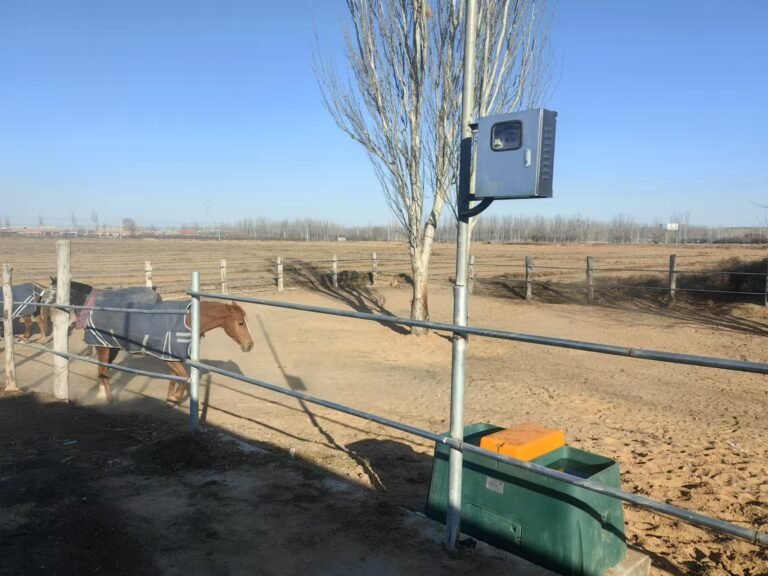
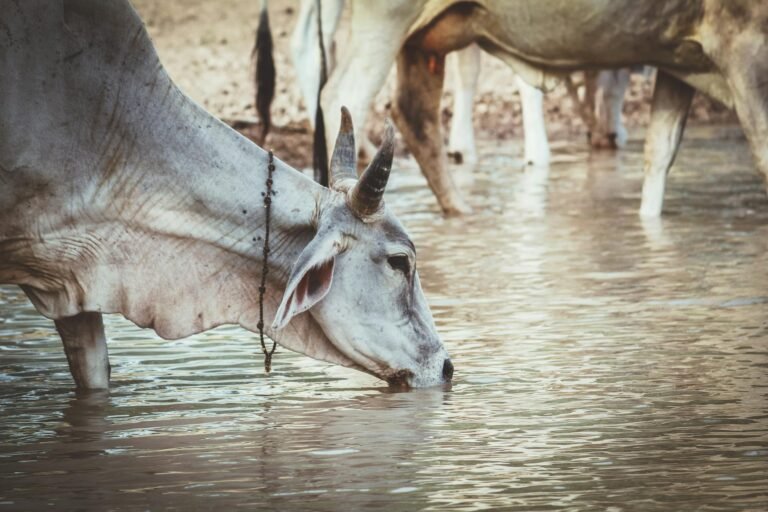
The behavior and performance of steers on pasture regarding water availability in troughs or in ponds were compared. Eight paddocks were randomly allocated to one treatment: POND (∼30 m of diameter) or TROUGH (water trough, 120 cm diameter and 60 cm high and 500 L capacity). Eight groups of six beef steers were randomly assigned to one of the paddocks. The first 10 days were considered for animal habituation. Animals were individually weighed (days 0, 30, 60, and 90). Beginning in the day after each weighing on days 30 (Month 1), 60 (Month 2), and 90 (Month 3), behavior and animal distribution in the paddock were recorded by direct visual observation in three periods of 4 consecutive days. Water temperature and fecal and herbage DM were also recorded in these periods. Water intake was measured during 16 random days in the troughs. Data were analyzed using Generalized Linear Mixed Models, with treatment and period as fixed effects. TROUGH steers gained more weight (0.44 vs. 0.34 kg/day/animal; P ≤ 0.007) during the experiment and were heavier than the others at the end of the study (P ≤ 0.05). POND steers spent more time drinking water, but TROUGH steers increased the number of drinking events throughout the study (P ≤ 0.05), suggesting an adaptation for the new type of water source. Both treatments increased grazing time throughout the study, but not ruminating time (P ≤ 0.05). Walking time differed between treatments in all periods of behavior observation (P ≤ 0.05). Events of animal licking and ingesting salt of POND steers reduced throughout the study (P ≤ 0.05). The number of drinking events of TROUGH steers increased throughout the study, and drinking events were longer for POND steers than TROUGH steers (P ≤ 0.05). TROUGH steers spent more time on pasture on Month 2 (P ≤ 0.05). Period collection did not affect the water intake of TROUGH treatment (P > 0.05). This study demonstrates that water available in troughs rather than ponds for steers on pasture has positive effects on their weight gain and affects cattle behavior.
The findings of this study showed that water supplied in a trough rather than in a pond has positive effects on animal performance and behavior. Although having the same body weight at the beginning of the study, TROUGH steers had an ADG 29% higher than POND during the experiment and were 4% heavier at the end of the study. Our findings confirm the previous study showing that cattle drinking clean water delivered to a trough gained 23% more weight than cattle drinking from a dugout (9). Similarly, yearling heifers gained 23% more weight when drinking clean water delivered to a trough than those drinking directly from a pond and 20% more than those drinking pond water pumped to a trough (5). Cows and calves with off-stream water also gained more weight than no-off stream animals (27). Brew et al. (28) reported that water intake of beef cattle is positively correlated with feed intake and ADG, which are in line with our findings as steers from both treatment reduced ADG and drinking time throughout the study.
Despite that grazing time was longer on POND treatment on Month 3, the difference of final body weight between treatments may be due to the fact that TROUGH steers increased their grazing time from Month 2, while POND steers only showed an increase on Month 3 compared to the beginning of the study. A previous study also reported an effect of water source on grazing time: cattle with access to clean water also spent more time grazing and less time resting than animals receiving pond water pumped to a trough and those with direct access into the pond (5). In our study, a systematic approach to ensuring similar pasture availability and consumption was not carried out, so it was not possible to affirm that nutrition did not influence weight gain.
DM intake is the most important factor for water intake in bovines (29), followed by milk production, sodium intake, and high temperatures (6). Earlier studies reported a positive correlation between water intake and DM intake (6, 29–31) and salt ingestion (6, 32). Animals under water deprivation have a reduction in food consumption and an increase in urine concentration (33). In contrast, cows accelerate drinking water intake to excrete a large amount of potassium and nitrogen into urine in excess of their needs (34). Despite that DM of herbage mass increased throughout the study in both treatments, the water intake from the TROUGH steers was not affected by the period of the study. Paddocks were set up on the same pasture, and the herbage content of both treatments was equal, as shown in Table 1; therefore, the higher fecal DM of POND steers could indicate that this group had a lower water intake than TROUGH steers. Moreover, fecal DM did not follow the increase in DM of herbage between periods, suggesting an effect of treatments on the moisture content of the feces.
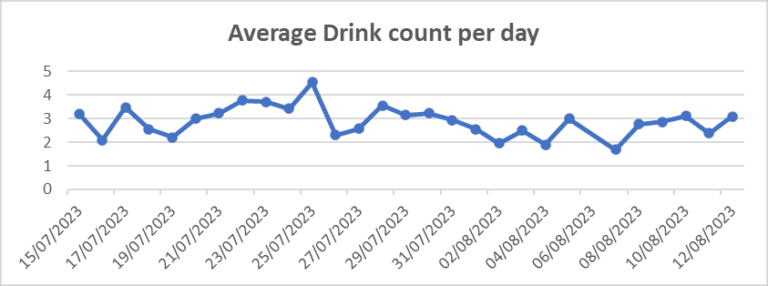
The duration of drinking bouts was longer in steers with access to POND than in TROUGH. Besides that, the number of drinking bouts increased on steers with access to TROUGH in the following periods, being higher than POND in the last period of behavior observation. It has been shown, in a number of experiments reported in a systematic review, that an increased frequency of drinking water resulted in increased weight gain in beef cattle and milk production in dairy cows (35), as was found in this experiment. The increase in the number of drinking bouts of steers with access to TROUGH in this study could be due to animal adaptation to the new type of water source. In the Bagshaw et al. (36) study, beef cattle in the grazing system also increased the use of trough over time.
Water intake by cattle can be affected by other factors including weather conditions, water quality, and height of the water trough. Increased THI (temperature–humidity index) resulted in cows drinking more water, spending more time at the drinker, making more visits to the drinker, and competing more at the drinker (37). Among other characteristics, cattle can discriminate for and select water based on organic solid contents (38) and they reduce water intake due to suspended particulate matter that can influence its appearance, odor, taste, and physical and chemical properties (39). Also, they have an aversion to drink water containing feces (5). In the case of the present study, animals could enter in POND water. Therefore, it was prone to manure contamination from both erosion of the soil adjacent and direct defecation and urination into the water by drinking animals (40). However, despite that suspended particulate matter could be higher on POND treatment, the chemical composition and microbiological quality of water from both treatments did not differ, as water of the troughs was pumped from the pond. While in POND treatment water was offered at the ground level, in TROUGH it was 60 cm high. In the study of Machado Filho et al. (2), the cows drank more water from a larger and higher trough, also 60 cm high, when they had access for 24 h than on the smaller version (30 cm height). Likewise, beef heifers preferred and drank more from a 60-cm-height round plastic trough than from a 50-cm-height squared concrete trough (4), and dairy cows took more sips, spent more time drinking, and drank more water from higher (60-cm) and larger troughs than small ones (30-cm-height) (3, 41). The current study was conducted during the hottest months of the summer, under high temperatures, and the average of maximum air temperatures was above 28◦C. Temperature and humidity have a direct relationship with cattle water consumption (32, 37, 42). Month 2 of behavior observation was the month with the lowest minimum and maximum air temperatures compared to the other 2 months. Apparently, differences in weather conditions among months did not change POND steers’ spatial distribution. However, in Month 2 TROUGH steers spent less time near the shade or water source, therefore spending more time on pasture. In fact, TROUGH steers grazed longer in Month 2, therefore spending more time on pasture. Conversely, in Month 3 POND steers spent more time on pasture and less time in shade than TROUGH steers, and they
also grazed longer in this period. These results are unlikely to be explained by the weather conditions but might be related to water intake, once dry matter intake is closely related to water (13).The availability of shade is essential for grazing animals, and their absence can reduce their well-being (43) and modify their behavior; that is, cows can spend more time around the water source when the shade is unavailable or insufficient (44). In addition, the quantity of forage in the field is likely to alter cattle behavior around water sources (36). In the present study, it was not possible to control the distance between the shade and the water sources (pond or trough), but this could explain the difference between treatments on their spatial distribution throughout this study. The location of the trough seems to be one of the critical factors affecting drinking behavior by cattle (7, 36). Mean water temperature did not differ between TROUGH and POND treatments. Therefore, the differences found in this study are unlikely to be due to water temperature Previous studies have reported that beef cattle drink more warm than cold water (45). This finding was later confirmed on dairy calves (46),lactating dairy cows (47), sheep (48), and goats (49).