Ana Valeria González Pereyra, Verónica Maldonado May, Carlos Guillermo Catracchia,
María Alejandra Herrero, Myriam Celina Flores, and Mariana Mazzini
Grazing animals are exposed to heat stress and there should be conditions to facilitate water intake. Three experiments were carried out to determine the relationship between water intake, water temperature, and heat stress for Holstein pastured dairy cows. Experiment 1: Drinking behavior of 13 cows was evaluated (for 3 consecutive days) and four time periods were established according to the temperature humidity index (THI): (H1:05:00 to 10:59 h, H2:11:00 to 16:59 h, H3:17:00 to 22:59 h, and H4:23:00 to 04:59 h). The highest mean percentage of drinking bouts (53.2%) was registered in H2 (THI: 74.91 to 83.95). Drinking bout means among time periods were different (p < 0.05), thus showing that heat stress conditions influence drinking behavior. Experiment 2: Three water troughs were placed in the sun (S) and three under a 2.2 m high structure covered with shade cloth (MS). Water temperature was registered at 10:00, 13:30, and 17:00 h, twice a week for 6 weeks. Mean water temperatures at 17:00 h were 33.2 ± 1.6 ºC (S) and 25.3 ± 1.9 ºC (MS) and showed significant differences (p < 0.05), thus supporting the shade cloth effect. Experiment 3: Five cows were offered water simultaneously at 18 and 31 ºC (T1 and T2), for 10 min, twice a day for 5 d. There were no significant differences among treatments (p > 0.05). Recorded water intake in T1 (18 L) was lower than in T2 (35.9 L), although body heat dissipation was higher (T1 = 672.64 kJ d-1, T2 = 620.76 kJ d-1).
Dairy cows in Argentina are directly exposed to climatic effects due to the predominant grazing production system predisposing the cows to heat stress situations during spring and summer. Both environmental temperature and relative humidity are factors that jointly determine the environmental effect on the animal’s well-being. The combination of both factors determines the temperature and humidity index (THI). At indices above 78, dairy cows are unable to maintain normal body temperatures through thermoregulatory mechanisms (McDowell et al., 1976; Lemerle and Goddard, 1986).
Nutrient metabolism generates heat which must bedissipated in a warm climate by physiological processesto maintain thermoneutrality. Dairy cows are in thecomfort zone when environmental temperatures are between 5 and 25 ºC (Roenfeldt, 1998). At 26 ºC or more, animal thermoregulatory capacity is surpassed and go into heat stress. Physiological mechanisms start functioning to overcome this state, such as decreasing dry matter consumption reducing metabolic heat generation. According to NRC (2001), with an environmental temperature of 40 ºC, consumption of dry matter decreases by 40%.
Drinking water is not only the most important essential nutrient for dairy cattle (Beede, 1991; NRC, 2001), but it also has high specific heat which promotes heat dissipation. There are studies that indicate the direct association between water intake and environmental temperature (Coimbra, 2007; Arias et al., 2008) as well as between water intake and the number of drinking bouts (Matarazzo et al., 2003; Brown-Brandl et al., 2006; Brscic et al., 2007; Coimbra, 2007).
Lactating cows require a great quantity of water which is related to their live weight, dry matter consumption, and production level since it represents 87% of milk volume. When water content in the organism is reduced by 10%, milk and meat production are affected (Herrero, 1998). Therefore, providing water, in quantity and quality, is fundamental in dairy production grazing systems. A characterization of the quality of water used for drinking, as well as washing milking equipment and facilities has been carried out in the dairy basins of Buenos Aires, Argentina. In general terms, the physical and chemical quality of water is acceptable in said region, but differences were found between the Abasto Norte, Abasto Sur, and Abasto Oeste basins (Herrero et al., 2000). It was determined in previous studies that the Oeste dairy basin showed worse underground water quality due to excessive total salts, hardness, chlorides, and sulfates (Herrero and Maldonado May, 2000).
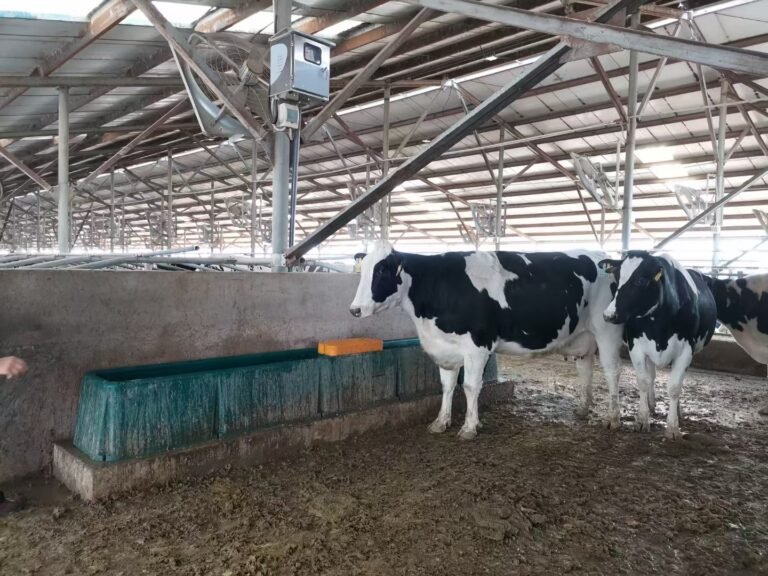
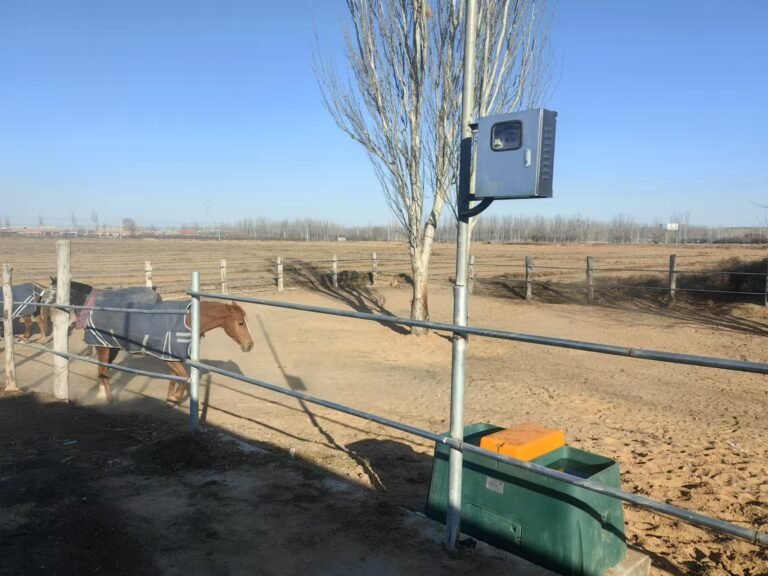
Exposing water troughs to solar radiation increases water temperature in critical seasons and worsens its physical and chemical quality by evaporation causing water intake and milk production to decrease (Challis et al., 1987).
There are studies indicating that a drinking water temperature between 20 and 28 ºC is the most accepted by cattle (Lanham et al., 1986). Other studies indicate that water intake between 7 and 16 ºC reduces tympanic temperature and respiratory frequency in dairy cows (Lanham et al., 1986; Milam et al., 1986; Stermer et al., 1986; Baker et al., 1988), although not the temperature preferred by the animals (Milam et al., 1986; Wilks et al., 1990; Beck et al., 2000). These effects are attributed to the water’s refreshing capacity which facilitates heat dissipation and helps to decrease metabolic load (Beck et al., 2000). At the same time, fresh water intake would provoke an increase in dry matter consumption and milk production (Milam et al., 1986; Wilks et al., 1990). In other studies, Beck et al. (2000) did not find any differences in milk production between cows that consumed water at 17 and 24 ºC; however, they indicate an increase in butyric fat production in those animals that consumed fresh water.
The objective of this study was to determine the incidence of water temperature and heat stress on drinking water intake of Holando-Argentino dairy cows during summer months in grazing systems. To that end, three experiments were designed with the following specific objectives: characterize drinking behavior due to the influence of environmental temperature and humidity; evaluate water temperature variations in water troughs directly exposed to solar radiation; and learn about cow preferences for drinking water at different temperatures.
In grazing-based dairy production, such as that found in Argentina, climatic conditions directly influence animal behavior. It was shown that in time periods in which THI reached dangerous levels, the mean percentage of drinking bouts at the water trough was the highest. However, in the presence of extreme THI (> 82), the number of drinking bouts decreases. As a result, it is clear that heat stress conditions influence drinking behavior. Water in troughs directly exposed to the sun in the summer months showed a temperature increase while water temperatures in troughs in the shade were maintained in the temperature range considered as the most acceptable to the cattle. In the last few years, with the purpose of decreasing heat stress in dairy herds, the use of a shade structure in grazing areas and holding pens has been widespread. Also, our experience shows the convenience of setting it up over water troughs. Drinking water temperature did not affect intake and it was not possible to demonstrate animal preference for drinking at 18 °C vs. 31 °C during heat stress climatic conditions. However, it should be taken into consideration that fresh water dissipates body heat better and will promote greater animal comfort in hot weather.
.