Received: 10 January 2019; Accepted: 29 January 2019; Published: 5 February 2019
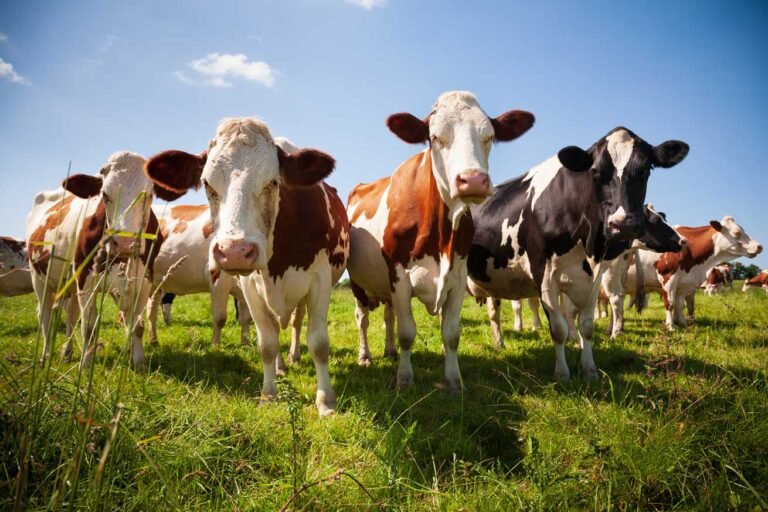
In Santa Catarina, Brazil, most milk is produced on small-scale farms that utilize grazing as the main form of nutrition; however, the farms differ in how they provide water for their herds, with some herds not providing access to drinking water while on pasture and other herds having unrestricted access to water. In this study, we assessed the milk production on farms that differ in the way drinking water is provided to the herd. Herds with unrestricted access to drinking water produced more milk than herds that had restricted access to drinking water, regardless of the main breed of the herd, and amount of concentrate offered per cow per day. Simple changes in water management practices may positively impact milk production..
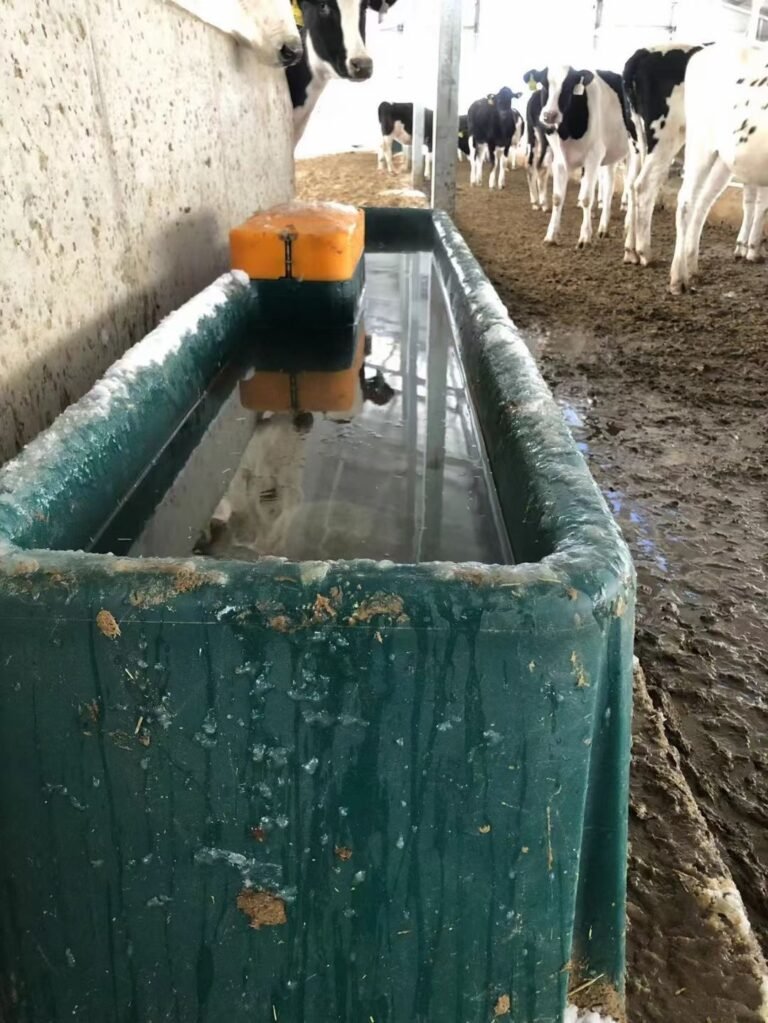
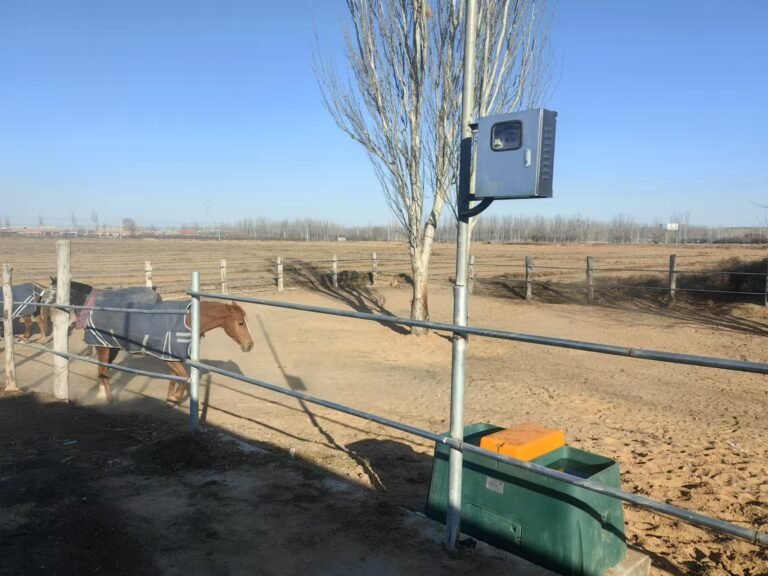
Abstract: In this cross-sectional study, we measured the association between water provision and milk production on intensively managed small-scale grazing dairy herds. Farms (n = 53) were categorized according to water provision as follows: (1) Restricted—cows did not have access to a water trough while on pasture; and (2) Unrestricted—cows had free access to a water trough while on pasture. Herd main breed and feeding practices were included in a model to assess the effect of water provision category on farm average milk yield/cow/d. The effect of pasture condition and environmental variables on milk production were also assessed, however were not retained on the final model. Herds provided with unrestricted access to drinking water produced on average 1.7 L more milk per cow/d (p = 0.03) than herds with restricted access to drinking water. Predominantly Holstein herds produced 2.8 L more milk per cow/d (p < 0.01) than non-Holstein herds. Each extra kg of concentrate offered per day increased milk yield by 1.1 L/cow/d (p < 0.01). In conclusion, providing free access to drinking water while grazing was associated with greater milk production.
Though causal relationships cannot be inferred from observational studies, in this study herds that were provided unrestricted water access while grazing were associated with an pproximately 10% higher milk production. In cattle, restricting water intake limits DM intake [18], which has experimentally been linked to reduced milk yield [33]. A recent meta-analysis on experiments comparing difference in milk yield of cows offered water access twice a day versus providing ad libitum water access found that restricting access to water was associated with reduced milk production [13]. Interestingly, these authors found an overall 1.7% reduction on milk yield in studies done in temperate climates, compared to a reduction of 15% on milk yield in experiments carried out in tropical regions. Some caution is warranted when interpreting their findings for tropical regions given that only two experiments using mainly Bos indicus cows (both with low animal numbers) met the inclusion criteria [13]. Our study, undertaken in a sub-tropical region, shows a reduction on milk yield in Bos taurus herds that had restricted access to water while grazing; the reduction was more ramatic than that shown for herds housed under cooler climates [13] and more in line with the results reported for tropical regions (e.g., [34]). It is worth noting that cows in herds with restricted water access had access to water troughs at least twice a day either before or after milking and that in hot days farmers brought the cows to areas with free access to shade and water troughs during the day.
We measured the association between pasture phenological stage and water provision type on milk production of the studied herds. Considering that juvenile plants have higher moisture content, the milk production of cows grazing such pastures, perhaps, would not be as negatively impacted by water provision type as total daily water intake would depend less on free drinking water intake. However, when grass phenological stage was tested in the univariable model there was no effect of this variable on milk production. Alternatively, farmers could be adjusting the levels of concentrate and corn silage based on pasture conditions, resulting in no differences in milk production across farms with different pasture conditions. Another confounding factor that could have influenced our results was that we collected our data during the time span of two seasons (summer and fall), thus weather-related variables and changes in day light length may have affected our results. When tested in the univariable model, the effect of daily average THI or number of hours THI was above 74 in the previous 4 days before visit day did not indicate an association between these variables and milk production. Differently from reproductive performance and behavioural changes [21,32], milk production is usually negatively impacted after periods of THI higher than 74 [23]. Perhaps we did not find an association between THI and milk production because THI was not extreme during the study days (see Table 1).
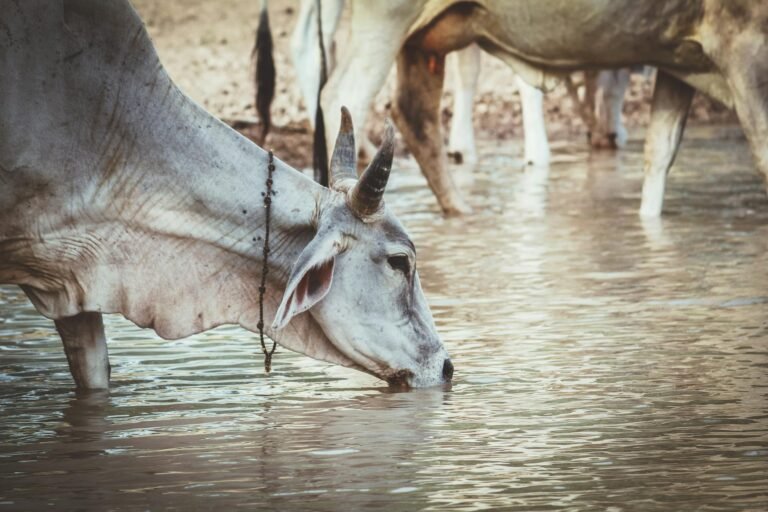
Lack of, or poor access to, water in grazing dairy herds is common in the study region [11] and elsewhere in the world (e.g., Europe; [9,35]), Restricted water access for lactating cows housed on pasture areas has been previously associated with lower animal welfare standards [9]. The association between restricting access to water and animal welfare is obvious, as thirst has been long argued to be a negative emotional state [10]. Indeed, animal welfare assurance programs such as the Canadian Code of Practice for the Care and Handling of Dairy Cattle [36], the FARM (Farmers Assuring Responsible Management) program in the United States of America [37] and Welfare Quality® in Europe [38] all state that cattle should have access to water to meet their needs and avoid prolonged periods of thirst. Our work is limited in that we could not assess individual data on time spent without access to water and other measures of thirstiness. We therefore encourage future research in this area, especially in the development of methodologies to assess thirst in cattle.
In cows that have unrestricted access to water, drinking behaviour is most often synchronized with milking [39]. Although we did not measure cows’ drinking behaviour in the present study, we speculate that competition to gain access the water troughs at milking times, and during elevated temperatures, was likely high (see e.g., [25]). Limiting access to water could result in some cows experiencing thirst-like states. In the same study region, farmers have reported bringing their cows to shade during hot hours of the day [11], and indeed in our study all farmers reported employing a similar practice, bringing the cows to a separate area with access to shade and water troughs. However, we caution using this strategy as it may not mitigate heat stress entirely, given that the farmers are making the decisions on behalf of the cows as to when they need access to shade and water; cows experience hot temperature differently than humans (see review [22]). Based on our result, this practice is not sufficient to mitigate the negative effects of restricted water access on milk
production.
Diet content is known to affect milk yield (see e.g., [40,41]); we noted a positive relation between amount of concentrate offered per cow/d and daily herd milk production, similar to that found in a previous study on grazing dairy cattle [41]. Although the average concentrate provided to cows varied across farm from a minimum of 1.5 to a maximum of 9 kg/cow/d, we have rposely not provided any recommendations regarding daily intakes of concentrate given that forage uality is an important factor that should also be considered; we did not collect any information on concentration composition or forage quality. We also recognize that the variables used to assess amount of supplementation eaten by the cows (amount of concentrate offered and area of silage harvested/cow/yr) are only estimates, but our approach did allow us to control for possible confounding effects regarding the association between water access and milk yield. In the same study area, recent research has showed that area of corn silage produced was positively associated with herd milk production [42].
In conclusion, providing unrestricted access to water while grazing was associated with higher milk production, regardless of the breed of cows and the amount of concentrate and silage offered. Water availability should be considered when planning dairy management systems, as restricted water access may decrease milk production.