Amit Kumar Singh;Champak Bhakat;Dhawal Kant Yadav;Garima Kansal;Manmohan Singh Rajput Ph.D. LPM Scholars, Livestock Production and Management Division, ICAR- National Dairy Research Institute, Karnal
Principal Scientist, Livestock Production Management Section, ICAR- National Dairy Research
Institute, ERS, Kalyani, West Bengal
MVSc Scholar, LPM Section, IVRI, Izatnagar, Bareilly, UP
Author’s email- amitkumarsingh5496@gmail.com
Introduction.
There is devastating climate change in the whole world along with different stress factors which are expected to increase in severity, its longevity, and its frequency. Among such factors the quality and the quantity of drinking water, high hot humid conditions with availability of scarce quality feedstuffs would be the most crucial ones for dairy production. Water is considered as the most important nutrient which is required by dairy and other animals to sustain their health and production with its important necessary physiological functions (NRC, 2007). Water intake plays an inevitable role in metabolic and many other bodily activities of dairy animals. It affects almost all the activities of animals’ body. Milk yield is highly affected with water intake. Commonly, 3 to 5 liters of water is required per liter of milk yield over and above maintenance dry matter requirement. Sufficient amounts of clean water must be provided to dairy cows to retain the maximum yield in milk production since there is a significant correlation between the amount of WI and milk yield in dairy cattle. Insufficient water supply imposes adverse effects on animal performance and welfare (Meyer et al., 2004). Restricted water intake may lead up to 26% reduction of milk production (Little et al., 1978). There is strong correlation between milk production and water intake or dry matter intake by dairy cows (Murphy, 1992; Kramer et al., 2009; Kume et al., 2010). Precise measurement of free WI (water intake) becomes very important to maintain production efficiency and to apply and evaluate food ratios for individual
cows or groups, and to proactively identify possible health problems.
Water and Animal
High yielding cows require a large amount of water, energy, protein and minerals to produce higher milk yield (Kume et al., 2010). Water is a vital nutrient for cows since their body weight is 56 to 81 % water (Murphy, 1992) and their raw milk is 87.3 to 88.1 % water (WijesinhaBettoni and Burlingame, 2013). However, dry cow’s water requirement is around 15-61 l /day (Holter and Urban, 1992). Water intake measurement can be helpful to measure the DMI for herds and can be used to estimate the changes in health and oestrus level of cows (Lukas et al., 2008).
.
Water requirements during dry and milking period
Different stages of production in a dairy animal lead to variation in daily water intake. There is difference in the free and restricted water intake. Free water intake is generally found in dairy animals as compared to that in restricted setting. Free water intake usually means water which are made available to the animals in ad libitum quantity with the allocation free movement space whereas in restricted setting animals are allowed to consume water in restricted amount and sometimes in limited available space.
Daily free water intake (WI) of lactating cows ranged from 23.5 to 143.3 L/day with the mean value of 83.6 (±17.1) L/day (Cardot et al., 2008). Whereas Axegard et al. (2017) found that water intake had a range between 23.9 and 130.4 kg/day for individual cow; also, it was found that water intake was correlated to many factors including dry matter intake, milk yield, potassium intake, sodium intake and nitrogen intake in the feed. Khelil-Arfa et al. (2012) reported that dry matter intake/day/cow was 4.7- 27.5 kg with free water intake/day/cow was 2.3- 140.0 kg whichwas associated with milk yield/day was 5.5- 42.2 kg. In a recent research, Singh et al. (2020) found that cows which consumed more dry matter had more water intake. Water intake was significantly and positively correlated with change in feed intake.
Factors affecting water intake
Water intake by a farm animal depends on several factors which accounts for change in the production level of dairy animals. The main factors affecting the daily free WI of dairy cows are dry matter intake, dry matter content of feed, milk yield, minimum ambient temperature and sodium intake (Murphy et al., 1983; Cardot et al., 2008). Spek et al. (2012) found cows to consume 146 g water/g Na. However, milk composition did not change, but, urea and lactose content were found higher under water restriction (Burgos et al., 2001). Brew et al. (2011) found a positive correlation (p<0.05) of water intake with feed intake and body gain. Hot summer conditions may increase the water consumption of dairy cows by 1.2 to 2 times more than their normal consumption (Murphy et al., 1983). Higher body weight of animal may lead to more water consumption (Meyer et al., 2004) whereas body loss has been noticed where water availability is restricted in dairy animals (Burgos et al., 2001). Meyer et al. (2004) in a study found that addition of every g Na was found to increase water intake only by 0.054 kg/day. Relationship of water intake with average ambient temperature, milk production, body weight and Na intake was found by Meyer et al. (2004) with coefficient of multiple determinations (r2) was 0.60 which shows high and significant relationships among those parameters.
Filho et al. (2004) assert that cows prefer high and large troughs. Cardot et al., (2008) found that free stall living cows used to visit water source 7.6 ± 3.4 times/day, however 0.3 ± 1.1 visits/day visits were without drinking. Dominancy in herds also affects water intake by the cow. In stall fed condition dominant cows were found to consume 7% more water/ day than submissive or lower rank cows Andersson and Lindgren (1984). Unpalatable and odourful source of water decreases acceptance and cows drink lesser than their requirement to meet production demands (Beede, 2006).
Drinking behaviors associated with water
Drinking behaviors (daily water intake, number of daily drinking events and daily drinking duration) of dairy cows have been determined manually till now. In modern and automated farms, the amount of water drunk by a cow is determined by quantifying the weight of a water vat (Meyer et al., 2004) before and after drinking or quantifying daily volumetric change of water in a trough (Morris et al., 2010). Daily drinking time and number of daily drinking events have been determined by live observations or video recordings (Huzzey et al., 2005; Chapinal et al., 2007). Cows looses water more as compared to sheep or goat from body through body skin, digestive process, urination, milk production (Sjaastad et al., 2010). Water intake for a freshly calved cow was found to be increased by 67% a week pre partum and post partum and furthermore, it got increased by 27% a week to third week post partum (Osborne et al., 2002).
Advanced practices and systems of watering to animals
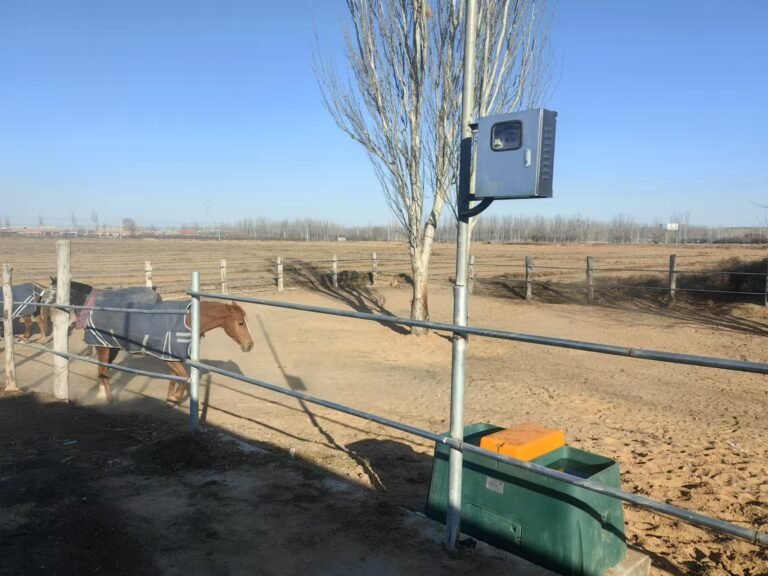
Water tufts, water buckets, water vats have been used since long back to clench the thirst of cows. Now days, developed automatic systems for analysis of animal behavior and welfare are used with image analysis and machine-learned segmentation technique (Nilsson et al., 2015). In an experiment drinking time taken before calving was found lowest pre calving and comparatively more during lactating period but was found highest during calving time (Huzzey et al., 2005). Free water intake along with correct prediction proves to be a beneficial aspect of a proper farm management of dairy animals. Latest technologies which are now utilized for water management at a farm, helps in accurately measuring other important aspects of biological activities in animals along with the measurement of their physiological and psychological level. Prediction of
water may become important in this way thereby enhancing the efficiency of measuring other farm activities.
Conclusions
It can be concluded that water intake may be helpful in predicting many important points in dairyfarm practices. New horizons of water intake for dairy cows should be given priority while designing operative procedures in a dairy farm. There are different factors that affect water intake of dairy cows. It affects their behavior patterns. Water should be freely available to dairy animals however, it should be measured accurately. Advanced methods can help in a great manner in this regard. Proper strategies should be adopted at farm level for accurately measuring the efficiency of dairy animals.